


TR Zeliang said Nagaland can reduce energy import dependence through sustainable power and renewable energy solutions in remote areas.
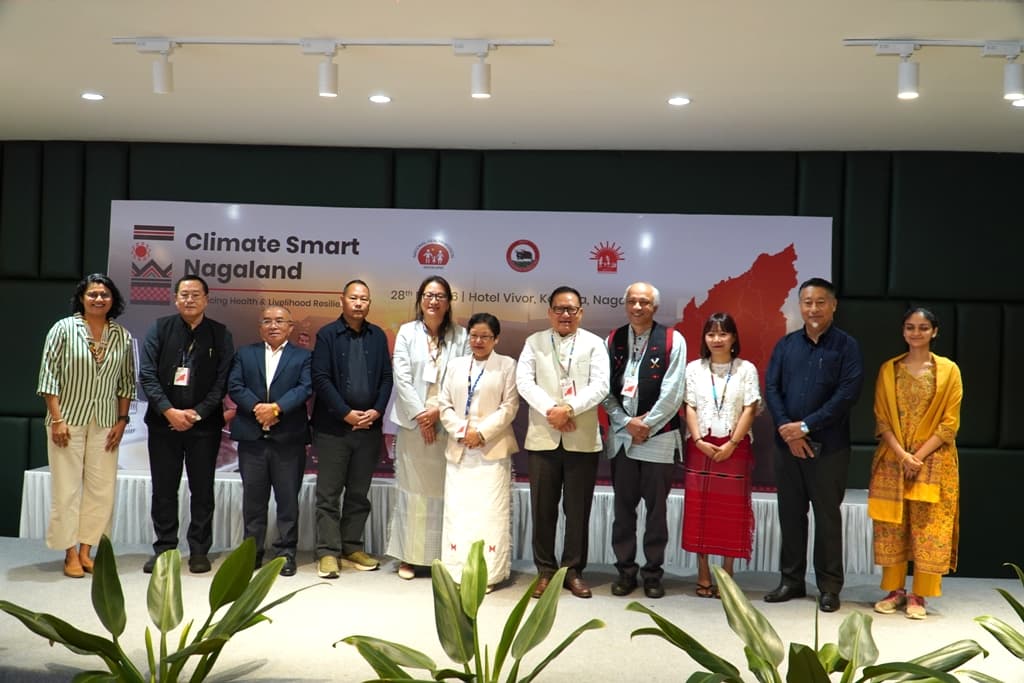
KOHIMA — Deputy Chief Minister TR Zeliang on Thursday said that Nagaland’s heavy dependence on energy imports could be reduced by adopting more sustainable energy sources.
Speaking at a programme on ‘Climate Smart Nagaland: Health and Livelihoods’ organised Hotel Vivor in Kohima, Zeliang said that the state’s power sector faces an annual revenue deficit of around INR 300 crore.
He rued that despite Nagaland preparing to celebrate its 64th Statehood Day this year, the state still remains at a nascent stage in several sectors.
He added that difficult terrain and poor connectivity continue to pose major developmental challenges, particularly in the power and energy sectors.
Zeliang asserted that the importance of sustainable energy has become more evident amid the global energy crisis and growing dependence on fossil fuels.
Also read: Accused in Lengrijan sexual assault case practised law in Dimapur — Chang organisations
He expressed confidence that SELCO Foundation’s expertise in clean, solar-powered solutions across different sectors would greatly benefit Nagaland.
“In many remote areas of Nagaland, uninterrupted power supply is not merely a matter of convenience but a necessity, especially for primary health centres and essential public services,” he said.
Referring to the ‘Energy for Health’ initiative being implemented by SELCO Foundation in partnership with the department of Health and Family Welfare, Zeliang described the project as a commendable effort towards strengthening healthcare delivery in remote areas through sustainable energy solutions.
He said that the solar-powered interventions implemented across health facilities have demonstrated how decentralised renewable energy can improve healthcare services in underserved regions.
The deputy chief minister added that such initiatives should not remain limited to the health sector alone but should also extend to livelihoods and community development.
“Development challenges cannot be addressed in silos. Integrated approaches and partnerships are essential,” he said, while stressing the importance of public-private partnerships in creating long-term and sustainable impact through community participation.
Secretary of Health and Family Welfare S Tainu highlighted key initiatives undertaken by SELCO Foundation in Nagaland, including projects relating to energy for health, innovation and startups, and sustainable livelihoods.
According to her, SELCO Foundation, in partnership with the department of Health and Family Welfare, has introduced decentralised renewable energy solutions across 325 health facilities in Nagaland, strengthening reliable healthcare delivery in remote regions.
Dr. Harish Hande, CEO of SELCO Foundation, observed that while climate change is widely discussed, traditional ecological knowledge possessed by tribal communities and farmers over generations is gradually being lost.
“The sophistication lies in understanding how forests function, and that knowledge is not being adequately documented or preserved,” he said.
Hande further stated that Nagaland holds strategic importance for SELCO Foundation beyond a conventional partnership model.
“With nearly 70% of the foundation’s focus now centred on the Northeast, the idea is to make Nagaland and the region a global centre of knowledge by developing solutions that can be replicated in other countries,” he said.
Senior Programme Manager of SELCO Foundation, Rucha Limaye, informed that nearly 70% of the organisation’s future work would focus on NE states like Mizoram, Manipur, Meghalaya, Nagaland and Assam.