


Naga leaders discuss repatriating ancestral remains from Pitt Rivers Museum, linking the process to healing, dignity, reconciliation and historical truth
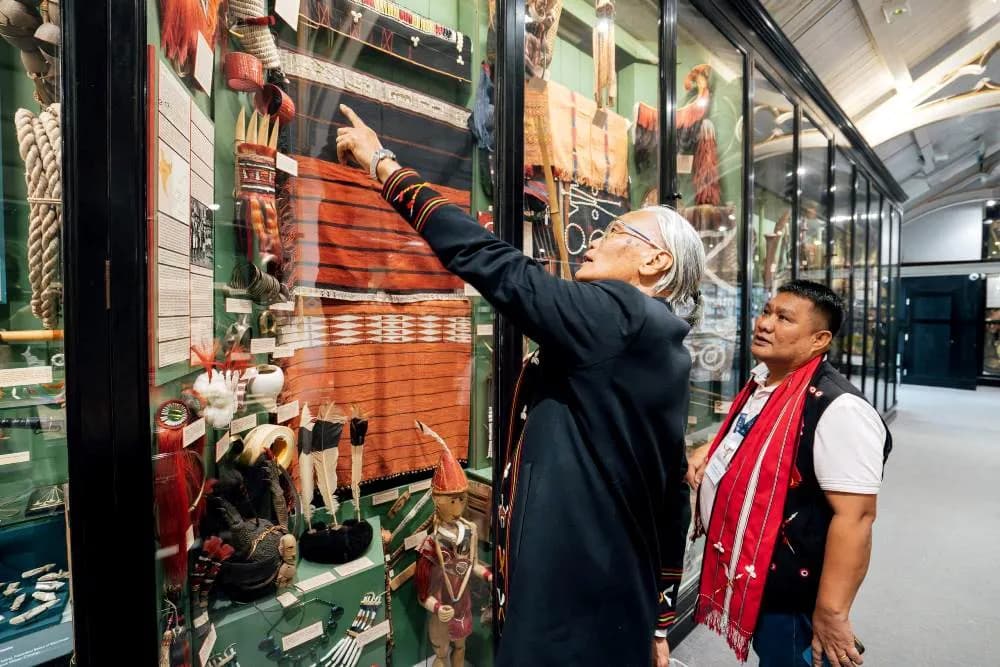
DIMAPUR — Repatriation of Naga ancestral human remains is not merely about bringing the dead home but about restoring a relationship interrupted by colonialism, speakers at the Forum for Naga Reconciliation (FNR) and Recover, Restore and Decolonise (RRaD) September Dialogue said in Dimapur on September 5.
The dialogue, themed “Returning to Wholeness through Healing”, focused on what the return of ancestral remains means for the Naga people and how repatriation can contribute to healing, reconciliation and a reclaiming of Naga history.
Dr. Visier Sanyu, a member of FNR, described the Naga repatriation journey as one marked by anger, hope, healing and reconciliation. He said the return of ancestral remains could restore a relationship that had been interrupted, although it would not automatically heal all historical wounds.
“Museums are not static institutions. They must reassess assumptions through which collections were formed,” Sanyu said, while discussing the changing approach to indigenous human remains and colonial collections.
Also read: Oxford agrees to repatriate 39 Naga ancestral remains
Repatriation of Naga ancestral remains seen as path to healing, unity
He said the problem with colonial representation was not that everything recorded by Western observers was false, but that those observers had the authority to decide which aspects of Naga life were important enough to represent.
This raised the question of who has the authority to interpret Naga history, he said, stressing that objects and human remains should not be treated in the same manner.
Sanyu said decolonisation should not be understood as rejecting everything from the West or refusing engagement with Western scholarship, museums and archives.
Rather, it required examining the unequal relationships through which knowledge had historically been produced and whose voices had been excluded.
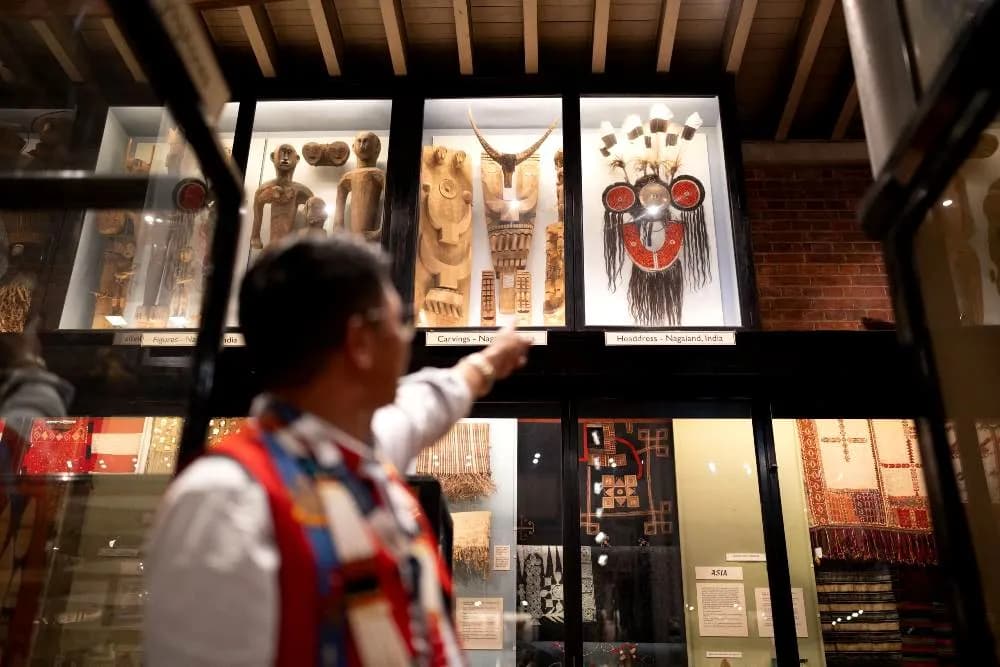
“The question is not whether the British should have studied Nagas. Scholarship itself is not the problem, but whether Nagas were given equal voice in how their people, culture and ancestors were represented,” he said.
He urged younger Nagas to take research seriously and ensure that repatriation did not become merely a political or ceremonial exercise. Young scholars, he said, should study collections, field notes, photographs, catalogues and correspondence held in institutions such as those in Oxford.
“That is how a difficult past can become a source of knowledge rather than merely a source of pain. There is no need to choose between historical truth and reconciliation. Genuine reconciliation requires historical truth,” Sanyu said.
Independent researcher Dr. Achan Mungleng, speaking on Tangkhul Naga traditions, said the return of ancestral remains was also connected to the belief that a soul's journey to Kazeiram, the Tangkhul place of the dead, must be completed.
She said Tangkhul society traditionally believed that ancestral remains must be brought home. Recalling the experience of the Tangkhul Naga Labour Corps during World War I, she noted that families even brought back the cut ponytail hair of men who died in France when their bodies could not be returned.
Mungleng said that, despite the socio-cultural preference for remains to return to their respective villages, she supported a common burial for the remains held by the Pitt Rivers Museum.
Rev. A. Peihwang Wangsa, Mission Secretary of Konyak Baptist Bumeinok Bangjüm, described repatriation as an act of restoring human dignity and addressing historical wrongs. He said ancestral remains had been taken away during the British period by anthropologists and administrators without the permission or knowledge of Naga communities.
“No family would have given away the head or body of their loved ones to be carried to an unknown land. No community would permit an enemy's head kept as a trophy to be taken away,” he said.
Wangsa recalled the visit to the Pitt Rivers Museum and the mixed emotions experienced by members of the Naga delegation upon seeing the remains. He said the museum had removed the remains from public display in 2020 following an internal ethical review.
He credited Prof. Dolly Kikon and Prof. Arkotong Longkumer with helping bring the museum's activities to wider attention and creating a pathway for repatriation. The FNR and RRaD subsequently consulted community leaders, church leaders and civil society representatives in Mon before proceeding with the process.
Wangsa said the Naga response should ultimately be one of forgiveness and reconciliation.
The speakers stressed that repatriation should therefore be understood not simply as the physical return of human remains, but as part of a wider process of historical truth, dignity, cultural recovery and reconciliation.
JOIN OUR WHATSAPP CHANNEL