


In a historic step towards cultural restoration and justice, the University of Oxford Council has officially agreed to return 39 Naga ancestral remains held at the Pitt Rivers Museum, following a six-year repatriation process
DIMAPUR — In a historic step towards cultural restoration and justice, the University of Oxford Council has officially agreed to return 39 Naga ancestral remains held at the Pitt Rivers Museum in the United Kingdom, following a six-year repatriation process.
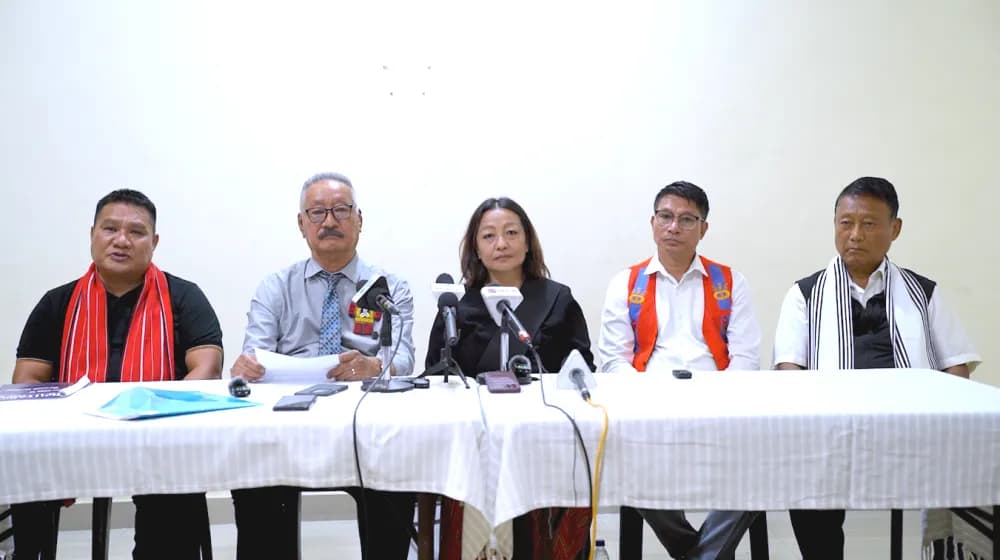
This was announced at a press briefing led by Convenor of the Forum for Naga Reconciliation (FNR) Rev. Dr. Wati Aier, on Saturday in Dimapur.
In a letter to Rev. Dr. Wati Aier, Prof. Laura Van Broekhoven, Director of the Pitt Rivers Museum, formally conveyed the decision to return 39 human remains at its on July 13, 2026, while declining the repatriation of one human remain (as it does not have a clear provenance as Naga).
“We hope we can now commence the work towards bringing the Naga ancestors to their homeland,” read the letter.
The initiative to bring back the remains of Naga ancestors began in 2020, when Prof. Van Broekhoven approached the FNR to facilitate the return, following which the forum collaborated with two prominent Naga academics—Prof. Dolly Kikon (US) and Prof. Arkotong Longkumer (UK)—to establish Recover, Restore and Decolonise (RRaD).
Also read: Naga tribal hohos meet UK parliamentarian to repatriate ancestral human remains
The RRaD, comprising all volunteer researchers, has been working with various Naga tribe Hoho leaders, civil society, church leaders, students and intergenerational communities across the Naga homeland to educate, create historical awareness and build solidarity around the return of the remains.
In June 2025, a delegation of Naga tribal Hoho leaders, elders, and members from FNR and RRaD visited the Pitt Rivers Museum to bear witness to the remains of Naga ancestors for the first time, following which the historic Naga Oxford Declaration on Repatriation was released.
“We are grateful to our ancestors for being a testament and silently proclaiming the stories of our people. We are sorry that it has taken us several decades, but we are here now to reclaim and return you to the homelands from where you were taken,” read the declaration.
“We acknowledge that this repatriation process is towards the healing and wholeness of the Naga people. As Nagas, we do so in a united voice, with mutual respect and consensus and to offer you a dignified rest, establishing a Naga monument of healing and peace for all generations, symbolising the oneness of the Nagas,” it added.
The Path Ahead
Welcoming the Oxford Council's decision, it was announced that a delegation led by Naga Tribe Hoho leaders, alongside FNR-RRaD representatives, will travel to the Pitt Rivers Museum to formally claim and bring the ancestral remains back home.
ALSO WATCH:
“The path home for the Naga ancestors has now become a reality as they journey to the Naga homeland. Repatriation, for the Nagas, is not simply about bones and ancestral remains finding their way back to the land, but importantly it is about memory returning to where it belongs. It is an essential step of a longer journey towards justice and dignity, and towards healing and wholeness,” read a joint statement of the Naga Tribe Hohos and FNR-RRaD.
When asked if places for the burial of the remains have been identified, Angami Public Organisation (APO) president Thejao Vihienuo said the matter is being pursued with the state government, expressing hope that it would allot a proper venue.
Regarding the nature of burial and rituals to be accorded to the remains, Rev. Ellen said the exact details are still being finalised as confirmation of repatriation was received only on July 13, 2026.
Responding to a question on whether the burial would follow Christian or pre-Christian traditions, given that the ancestors were likely non-converts, she said the process has involved the Church and members of the church community, and that the aim is not to engage in a theological or cultural debate.
Specific logistics, ceremonies and accompanying rituals would require further planning and deeper discussion with the community, she said, adding that RRaD remains open to public ideas and feedback.
On what will happen after the remains are brought home, she said the collective decision was to give them a dignified burial.
Preparations for the return and subsequent memorial ceremonies are expected to begin in the coming months.
The press conference was also addressed by Phom Peoples’ Council vice president NT Thamlong Phom; RRaD coordinator Rev Dr Ellen Konyak; Tangkhul Naga Long vice president Jollyson R Shimray; and APO president Thejao Vihienuo.
JOIN OUR WHATSAPP CHANNEL