


MAOT and ABAM Youth Ministry trained 46 youths in agriculture, entrepreneurship and leadership through a two-day programme at SARS, Yimsemyong.
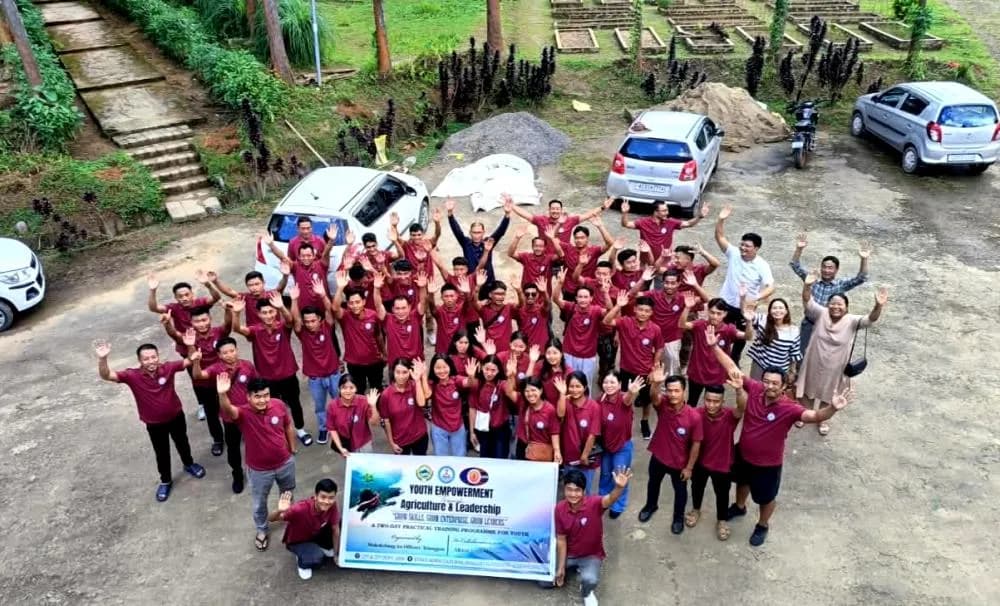
MOKOKCHUNG — The Mokokchung Ao Officers' Telungjem (MAOT), in collaboration with the ABAM Youth Ministry, organised a two-day youth empowerment training on agriculture and leadership under the theme, “Grow Skills, Grow Enterprise, Grow Leaders,” on September 22 and the 23rd at the State Agricultural Research Station (SARS), Yimsemyong, Mokokchung district.
The training brought together 46 youths from different churches and institutions affiliated with the Ao Baptist Arogo Mungdang (ABAM), with the programme aimed at equipping young people with practical agricultural skills, entrepreneurial perspectives and leadership capacity.
The sessions covered a range of agriculture and enterprise-related areas, including beekeeping, kitchen and nutrition gardens, oyster mushroom cultivation, composting and organic inputs, poultry management, tree nursery management, youth groups and collective enterprise, leadership, and basic agricultural business planning.
A total of 17 experts and resource persons from government departments and institutions, including Agriculture, Horticulture, Krishi Vigyan Kendra (KVK), Veterinary, District Rural Development Agency (DRDA) and Nagaland State Rural Livelihoods Mission (NSRLM), facilitated the sessions.
The programme combined theoretical discussions with hands-on practical demonstrations.
Also read: Rio launches fellowship programme, NEDFi study on Nagaland’s economic potential
Speaking on the purpose of the training, I Lipokonen Jamir, joint director of SARS and president of MAOT, highlighted the opportunities available to young people in the agricultural sector.
Referring to the limited availability of jobs in the state and the growing number of young people seeking employment, he encouraged participants to explore agriculture and entrepreneurship as avenues for creating opportunities rather than waiting solely for employment.
In the introductory session, Yashikala Jamir, assistant professor and general secretary of MAOT, emphasised the interconnectedness of various agri-based activities and said youth participation in agricultural enterprises could contribute to individual self-reliance as well as the wider agricultural ecosystem.
Participants also heard success stories from vegetable and poultry farmers, who shared their experiences of developing their enterprises. Their testimonies highlighted the importance of learning through trial and error, persistence and overcoming social and cultural challenges in pursuing agricultural ventures.
In his closing remarks, Chubatoshi, vice-president of MAOT, encouraged the participants to identify their individual skills and areas of interest and remain committed to them despite competing interests and influences.
The programme sought to promote agriculture as a potential pathway to self-reliance, enterprise creation and community development among young people.