


ICAR-KVK Phek conducted five-day training on integrated farming system to promote climate-smart and sustainable farming.
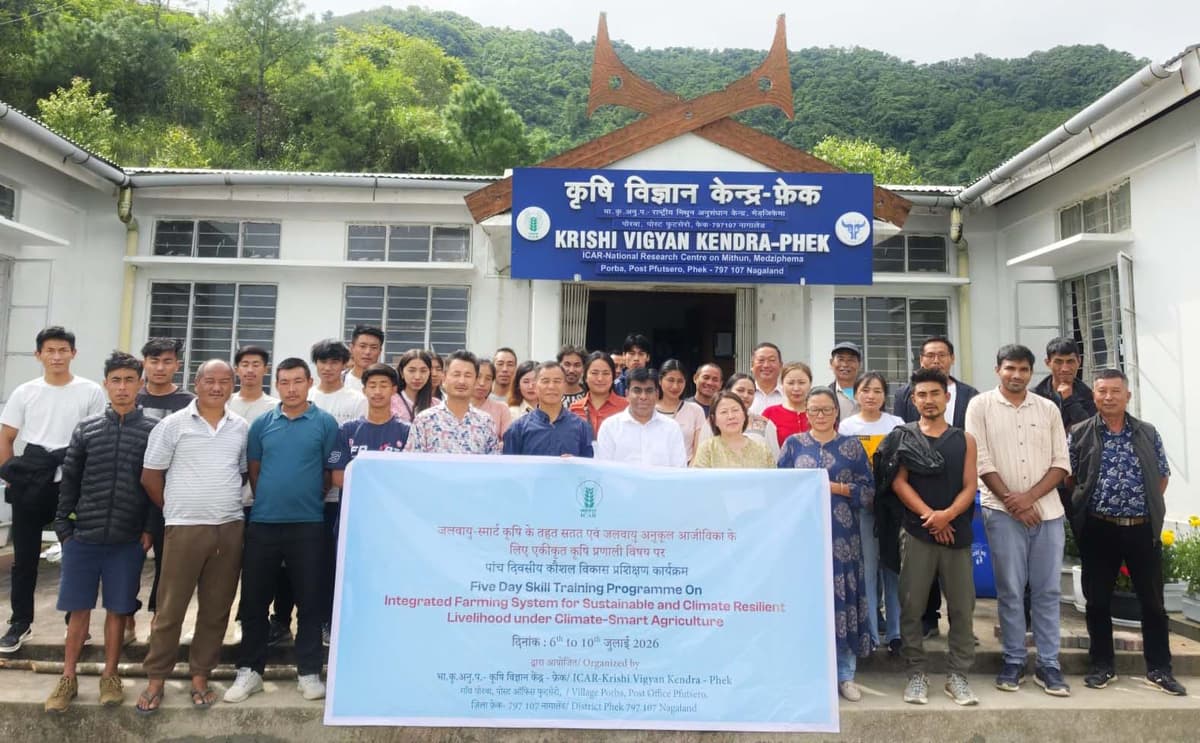
DIMAPUR — The ICAR–Krishi Vigyan Kendra (KVK), Phek, organised a five-day skill training programme on Integrated Farming System (IFS) for sustainable and climate-resilient livelihoods under Climate-Smart Agriculture from July 6 to the 10th at its campus in Phek.
According to a press release issued by KVK Phek, the programme aimed to equip farmers with practical knowledge and skills on integrated and sustainable farming practices to improve productivity, enhance farm income, and build resilience to climate change.
The programme was inaugurated by Senior Scientist and Head of ICAR–KVK, Phek, Dr. Sanjeev Kumar Singh, who highlighted the importance of integrated farming systems in achieving sustainable agricultural development through the efficient utilisation of available farm resources.
He also spoke on the potential impact of El Niño on agriculture and livestock, urging farmers to adopt climate-resilient technologies, water conservation measures, and diversified farming systems to minimise production risks.
During the five-day training, experts conducted technical sessions on crop diversification, integrated livestock management, soil health management, natural farming, water conservation, nutrient recycling, biogas production, organic pest management, and value addition.
The sessions were led by Dr. T. Esther Longkumer, Dr. Hannah K. Asangla, Manjunath KS, Dr. Valentoli, and Pooja.
Also read: Axis Bank opens Chunlikha branch in Tseminyu
The programme also featured hands-on demonstrations, interactive discussions, exposure visits, and an exhibition showcasing various components of integrated farming systems.
A special demonstration on natural farming introduced participants to the preparation and application of natural inputs and eco-friendly crop production practices.
The release stated that farmers actively participated throughout the programme, interacting with scientists and gaining practical insights into sustainable farming technologies.
Speaking during the valedictory session, participants appreciated the relevance of the training and expressed their commitment to adopting integrated farming system and natural farming practices to enhance productivity, conserve natural resources, and improve their livelihoods.
The programme concluded with a feedback session and the distribution of participation certificates.