


Kohima district administration honours NGOs, CSOs and other organisations for philanthropic activities, highlighting community service and social responsibility.
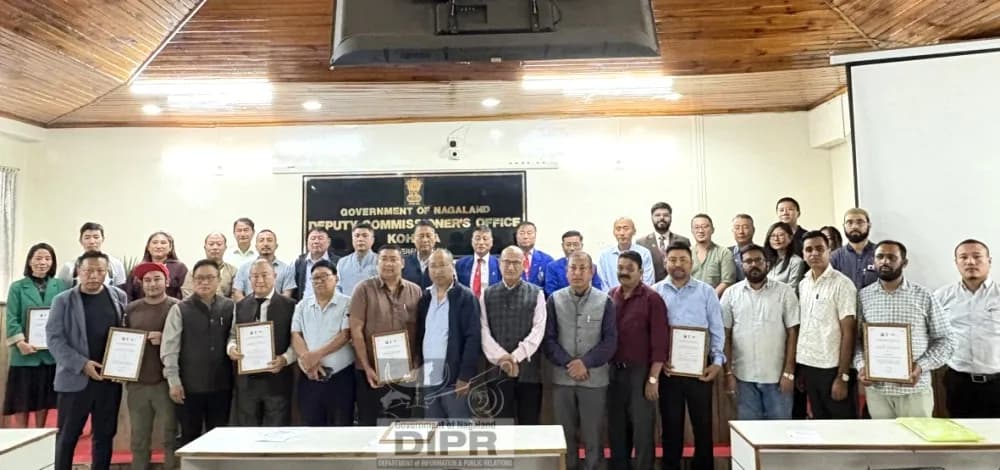
DIMAPUR — The district administration, Kohima, organised a programme on August 21 to present Certificates of Appreciation to NGOs, Civil Society Organisations (CSOs) and other organisations in recognition of their philanthropic activities undertaken as part of the 80th Independence Day celebrations in Kohima.
Delivering the keynote address, Deputy Commissioner, Kohima, B Henok Buchem, appreciated the NGOs and CSOs for their compassionate and selfless service to vulnerable and disadvantaged sections of society, a DIPR report stated.
He said Independence Day is not only a celebration of political freedom but also an occasion to reflect on the responsibilities of citizens.
Recalling the sacrifices of the freedom fighters, Buchem said their vision of an India where every citizen lives with dignity, justice and opportunity could be realised only when development reaches every section of society.
The DC said serving vulnerable sections is also a service to the nation, adding that the spirit of Seva reflected citizenship, solidarity and shared responsibility.
He acknowledged the role of NGOs, CSOs and community organisations in complementing government efforts, particularly through their grassroots knowledge and ability to reach vulnerable communities.
Also read: Modern Institute of Teacher Education hosts 14th graduation ceremony in Kohima
He encouraged the organisations to maintain close coordination with the district administration and work towards greater convergence between government schemes and community initiatives.
Buchem also called for continued focus on the elderly, persons with disabilities, vulnerable children, economically disadvantaged families and others facing social exclusion.
In his special address, Angami Public Organisation president Thejao Vihienuo said true kindness lay in giving or doing something good for someone who could not return the favour.
He appreciated the NGOs and CSOs for extending support to homes and institutions serving the less privileged, adding that even small gestures such as visits, sharing meals and distributing sweets could leave a lasting impact.
Representatives of the Kohima Chamber of Commerce & Industry, Nagaland Contractors’ and Suppliers’ Union and Classic Club shared their experiences on “Philanthropic activities, impact and experience of working with disadvantaged and vulnerable sections of society.”
They highlighted the importance of inclusion and community service, as well as extending material, financial and moral support to those in need. They emphasised that philanthropy should be measured not only by what is given but also by the impact it creates in the lives of others.
Speaking on “Role of civil societies and media in amplifying the voices of vulnerable sections and strengthening social responsibility,” Kohima Press Club representative Rita Krocha highlighted the strong sense of community among the Nagas, particularly during the COVID-19 pandemic.
She recalled how communities came together by sharing agricultural produce and extending support to families in need.
Krocha said civil society organisations, through their grassroots engagement, were well placed to understand the needs of vulnerable sections, while the media had a responsibility to highlight their experiences and struggles.
She also highlighted the role of civil society and the media in promoting active citizenship and shared responsibility.
Certificates of Appreciation were subsequently presented to NGOs, CSOs and other organisations in recognition of their philanthropic activities.
The programme was chaired by Seyiekhrietuo Solo, SDO (Civil), Kohima, who said the true meaning of success lay in giving back to society and bringing about positive change.
He said the true test of a society was reflected in how it treated its vulnerable, sick and disadvantaged members.
The programme was attended by representatives of NGOs and CSOs, district administration officials, members of the media and other stakeholders.