


Kohima District Task Force held a meeting to review plans for the upcoming Stop Diarrhoea Campaign 2026.
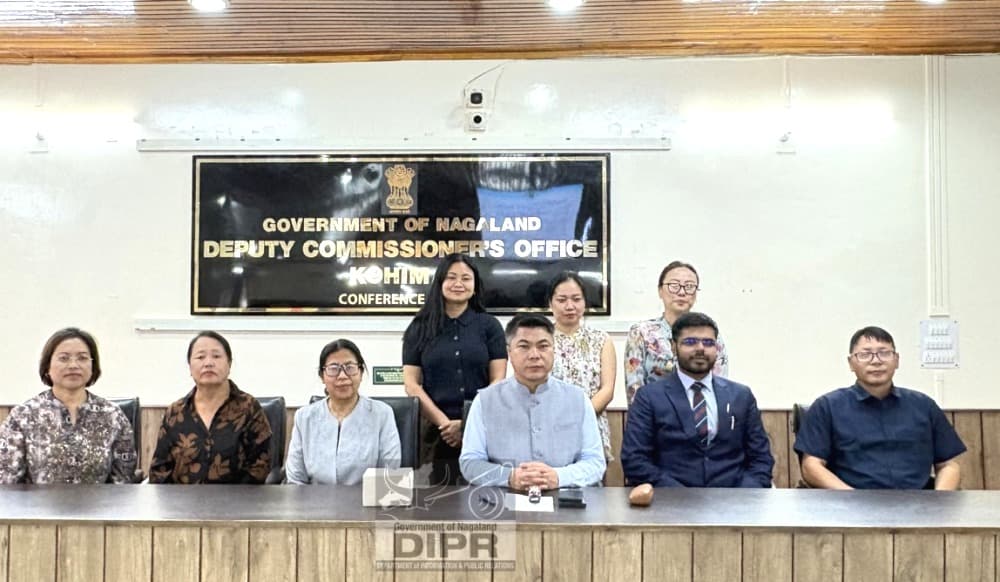
DIMAPUR — A Kohima District Task Force (DTF) meeting with allied departments on the Stop Diarrhoea Campaign 2026 and routine immunisation (RI) was held at the deputy commissioner's (DC) conference hall in Kohima on Tuesday.
The meeting was held under the chairmanship of DC Kohima B Henok Buchem, stated a DIPR report.
The DC on the occasion stressed the need to overcome stigma and misconceptions surrounding diarrhoea and healthcare practices. He observed that many people still rely on non-scientific forms of treatment, leading to avoidable health complications, particularly in far-flung areas where access to healthcare and awareness remain limited.
He stated that diarrhoeal diseases affect productivity in all sectors, including schools and workplaces, and called upon all departments to ensure that resources and manpower are effectively mobilised for the campaign. He urged all stakeholders to focus on the most important interventions to ensure the success of the campaign and improve child health outcomes in the district.
Delivering a presentation on the Stop Diarrhoea Campaign 2026 and RI, District Programme Officer (Reproductive, Maternal, Newborn, Child, Adolescent Health plus Nutrition), Dr. Khrievilhou Nakhro said that the ultimate goal of the Intensified Diarrhoea Control Fortnight (IDCF) is to attain zero child deaths due to diarrhoea through improved awareness on the use of oral rehydration salts (ORS) and zinc and the promotion of preventive and management measures for diarrhoea among children under five years of age.
Read more local news: Kohima, Mon DPDB meetings discuss key development issues
He informed that the campaign would be conducted from June 16 to July 31, covering all children below five years of age, caregivers, and households, with a special focus on hard-to-reach areas, villages without sub-centres, and vulnerable communities.
During the campaign, accredited social health activists (ASHAs) will distribute ORS packets and demonstrate the preparation and use of ORS and zinc at the community level. Interpersonal awareness activities on sanitation, hygiene, and diarrhoea management will also be carried out by community health officers and auxiliary nurse midwives (ANMs).
Handwashing demonstrations will be conducted in schools and Anganwadi centres, while ORS-zinc corners will be established in health facilities for the treatment of diarrhoeal cases.
The DPO also shared information on continued breastfeeding, the use of clean drinking water, handwashing practices, and the need to immediately contact ASHAs, ANMs, or doctors if children develop warning signs such as fever, blood in stool, inability to drink, or worsening conditions.
Sharing the district’s achievements during the Stop Diarrhoea Campaign in 2024 and 2025, Dr. Nakhro informed that 16,479 children were provided ORS and zinc in 2024, while the number increased to 20,147 in 2025. He also noted that mobile teams distributed ORS and zinc to children in remote areas during the campaign period.
From April 2025 to March 2026, Kohima district achieved 120 per cent coverage for the first dose of Measles Rubella (MR) and 118 per cent full immunisation against the Headcount 2025 target of 2,088 infants. A total of 2,497 children received the MR first dose, while 2,468 children were fully immunised. The district also achieved 105 per cent coverage for the MR second dose with 2,198 beneficiaries.
Among the blocks, Kohima Sadar recorded the highest performance with 144 per cent coverage for both the MR first dose and full immunisation, while Jakhama and Tseminyu recorded 75-80 per cent coverage in most categories. Against the Government of India Census target of 3,022 infants, the district achieved 83 per cent MR first dose coverage and 82 per cent full immunisation coverage.
On the roles and responsibilities of allied departments, Dr. Nakhro said the Social Welfare department would create awareness through Anganwadi centres and home visits along with ASHAs, while the School Education department would conduct handwashing demonstrations and promote hygiene awareness in schools.
Nagaland State Rural Livelihoods Mission – Rural Development (NSRLM – RD) will disseminate information on ORS and zinc use among self-help group (SHG) households; Public Health Engineering department / Jal Jeevan Mission will support clean drinking water initiatives and water quality testing, while Urban Development, municipal, and town councils will assist in awareness generation and community mobilisation.
He further called upon DTF members to sensitise the public about ongoing health activities, educate people on the importance of free immunisation against vaccine-preventable diseases, and encourage communities to avail of medical services.