


On International Nurses Day, healthcare workers in Nagaland's rural areas share their challenges, resilience, and dedication to serving communities.
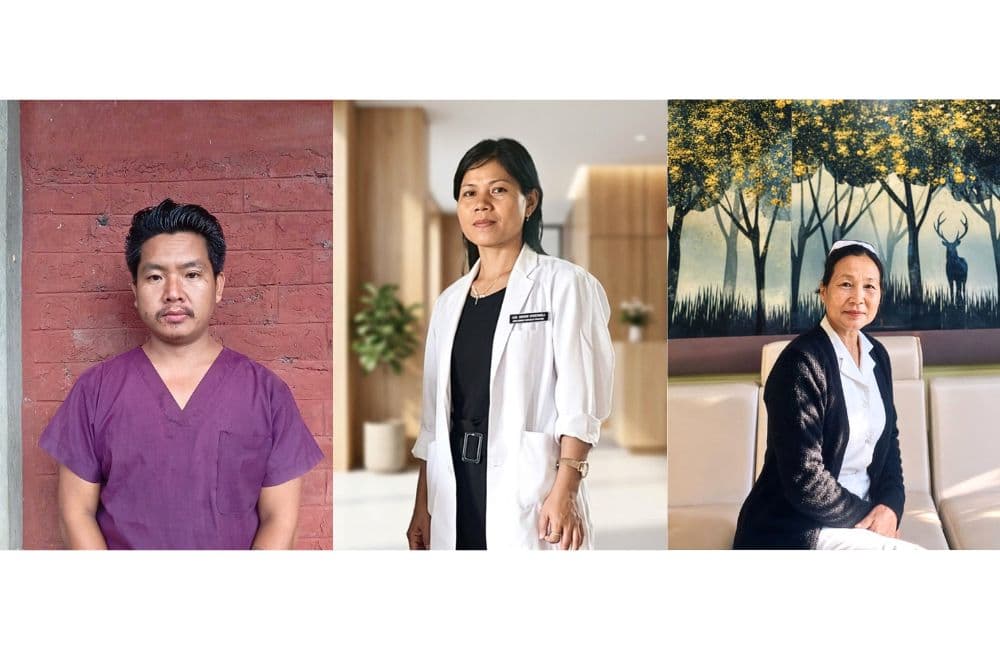
DIMAPUR — On International Nurses Day, observed on May 12, hospitals and communities honour the nurses who serve as the support system of healthcare. From hospitals to rural clinics, nurses are recognised for their compassion, flexibility, and round-the-clock commitment to saving lives and comforting patients.
The spotlight today is on the nurses posted away from the cities, working with limited access to resources and at times without doctors.
Breaking stereotypes
In a profession still widely seen as female-led, Andok H Phom, a 35-year-old male nurse posted at the Primary Health Centre in Sakshi village under the Longleng district, encountered stereotypes at the beginning of his career while delivering the same compassion, skill, and resilience.

Though he once felt awkward about the title "nurse" and wearing scrubs, which are often seen by society as female, he now wears both with pride.
Often the only man at the health centre, he is simply "nurse" to his patients, acting as their caregiver and healer.
Andok took up General Nursing and Midwifery after his aunt urged him to apply for a vacancy with no male candidates. He was uncomfortable initially when he left the state for training, but working alongside many male nurses during his training and internship eased that feeling.
The challenge returned in 2021 when he joined his workplace as the only male nurse. Over time, he became consumed by the work, and where villagers once placed more trust in female nurses, he gradually earned that same confidence.
For Andok, the greatest job satisfaction comes when patients recover under his guidance, especially in a doctor’s absence, and continue to trust him.
Yet he pointed out that nurses in rural settings also face public anger, largely due to limited supplies and doctors being unavailable during emergencies.
During shortages, staff members often spend from their own pockets to help. In such crises, he wishes the public understood their limitations.
Talking to Eastern Mirror, he stated that rural nurses must stay on their toes, working around the clock with the sense they could be called anytime, even at midnight while off duty, because they are the first line of care.
"At times, even after we reach home, we have to rush back to the centre to attend to patients and their needs," he added. He further noted that every nurse deserves respect for their ability to tend to patients, often going beyond human capacity to provide care.
Andok pointed out that every primary health centre needs at least one medical officer. As nurses, they cannot manage serious cases and must refer patients to district hospitals, which are often far from the health centres.
He urged more men to take up nursing, acknowledging that the job satisfaction it brings at the end of the day is rewarding. "There is no greater feeling than the trust a person places in you with their life," he said.
Limited resources, endless responsibilities
Arati Sangma, a Community Health Officer posted at Zaonger Health and Wellness Centre in the Pungro block of Kiphire district, has been at Zaonger village for the last two and a half years and has worked in different hospital settings as a staff nurse for over seven years.

She stated that the most rewarding part of being a nurse is seeing how much impact small interventions have.
"We become advocates, educators, and long-term partners. With limited resources, we learn to make thoughtful calls, work with the community, and focus on practical solutions. The gratitude and trust from patients mean everything," she expressed.
However, the biggest challenges she faces in a rural setting are a lack of health awareness, limited staff, a shortage of medicines, and long distances to referral centres. In emergencies, she said they stabilise patients with whatever is available. Workload, language, and literacy barriers also affect care.
According to her, they cope through adaptability, teamwork, and preventive care while staying calm, prioritising patients, and building community trust through clear communication and health education.
Sangma noted that with fewer facilities and specialists nearby, rural nurses must be highly resourceful. Lacking advanced tools, she said they rely on strong clinical observation of symptoms and vital signs. Limited supplies and medicines are used carefully, with emergency kits organised and treatment prioritised by urgency.
"For complex cases, we coordinate with distant specialists through phone calls and telemedicine. During emergencies, quick thinking and teamwork help stabilise patients before referral. We also involve families by teaching basic caregiving, hygiene, and warning signs while working closely with ASHAs and volunteers," she said.
These challenges, according to her, make them flexible, calm under pressure, and problem-solving orientated. Even with fewer resources, dedication and community support greatly improve patient outcomes.
"On difficult days, what keeps rural nurses committed is knowing patients truly depend on them. Often the first point of contact during illness, childbirth, or emergencies, our presence can comfort, protect, or save lives," she shared, acknowledging that gratitude from families, a child’s recovery, or a safe delivery makes the long hours worthwhile.
In rural postings for nurses in close-knit villages where health myths or hesitation are common, trust in villages, she asserted, is earned through time, respect, and consistency.
Nurses listen without judgement, speak the local language, and stay present for emergencies and home visits. For her, by involving leaders and letting results speak, nurses reduce resistance, and people remember how they were treated, not just the treatment.
According to her, the one change rural healthcare needs most is better local access, equipped centres, more medicines, staff, ambulances, and labs.
On call even when off duty
B Shaulau Phom, a nursing veteran who has been serving for the last 25 years and a 2022 Longleng district awardee, recalled her first posting at Pangsha Primary Health Centre in Noklak.

With another nurse, she served the health centre, which included home visits out of necessity to tend to patients. She stated that rural nurses are on call even when off duty because they are the first line of care in the absence of doctors.
Currently posted at District Hospital Longleng, the nursing veteran noted that behind every recovered patient is a nurse who stayed late, attended closely, and fought gently to meet the demands and trust. Having worked in a rural posting with no motorable roads, she shared that nurses face resource gaps and long hours but remain vital to community health and patient trust.
She pointed out that rural areas need more nurses, as the few posted cannot meet the demands of villagers, most of whom are financially insecure.
Nurses often go beyond their capacity, even financially, to tend to patients, she added. She also urged patients and attendants to understand their limitations and extend nurses the respect they deserve.
As first-line caregivers who spend the most time with patients, she called upon nurses to remain humble and selfless. She added that every family would benefit from having a nurse, as she feels it is an advantage for both the family and the community.