


National IP Yatra Nagaland 2026 launched in Dimapur to promote intellectual property awareness among MSMEs, innovators and entrepreneurs.
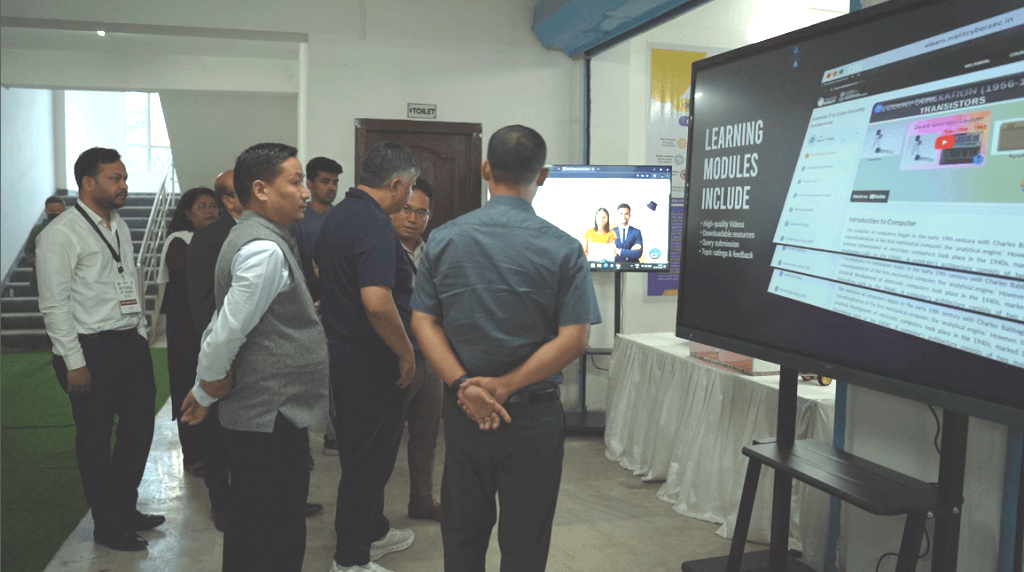
Abu Metha calls on youth to equip themselves with tech skills
DIMAPUR — Investment & Development Authority of Nagaland (IDAN), in collaboration with Ministry of MSME, Government of India, kicked off the two-day National IP Yatra Nagaland 2026 on the theme “Embracing modern technology |from traditional to industrial,” at Integrated Business Hub & Innovation Centre, Forest Colony, Dimapur, on Thursday.
Guest of honour and Chairman of IDAN, Abu Metha, who is also advisor to the chief minister of Nagaland, said that modern technology, supported by a network of satellites, has become an essential part of daily life and continues to drive progress in areas such as science, space research, medicine, and innovation.
Also read: Shimray highlights indigenous wisdom at biodiversity festival
Urging youngsters to keep pace with the rapidly changing technological world, the IDAN chairman said that in today’s age, being uneducated is not about the inability to read or write, but about the inability to use modern technology.
Metha encouraged young people to equip themselves with technological knowledge and to be like a sponge, absorbing as much knowledge as possible to prepare for future challenges.
He emphasised that knowledge is power and that the internet has made information easily accessible, making excuses such as “I don’t know” or “I was not aware” no longer valid.
He added that even small entrepreneurs, innovators, and creators must recognise that the world is now a global marketplace, where digital platforms enable them to reach audiences anywhere.
Encouraging continuous learning, Metha said that by expanding their knowledge and skills, young people can empower themselves, overcome challenges, and become valuable contributors to society.
Under Secretary of IDAN I Changsang, in his keynote address, said the IP Yatra is an important initiative to promote awareness and adoption of intellectual property rights among MSMEs, start-ups, innovators, and entrepreneurs, contributing to India’s vision of a knowledge-driven and innovation-led economy.
He noted that for a state like Nagaland, intellectual property is crucial not only for legal protection but also for safeguarding indigenous knowledge, traditional craftsmanship, agricultural biodiversity, and cultural expressions preserved by communities for generations.
He highlighted Geographical Indication (GI) as an important tool, citing examples such as Naga Mircha and the Chakhesang Shawl, which demonstrate how cultural heritage can be transformed into economic value.
He went on to state that Nagaland has strong potential in sectors such as handloom, handicrafts, agro-based products, food processing, and traditional art forms. However, much of the state’s innovation remains informal and unprotected, limiting the ability of artisans and entrepreneurs to benefit fully from their work.
He further stated that institutional support such as the Intellectual Property Facilitation Centre under IDAN and proposed technology transfer facilitation centres will assist innovators and MSMEs in IP registration, technology adoption, and commercialization, helping turn ideas into market value.
Mohamad Ali Rahman, Director of Micro, Small and Medium Enterprises Development and Facilitation Office (DFO), Dimapur, said the MSME sector contributes around 30% to India’s GDP, 36% to the country’s manufacturing output, and 45% to exports.
He stated that the MSME sector is the second-largest employer and will play a crucial role in achieving India’s vision of a developed nation by 2047.
He also said that the government is adopting a whole-of-government approach to address the challenges faced by MSMEs and to support them in improving productivity and growth.
Rahman informed that more than seven crore MSMEs are currently registered on the Udyam Portal and Udyam Assist Portal, generating employment over 13 crore people.
He further said the Ministry continues to strengthen the MSME sector through various initiatives, however, he noted that one of the major challenges remains the commercialization of intellectual property, stressing the need to support youth, startups, and MSMEs in bringing their innovations and creative ideas to the market.