


Gam Angkang Shimray says indigenous knowledge systems can help solve global challenges at biodiversity festival in Chizami.
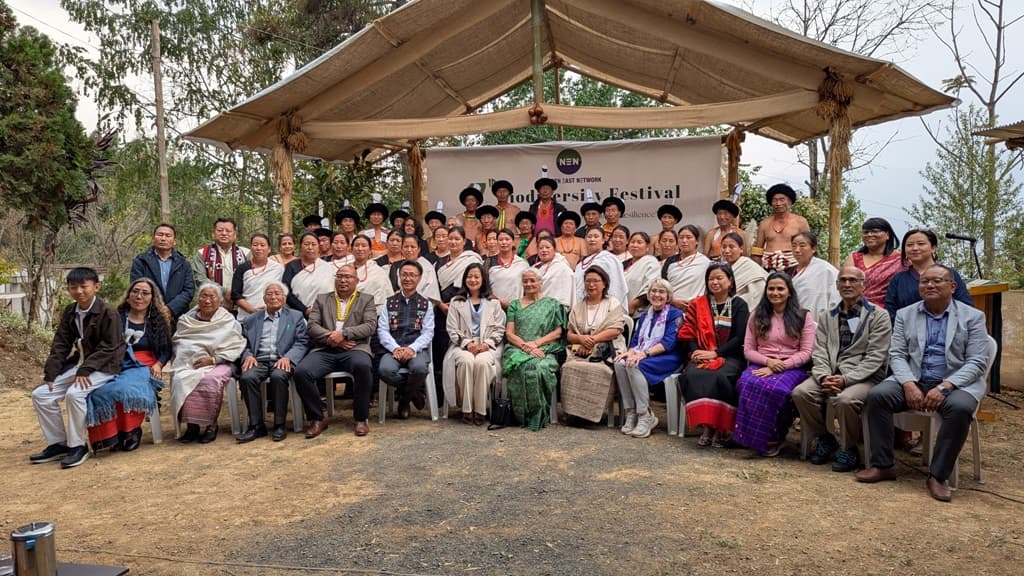
KOHIMA — Gam Angkang Shimray, former general secretary of Asia Indigenous People's Pact, on Thursday said indigenous people were always considered illiterate and primitive but are now increasingly being recognised internationally for their knowledge systems that can be part of the solution to global problems.
Shimray was speaking at the two-day 17th Biodiversity Festival of the North East Network (NEN) held on the theme "Agroecology for community resilience" at NEN Resource Centre, Chizami, Phek district, which commenced on March 11.
As the world tries to understand the indigenous knowledge system, the indigenous communities have to stepped in and advocate the knowledge and recognise that they are part of the solution. They must collectively work together to become a transformative force, he said.
Shimray stated that it is for indigenous communities to realise that in the international environmental platforms and processes, the knowledge system is beginning to break down the wall and the barrier of the notion of being primitive, illiterate, and uneducated.
Also read: Chief Minister Neiphiu Rio greets Sangtam community on Tsohsu festival
He observed that indigenous peoples and communities have a special relationship with their land territories and resource systems.
Citing instances, he said that when a village is first established, the leadership selection process is carried out in a democratic way, along with rituals to determine whether the leadership selected by the people is also accepted by the Creator.
He said one of the crucial vows that the elders make to the Creator is that they will live in harmony with the land and that the people will follow the law of the land.
Grounded in this relationship, the people always try to restore the relationship.
He also outlined the important role of women, youth, and children in preserving indigenous knowledge systems.
When it comes to village affairs and knowledge management, women have championed and taken the leadership roles. They are the custodians of the knowledge system and philosophy through weaving and ornaments. To understand what indigenous knowledge is, a lot is in the symbols of the weaving and the jewelleries, Shimray added.
Urging the youth to be good and vibrant, he noted that it starts right from home and in the fireplace. He also stressed the importance of giving importance and investing in children. Indigenous approach is that if one leaves behind responsible children, the future is secure.
He further pointed out the importance of respecting the knowledge sovereignty of each community because it is territorial.
In climate pledge, a lot is just focus on the forest and not a focus on the people. In the heart of conservation and funding and programmes and approaches, communities have to be understood as the fundamental foundation, Shimray added.
Chepeu Koza, range forest officer, Phek; Prof. Geraldine Forbes, Emerita Department of History, State University of New York at Oswego; and Dr. Monisha Behal, co-founder & chairperson, NEN, also addressed the gathering.
A 'Seed Exchange' aiming at sustainability was also held among five tribes - Angami, Chakhesang, Yimkhiung, Khiamniungan, and Pochury.
Other highlights included cultural performance by Pathso Nokeng Women Group, Kelhiwe Mekrisuh & friends, and Sumi Women Farmers, and exhibition and earth market, and voices from the community.