


ICAR trains farmer on quality seed production in Chümoukedima village
Share


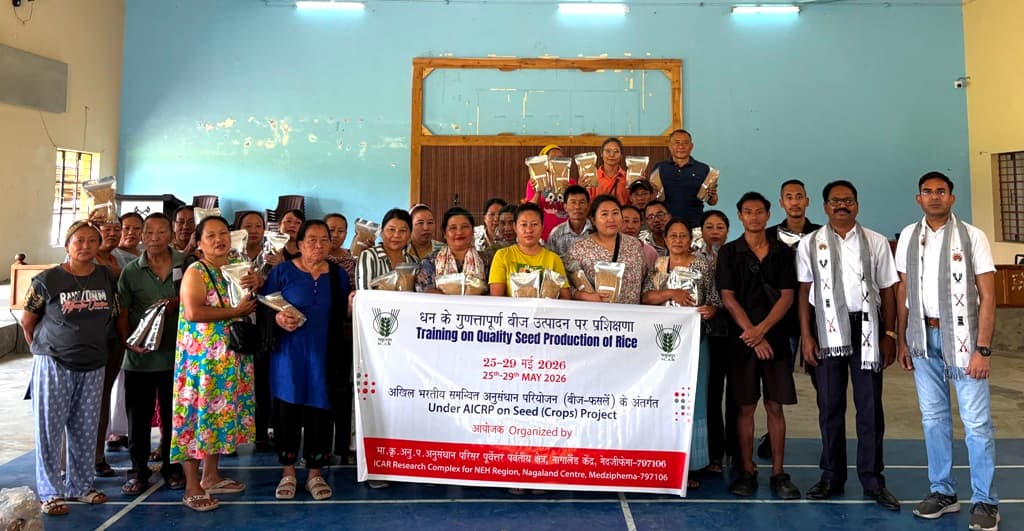
DIMAPUR — In a step towards strengthening sustainable agriculture and enhancing farmers’ income in Nagaland, the ICAR Research Complex for NEH Region, Nagaland Centre, Medziphema, organised a farmer training programme on quality seed production of rice in Chümoukedima village on Friday.
An update from ICAR stated that Dr. H Kalita, head of regional centre, ICAR Nagaland Centre, highlighted the importance of quality seed production in improving food security and farmers’ livelihood in Nagaland. Stating that quality seeds are essential for achieving higher productivity, better crop performance and sustainable agricultural development, he encouraged the farmers to adopt scientific seed production practices.
During the technical session, Dr. Harendra Verma, Scientist at ICAR Nagaland Centre, elaborated on modern rice seed production technologies and the importance of certified seeds in achieving better yield and profitability. He also informed on the newly released seven rice breeding lines developed for Nagaland conditions, which have the potential to deliver nearly double productivity compared to traditional local varieties under improved management practices.
Also read: Wokha District Hospital gets ALS Ambulance
Dr. Verma also explained that the improved lines would not only enhance food production and grain quality but also help farmers increase income and reduce cultivation risks. He further trained farmers on important aspects of quality seed production including varietal selection, isolation distance, rouging, seed treatment, nutrient management, pest and disease management, harvesting and proper storage techniques.
During the programme, Dr. Moatoshi Jamir, PBG, ICAR Nagaland Centre, interacted with the participants in local dialect, helping farmers better understand the scientific recommendations. He addressed several field-level challenges faced by the farmers and assisted them in understanding the improved practices and technologies more effectively. A total of 46 farmers actively participated in the interactive sessions.
The training concluded with a discussion, reflecting the growing interest of farmers in adopting improved rice seed production technologies for higher productivity and sustainable livelihoods. It added that rice seeds of improved varieties were also distributed to the participating farmers to encourage scientific cultivation practices and wider adoption of quality seed production technologies in the region.