


Nand Kishore Yadav released two books documenting Naga indigenous knowledge and textile traditions at NEZCC in Chümoukedima.
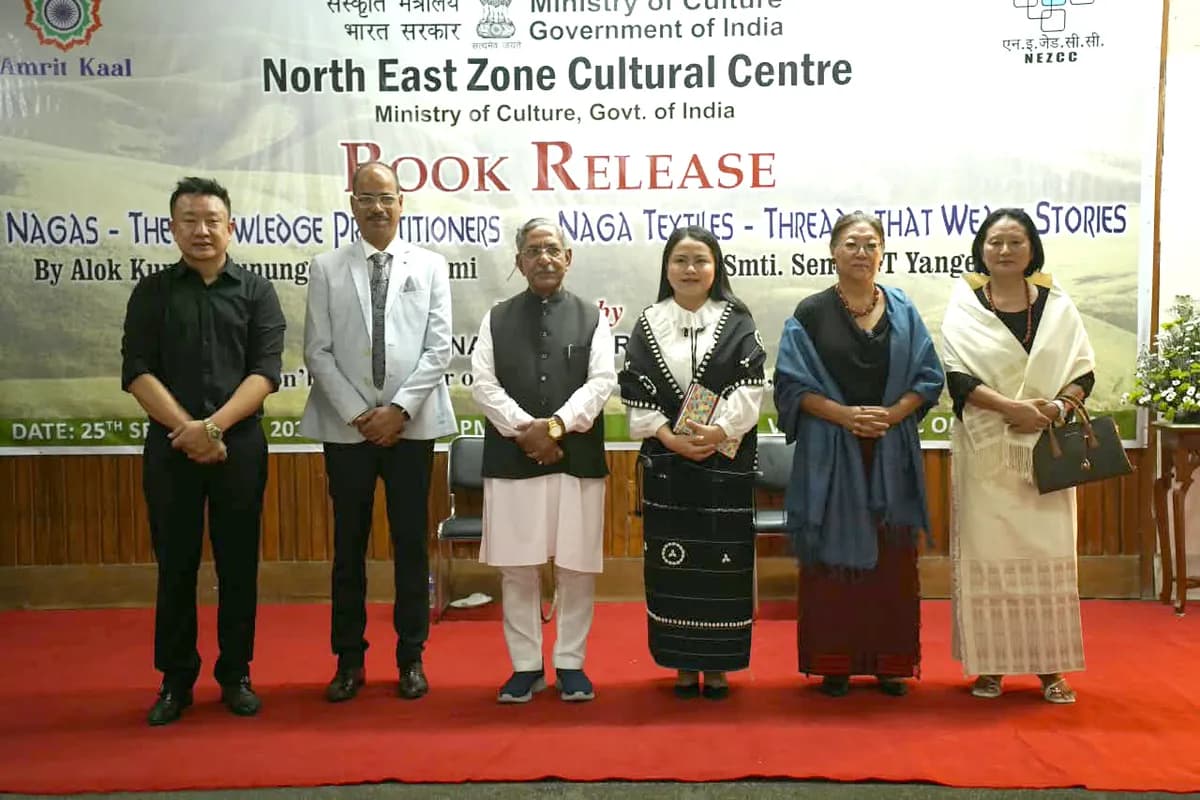
Nand Kishore Yadav calls for wider access to works documenting indigenous knowledge and textiles
DIMAPUR — Nagaland Governor Nand Kishore Yadav on Friday released two books highlighting Naga indigenous knowledge and textile traditions at the North East Zone Cultural Centre (NEZCC) office Atrium in Chümoukedima.
The books—Nagas: The Knowledge Practitioners, authored by Dr. Alok Kumar Kanungo and Dr. Alino Sumi, and Naga Textiles: Threads That Weave Stories, authored by Padma Shri Sentila T Yanger—document traditional knowledge, practices and cultural narratives of Naga communities.
Speaking at the event, Yadav said the two books, though dealing with different subjects, convey a common message: culture is not merely a legacy from the past but a body of knowledge created, practised and transmitted across generations.
He said indigenous communities should no longer be viewed merely as subjects of anthropology and history, but recognised as producers and practitioners of knowledge.
Indigenous knowledge, he added, is not simply folklore, but knowledge developed through observation, experience and adaptation.
The Governor noted that farmers possess knowledge of soil, seasons and biodiversity, while artisans understand materials and techniques and elders preserve knowledge of rituals, traditions and symbols.
Preserving Naga heritage, therefore, should involve safeguarding not only cultural objects but also the knowledge associated with them.
He particularly highlighted Naga textiles, saying a shawl is more than a piece of cloth as it carries identity, memory, social meaning and artistic expression. Its colours, motifs and weaving techniques represent generations of accumulated knowledge.
Yadav stressed the importance of documenting such knowledge before it disappears, while respecting the identity, ownership and intellectual rights of the communities from which it originates.
He also said embracing modernity should not mean abandoning cultural memory, especially as young people increasingly grow up alongside smartphones, artificial intelligence and digital platforms. Instead, he called for a meaningful dialogue between modern education and indigenous knowledge.
The Governor expressed hope that the books would reach schools, colleges, researchers and, most importantly, the communities whose traditions and knowledge they document, rather than remain confined to libraries and academic institutions.
Speaking on Nagas: The Knowledge Practitioners, co-author Dr. Alino Sumi expressed gratitude to Kanungo, as well as elders, knowledge practitioners and community members who shared their knowledge and contributed to the work.
She said the book began with a question about the knowledge systems, technologies and practices that existed within Naga communities beyond the stereotypes through which Nagas have often been studied.
The book documents traditions including Chakhesang trapping methods, Pochury salt-making, Lotha and Sumi fishing practices, as well as knowledge relating to megaliths, burial customs and material culture.
Sumi said much of this knowledge survives in pockets of Nagaland but is at risk of disappearing as elders pass away and younger generations move away from traditional settings.
She described the book as a beginning and called for continued documentation of indigenous knowledge before it is lost.
Yanger said her field research for Naga Textiles: Threads That Weave Stories began in 2022. Visits to different districts, she said, were marked by the cooperation of communities, village councils, elders, knowledge keepers and weavers.
The experience reinforced the urgency of documenting textile narratives before they disappear with the older generation, she said.
The book presents textile traditions from 15 Naga communities, portraying textiles as living archives of identity, memory and cultural knowledge.
Yanger said the publication looks beyond the visual beauty of woven textiles to the stories, practices and traditions carried through generations.
Dr. Alok Kumar Kanungo also spoke at the programme and highlighted the significance of the book and its documentation of Naga indigenous knowledge.