


Ghatashi Town Baptist Church cultivates seven acres in Zunheboto to fund construction, while officials encourage farming and coffee cultivation
DIMAPUR — A church in Zunheboto district is looking to its fields, rather than outside donors, to help pay for its new building.
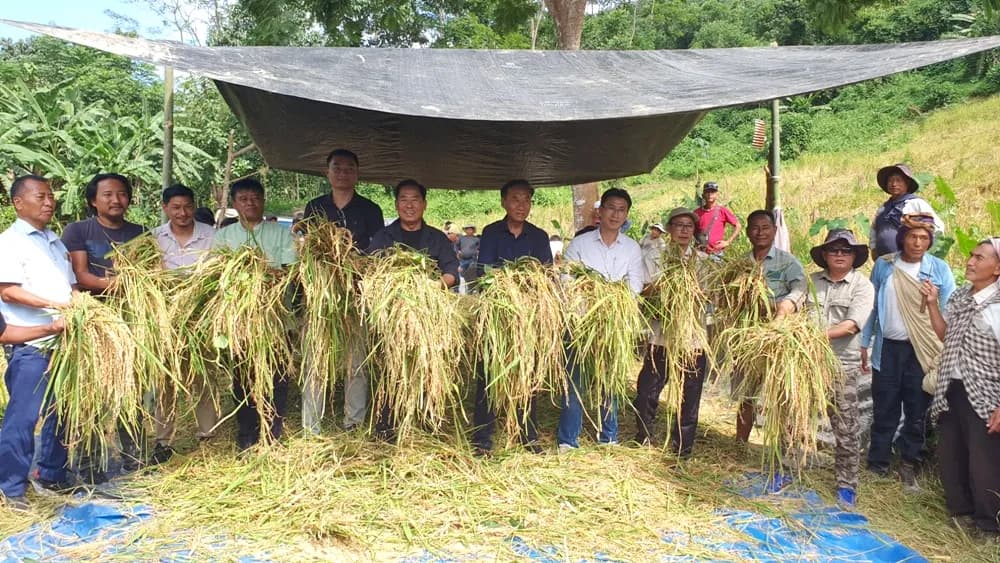
According to an update received here, Ghatashi Town Baptist Church (GTBC) has taken up jhum cultivation on around seven acres of private land, growing paddy, sticky rice, job's tears and vegetables to raise money for the construction project.
The harvest at the cultivation site in Doyang River Valley under Ghatashi in Pughoboto subdivision yielded around 300 tins of paddy on Saturday, former minister Y Vikheho Swu said. The proceeds from the sale of the produce will go directly to the building fund, he added.
Swu, convener of the GTBC building construction committee and president of the Naga People's Front Central Farmers' Wing, said the initiative would help the church rely less on donations and contributions from outside.
The harvest also provided an occasion for officials to make a wider pitch for farming as a livelihood, particularly for young people who leave rural areas in search of jobs.
Also read: A market of their own: PwDs step into the spotlight in Dimapur
Zunheboto District Rural Development Project Director N Kupto Achumi, who addressed the gathering as the “harvest programme father”, urged people to return to rural areas and take up agriculture. He said fertile land and modern farming methods could help young people build self-reliant livelihoods instead of depending on government employment.
Achumi welcomed the church's initiative as an example others could follow and assured the area of possible support from the Rural Development Department.
I Acato Chishi, district project officer of the Land Resources Department in Zunheboto, pointed to Arabica coffee as another crop with potential in Pughoboto subdivision.
Coffee plants generally begin flowering in their third year, with harvesting possible from the fourth year and commercial production from around the sixth, he said. With proper care, plantations can remain productive for decades.
Chishi encouraged farmers to start with manageable plots and focus on quality, including specialty coffee, rather than expanding cultivation indiscriminately. Intercropping coffee with black pepper could offer an additional source of income, while the crop's ability to grow under shade could help conserve forests, he said.
The department provides free coffee saplings and technical support and facilitates links with the Coffee Board of India for assistance to eligible growers.
A mechanised coffee-washing station has also been established in the Ghatashi cluster under a North Eastern Council-supported initiative.
Chishi called for a gradual shift from jhum cultivation to permanent farming systems, including coffee plantations.
For GTBC, the immediate aim is more modest and concrete: to turn the produce from its fields into money for its church building.