


NEC reviews Nagaland’s coffee project at Tuophema, urging better processing, infrastructure, mechanisation and market links to boost farm incomes
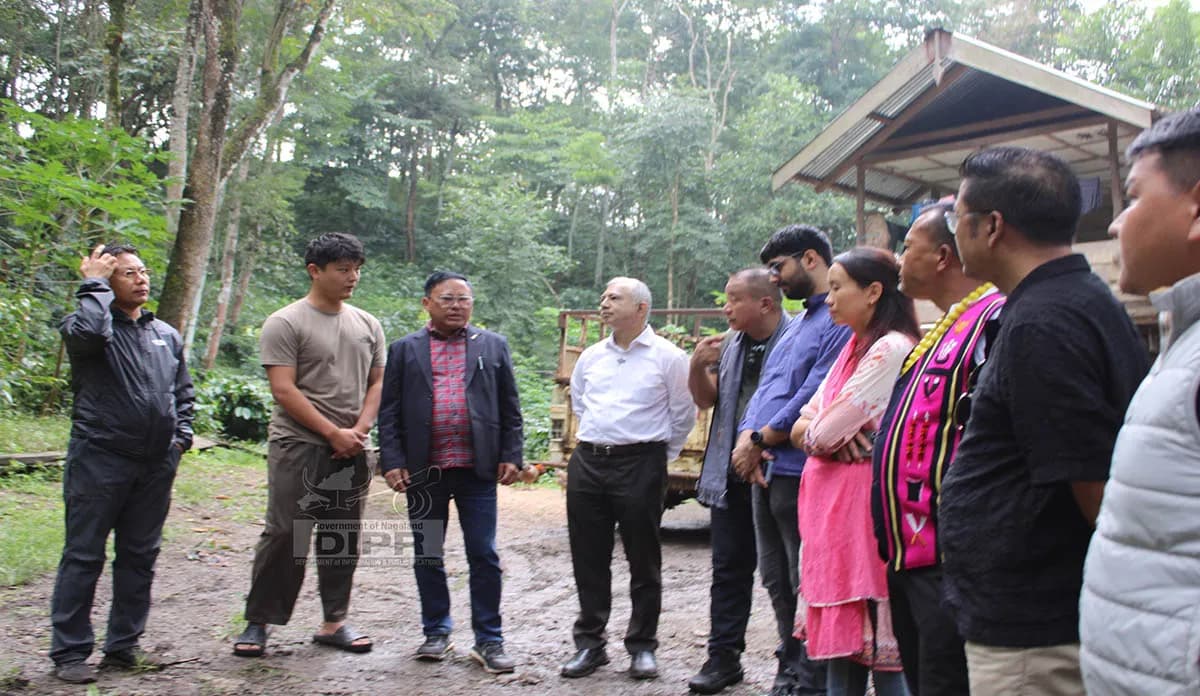
DIMAPUR — Coffee in Nagaland needs to move beyond plantations and into a full-fledged economic ecosystem, North Eastern Council (NEC) Secretary Satinder Kumar Bhalla said during a visit to Tuophema village on Friday.
According to a DIPR update, Bhalla inspected coffee plantations and the Hi-Tech Coffee Washing Station and interacted with growers and members of Tuophema Cluster as part of a review of the Coffee USP Project.
He said the project should be viewed not simply as a plantation programme but as an integrated livelihood and economic development initiative capable of generating greater value from the region’s natural and human resources.
For coffee to become commercially viable and competitive, Bhalla said, planting alone would not be enough. Better road connectivity, modern processing machinery, post-harvest infrastructure, quality assurance, value addition and stronger market and export linkages would all be required.
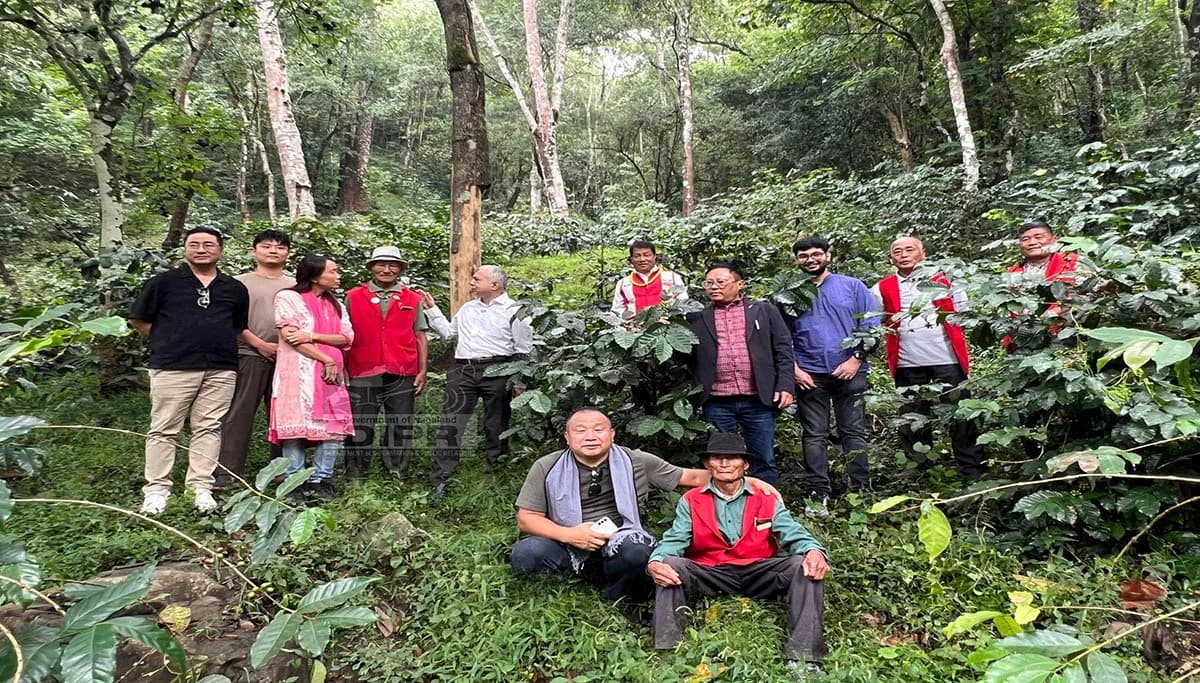
He said the larger objective was to raise the incomes of farmers and communities and create sustainable livelihoods that could translate into better access to education, healthcare and other amenities.
Bhalla called for coordinated efforts by the Centre, Nagaland government, Coffee Board, local administration, farmers, technical institutions and the private sector to build the sector.
He also asked the state government and Coffee Board to work with central agricultural institutions to identify suitable intercrops and complementary activities that could be undertaken in coffee plantations.
The NEC secretary assured growers that possibilities for water harvesting, mechanisation, new technologies and appropriate equipment would be examined to address field-level challenges. He also encouraged the local administration to engage industrial houses, investors and exporters who could support mechanisation and automation through suitable financial and institutional arrangements.
Bhalla highlighted the contribution of young growers, citing Vibei Kense, described as the youngest coffee grower in the cluster, who had travelled to Vietnam and obtained specialised certification in coffee.
Principal Secretary and Development Commissioner Y Kikheto Sema said coffee cultivation in Nagaland dated back to 1981 but had not reached its full economic potential because of limited awareness, inadequate market linkages and other constraints.
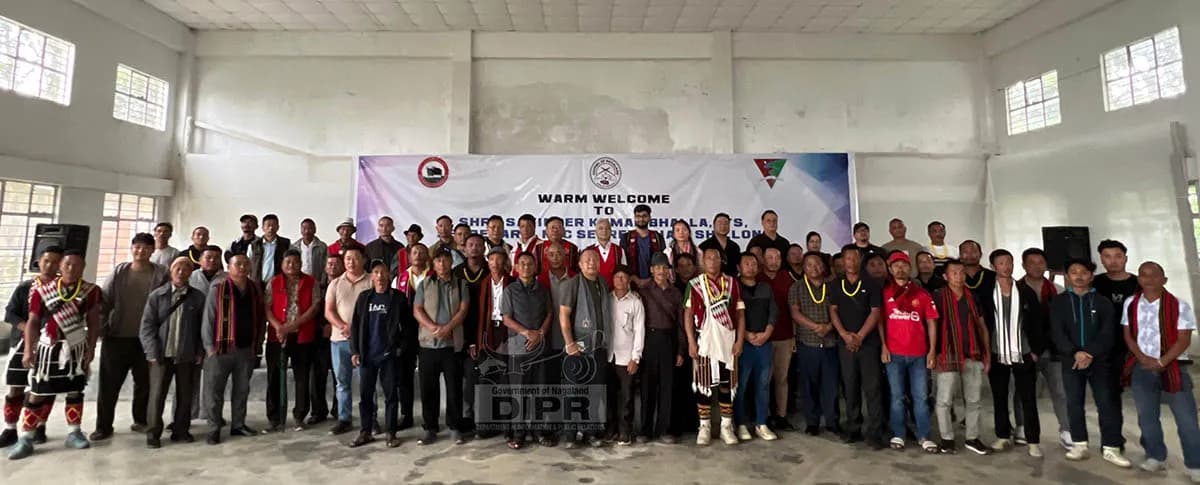
He encouraged growers to adopt an integrated approach, including black pepper and other suitable crops alongside coffee wherever technically feasible, saying diversification and value addition could strengthen farm incomes and generate employment for local youth.
Tuophema Village Council chairman Pfuduolhou Kense said growers were grateful for the government’s support but faced acute labour shortages and high costs during weeding and harvesting.
He sought assistance with brush cutters and harvesting equipment, as well as water-harvesting structures, storage tanks and irrigation facilities.
Water availability, he said, was particularly important during dry periods and for post-harvest processing.