


The Frontier Nagaland Territorial Authority Bill, 2026 was introduced in the Assembly, with Chief Minister Neiphiu Rio eyeing an April rollout following the MoA.
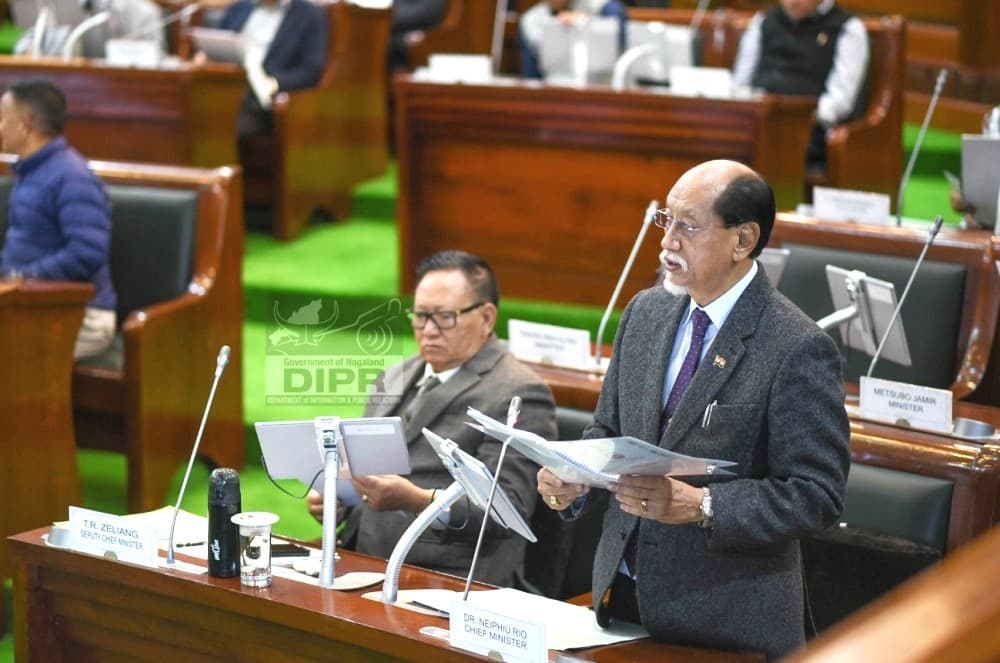
KOHIMA — The Frontier Nagaland Territorial Authority (FNTA) Bill, 2026 was introduced in the Nagaland Legislative Assembly on Thursday, with Deputy Chief Minister Y Patton tabling the legislation.
Chief Minister Neiphiu Rio, in his budget speech, earmarked INR 100.57 crore as “Grants to FNTA,” clarifying that the allocation comes after excluding the common pool.
The development comes in the backdrop of the signing of a Memorandum of Agreement (MoA) on February 5 in New Delhi between the government of India, the state government and the Eastern Nagaland People’s Organisation (ENPO).
Addressing the media, Rio said that the proposed legislation incorporates provisions of the MoA.
WATCH MORE:
He, however, informed that while the state had written to the Union home secretary seeking consultation as mandated under the agreement, no response was received from the Centre.
Rio clarified that the bill was broadly in line with the MoA and that some issues had been communicated to the Centre as per the agreement, but there had been no reply.
Also read: Nagaland, Centre and ENPO sign MoA for Frontier Nagaland Territorial Authority
He added that the bill was introduced following legal advice from the Law and Justice department and the Advocate General of Nagaland.
The chief minister also said the state government had assured ENPO that the bill would be introduced and passed during the current Assembly session. It is scheduled to be taken up for discussion on Friday.
Referring to his interaction with the Union home secretary, Rio said that the Centre is keen on early progress, adding that Union Home Minister Amit Shah is expected to inaugurate the FNTA, likely by April.
Finance Commissioner Kesonyü Yhome said that the INR 100.57 crore allocation would translate to slightly over 30% after accounting for the common pool.
He explained that, as per the MoA, grants from the state government are designed to be proportionate to the area and population of the FNTA region.