


From children to seniors, Dimapur faces shortage of parks as rapid urban growth and land scarcity limit green spaces
Yapangnaro
DIMAPUR — Finding a quiet patch of green has become increasingly difficult: from children looking for a place to play to elderly residents seeking space to sit and talk, the absence of parks is being felt across Dimapur.
The issue reflects a growing gap between the city’s rapid expansion and the availability of accessible public green spaces, with officials, health professionals and community members pointing to land scarcity as the primary barrier.
Speaking at the District Hospital, Medical Director Dr. Disiliu told Eastern Mirror that Dimapur, as Nagaland’s commercial hub and fastest-growing urban centre, lacks proportional green infrastructure despite increasing population density, traffic congestion and rapid construction.
Also read: Employees’ State Insurance medical services extended to 9 more districts in Nagaland
“WHO recommends at least 9 sq. m of green space per person. Urban planning guidance suggests a minimum of 8 to 12 well-distributed public parks for a city of this scale. That means at least one accessible green space within a 1 to 1.5 km radius of every residential colony. Priority zones should include Midland, Signal Basti, Naharbari, and the high-density colony belts where open land is still available,” she said.
According to her, parks support public well-being by providing safe spaces for daily activities such as walking, jogging and exercise, helping reduce obesity, high blood pressure, anxiety and heart-related conditions.
She added that being around trees and greenery lowers stress, depression and respiratory problems, while also creating opportunities for social interaction across age groups, reducing loneliness and strengthening community bonds.
Dr. Disiliu also highlighted the importance of green spaces within hospital environments, noting that such spaces help doctors and medical staff decompress, and reduce burnout.
For patients, she said surrounding greenery improves oxygen quality, promotes calmer breathing, reduces anxiety and supports faster recovery. Improved air circulation also reduces indoor pollutants, benefiting respiratory health and overall well-being.
‘No vacant land’ in core areas
Petevilie Khatsu, Additional Director of Urban Development, said that the department has been planning to set up parks in Dimapur over the past four to five years, but progress has not been possible due to the unavailability of land.
According to Kholie Kapfo, President of GB Union Dimapur (Sadar), there is “no vacant land” available in the heart of the city, where colonies have expanded and concrete structures have replaced open grounds.
Residents from different age groups across Dimapur highlighted the absence of accessible recreational spaces and shared how the lack of such spaces affects their daily lives.
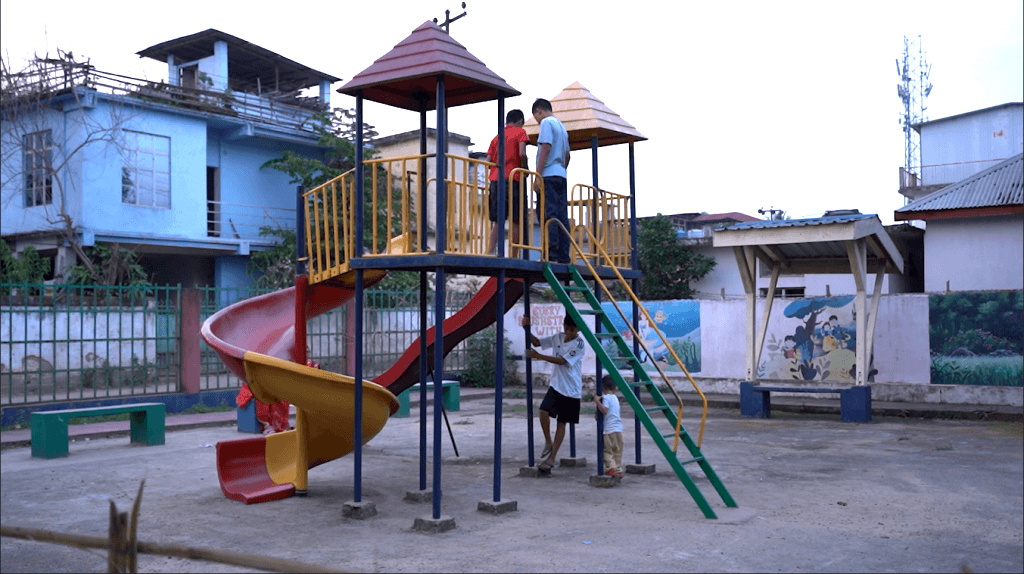
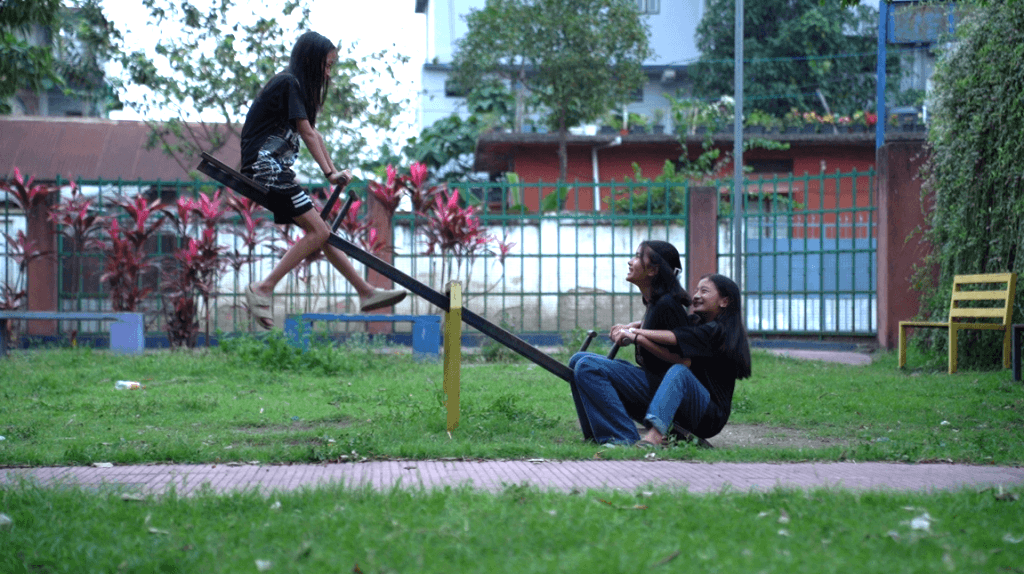
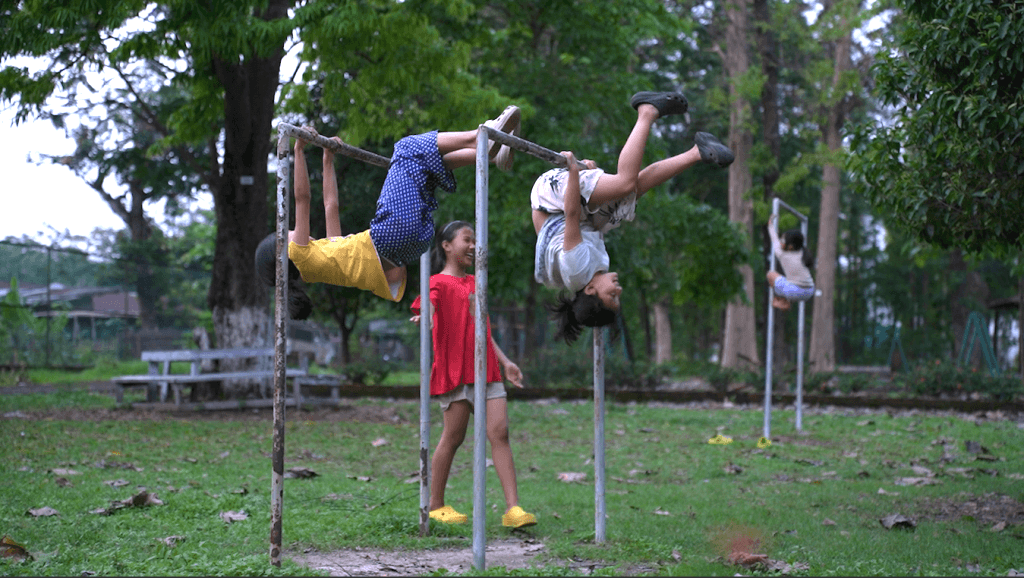
Sentijungla and Toka, aged about six and 12, said that they want “a place to run, not just roads”, with safe play equipment close to home so they do not have to cross busy colony roads, while teenagers Seno, Pensa and Kevi said they need “a spot to hang out after tuition” within their own colonies.
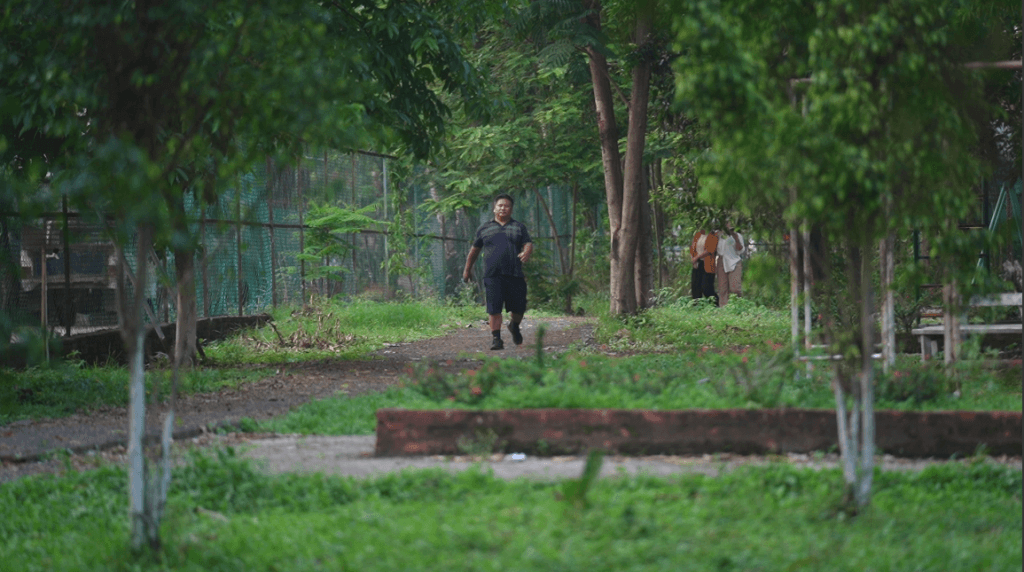
Daniel (24) pointed to the need for walking tracks and proper lighting to make neighbourhoods safer, especially after dark.
Akoubu (40) said parks could help reduce screen time and create opportunities for social interaction within communities.
Senior citizens Lipok, Visakhonuo, Mendi and Wallong, all aged above 60, shared the importance of nearby open spaces where they can sit, talk and remain physically active.
Government initiatives, limited reach
An official from the Dimapur Urban Development office said that a number of parks have been developed over the years under various government schemes.
Under the Smart City Mission, 12 parks were developed in Kohima under the Nurturing Neighbourhood Challenge programme. In Dimapur, parks have been taken up under AMRUT and AMRUT 2.0, including those at PWD colony, Landmark colony, IHSDP complex and Government College Dimapur, with a new park at Netaji colony currently under development.
At present, parks do not generate revenue and are meant for public use, though user charges may be considered in future for sustainability, the official said. They also cited vandalism and littering as key operational challenges.
Supply Colony Park as a model
Amid these constraints, Supply Colony Park is an example of how green spaces can be sustained within a built-up neighbourhood.
Chubazungla Longkumer, finance secretary of United Women Welfare Organisation (UWWO), said that the park was established in 1979 on land provided by a PWD engineer and has since been maintained by the organisation, which comprises 122 women.
Over the years, the park has evolved into a community space that is used for birthdays, election campaigns and festive programmes, while schools and churches also hold picnics and gatherings there. Mornings and evenings see a steady presence of residents, particularly senior citizens, who come for fresh air and conversation.
A playschool located within the premises also contributes to its upkeep, with children participating in cleaning activities. Although the Urban Development department undertook renovation at one stage, users pointed to ongoing gaps such as the absence of washrooms and a dried-up water source.
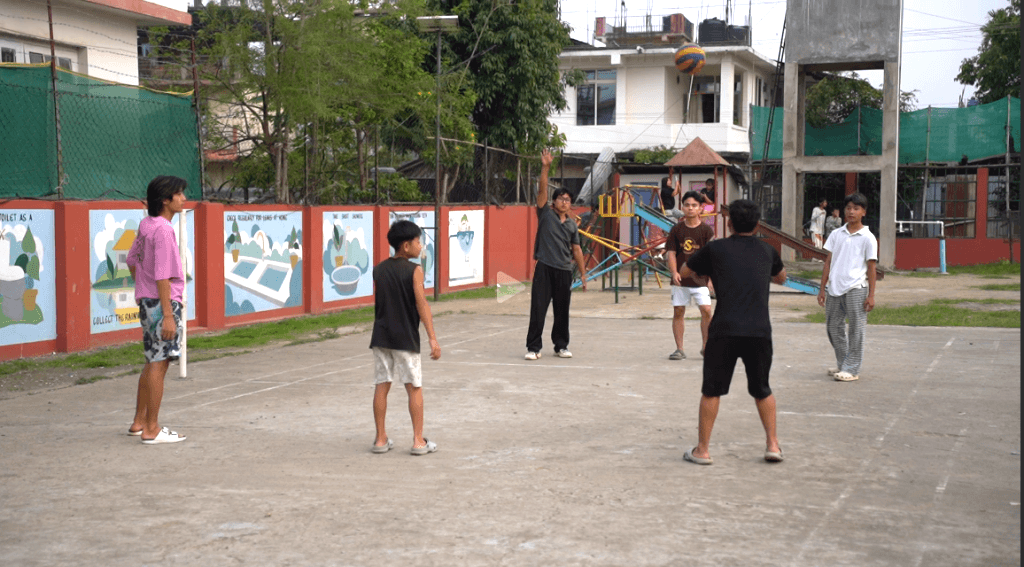
Even with these limitations, the park continues to function through consistent community involvement, suggesting that small, locally managed spaces can still meet multiple needs where larger interventions are difficult.
In a city where finding open ground is becoming increasingly difficult, spaces like this remain one of the few places where people can step away from the built environment — even if only for a while.
(The writer is a graduate in Mass Communication and Journalism from St. Joseph’s College, Darjeeling, and is currently an intern at Eastern Mirror.)