


A two-day training on adolescent sexual and reproductive health in emergencies was held by FPAI Nagaland in Kohima for youth participants.
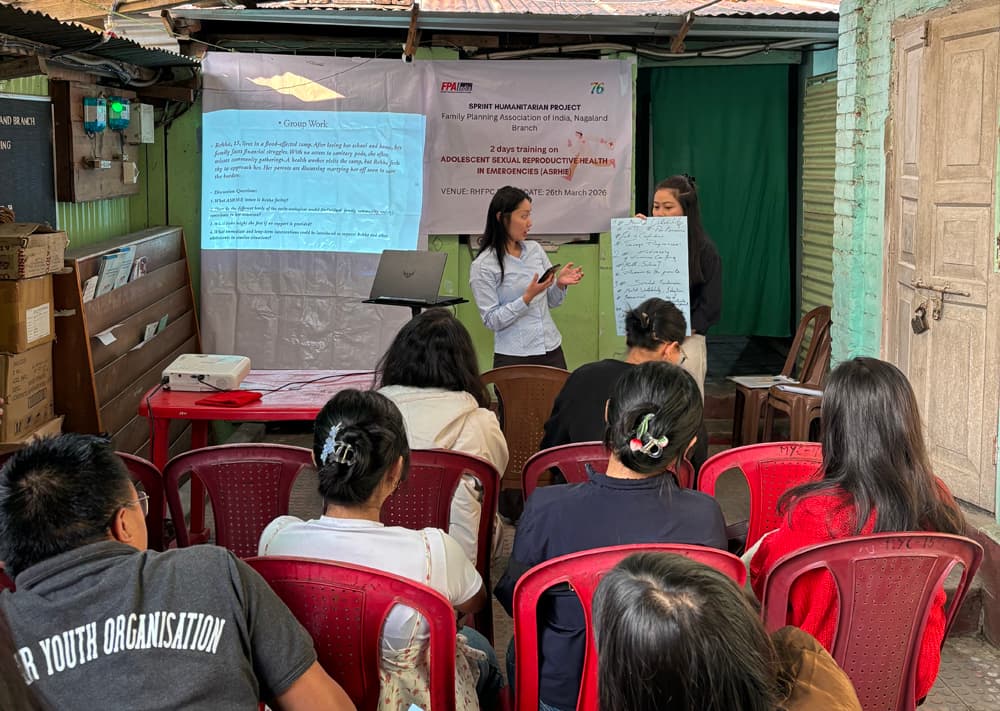
DIMAPUR — A two-day training on Adolescent Sexual and Reproductive Health in Emergency (ASRHiE) was conducted in Kohima at the Reproductive Health and Family Planning Clinic (RHFPC), Family Planning Association of India (FPAI), on March 26 and 27.
The programme engaged youth participants and aimed to build their understanding of adolescent health needs in emergency settings, according to an update.
The training was facilitated by the FPAI team, led by the programme officer and supported by a youth volunteer, who guided participants through key concepts in an interactive manner.
The sessions covered important topics, including adolescent sexual and reproductive health (ASRH), the impact of emergencies on young people, and the Minimum Initial Service Package (MISP 6+1).
Participants engaged in discussions, case studies, and scenario-based learning, helping them connect the concepts to real-life situations. Key issues such as limited access to services, menstrual hygiene challenges, and vulnerability during emergencies were also highlighted.
Also read: Nagaland Finance department undertakes INR 22 crore construction works
Department of Planning and Transformation bids farewell to Temsunaro Aier
The training concluded with participants gaining practical insights and a better understanding of how to respond to adolescent health needs during emergencies.
Separately, the FPAI Nagaland branch conducted Adolescent Education Programme (AEP) sessions at Vinyüzo Higher Secondary School, Dainty Buds, Mewi Higher Secondary School, and Modern Higher Secondary School during the month.
The AEP is an age-appropriate and culturally relevant approach that equips young people with accurate knowledge, life skills, and values related to growing up, relationships, gender, and health.
It aims to empower adolescents to make informed decisions, develop respectful relationships, and build confidence to navigate challenges during adolescence.
The sessions were conducted by the staff of FPAI, with youth volunteers supporting and assisting during the programmes.
This initiative is part of FPAI’s outreach efforts aimed at empowering young people with essential knowledge and skills for their overall development and well-being.