


Salhoutuonuo Kruse says Nagaland can become a premium horticulture hub with support for organic farming and hill agriculture.
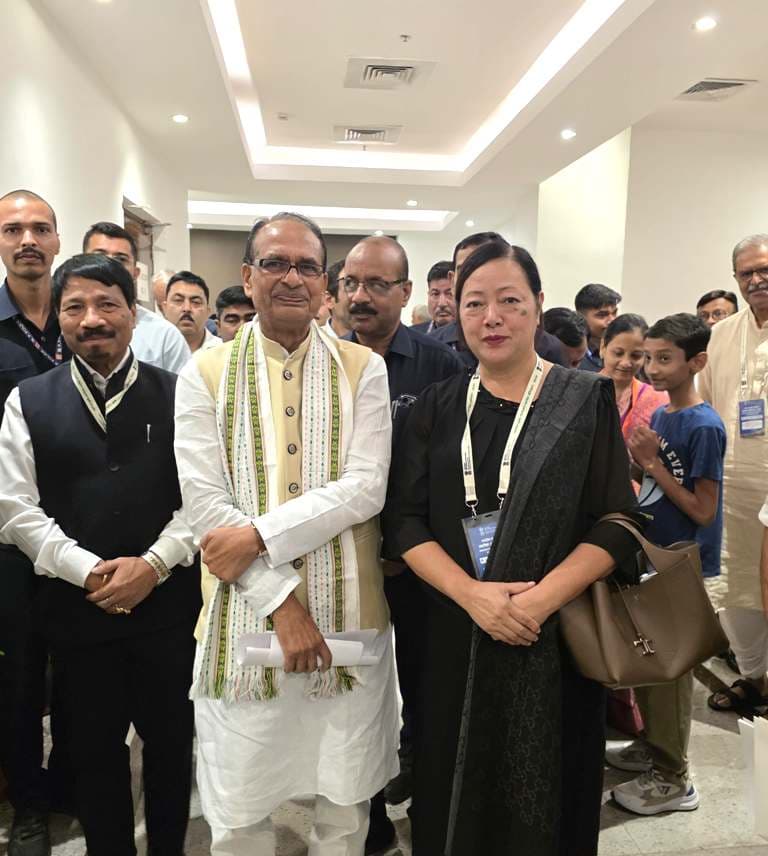
KOHIMA — Nagaland’s Minister for Horticulture and Women Resource Development (WRD), Salhoutuonuo Kruse, on Friday called for focused, flexible and sustained support for hill agriculture while highlighting Nagaland’s strengths in horticulture and organic farming.
The minister was addressing the National Conference on Agriculture for Kharif Campaign 2026 held at the C Subramaniam Auditorium, NASC Complex, Pusa, New Delhi.
Kruse extended her appreciation to the Ministry of Agriculture & Farmers’ Welfare for organising the conference and for its continued support towards the development of agriculture and horticulture in the country.
She also placed on record her appreciation to Shivraj Singh Chouhan, Union Minister for Agriculture & Farmers’ Welfare, for his sustained efforts in strengthening the agriculture sector through various schemes and interventions.
Also read: Lotha Youth Hoho intensifies anti-drug drive in Wokha
According to her, support extended under Mission for Integrated Development of Horticulture (MIDH), PMKSY, RKVY, MOVCD-NER and other initiatives has significantly contributed towards improving rural livelihoods, creating infrastructure and promoting sustainable agricultural and horticultural development in Nagaland.
Kruse said horticulture has contributed immensely to agricultural transformation in Nagaland. In the last five years, over 4.2 lakh hectares have come under horticulture crops covering fruits, vegetables, plantation crops, spices, medicinal and aromatic plants, flowers and post-harvest technologies.
She said Nagaland, being a hilly and mountainous state, considers horticulture not as a peripheral activity but as a central pillar of rural livelihoods and economic transformation, with about 70% of its population dependent on agriculture and allied sectors.
Highlighting the state's strengths, Kruse said Nagaland already has the right ingredients, including biodiversity, traditional chemical-free practices, GI-tagged crops and national recognition.
She cited products such as the GI-tagged Naga Mircha, large cardamom, kiwifruit, pineapple, mandarin orange, Kholar (Rajma), millet, black and brown rice, agarwood and wild rambutan.
“With the right support, Nagaland can position itself as a premium horticulture hub for niche and export-oriented products,” she said.
The minister also highlighted Nagaland's internationally recognised alder-based farming system, particularly among communities practising jhum cultivation.
She said the system integrates alder trees with agricultural crops in a sustainable agroforestry model, improving soil fertility naturally, reducing dependence on chemical fertilisers, preventing soil erosion and improving moisture retention and soil structure.
Stating that “Nagaland doesn’t need to go organic—it already is,” Kruse said the state is known for a wide range of organic and naturally grown products through traditional farming methods and government-backed farming initiatives.
Speaking on the challenges faced by farmers, she said unpredictable rainfall, soil erosion and landslides are becoming recurring challenges and called for targeted investment in hill-specific climate-resilient technologies backed by real-time localised advisory systems.
She said jhum cultivation is not just a farming practice but part of the identity of the people, and stressed that the transition to more sustainable systems must be gradual, incentivised and community-driven.
Kruse further pointed out that infrastructure deficit remains the biggest bottleneck despite increased production, with farmers continuing to face high post-harvest losses, lack of cold chain facilities, weak aggregation and limited market access.
She called for focused investments in storage, processing, branding and market linkages, especially for Nagaland's unique products.
She said the North East stands at the threshold of leading an “Evergreen Revolution” that is sustainable, inclusive and rooted in its strengths, adding that Nagaland is ready to take that lead.
“The next step is to go commercial without losing the organic ethos,” she said.
The minister maintained that strategic investments in the North East and states like Nagaland would help reduce regional imbalance, unlock export potential and create resilient rural economies.
Furthermore, Kruse expressed confidence that with a strong Centre-State partnership, Nagaland can emerge as a model for horticulture and agriculture-led growth in India.