


TVBCLN inaugurated the 6th edition of the Chengu Festival and Green Hero Award to promote biodiversity in Sukhai village.
Share


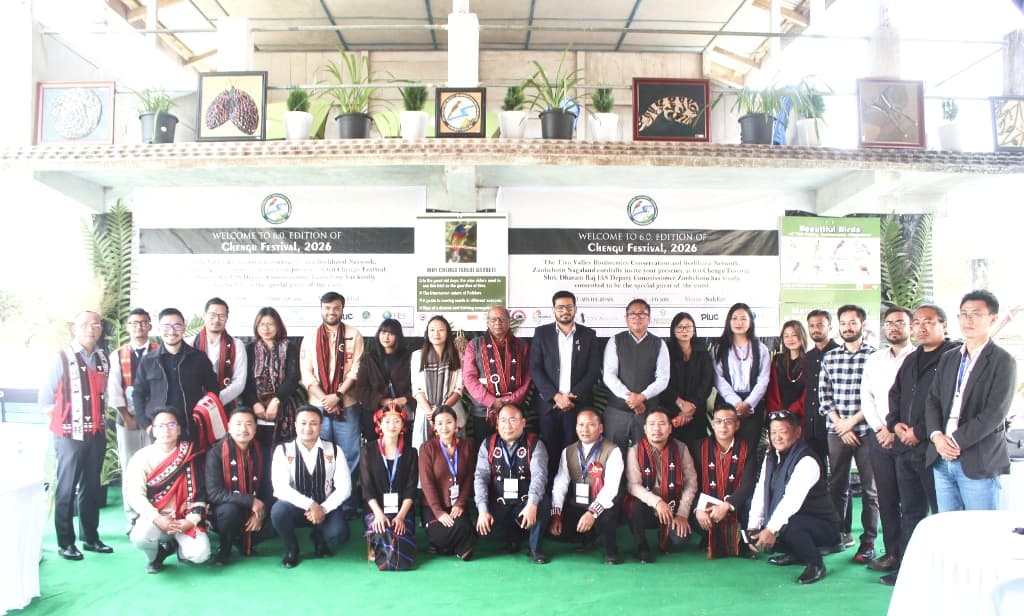
DIMAPUR — The Tizu Valley Biodiversity Conservation and Livelihood Network (TVBCLN) inaugurated the 6th edition of the Chengu Festival-cum-Green Hero Award on the theme 'Biodiversity our heritage' at Sukhai village in Zunheboto on March 20.
According to a press release, the event was co-powered by the Nagaland Tourism department along with partners including VNV Advisory, TERI, Mountains to Mangroves, Aboriginal Energy, Pluc TV, Ground Up, and FES, and had Dharam Raj, Deputy Commissioner of Zunheboto, as the special guest.
In his keynote address, Raj stressed that biodiversity conservation is an age-old practice woven into the lifestyle of forefathers. He welcomed TERI's support for community-led climate action, noting how rapid climate change threatens food security and agriculture.
Also read: Eye screening camp organised in Dimapur to mark World Glaucoma Week
"United Nations programmes encourage biodiversity conservation for sustainable growth and to preserve our natural legacy," he said.
Raj highlighted opportunities like carbon storage initiatives, with companies eyeing investments in Nagaland's green resources to offset carbon footprints. "This is a great chance for Zunheboto district, as other villages explore similar setups," he added.
He congratulated the Green Hero Award recipients as champions of nature preservation and expressed delight at participating in the festival.
Toka E Tuccumi, Joint Director of Tourism, Nagaland, described the Chengu Festival as the intellectual property of the Sukhai, Ghukhuyi, and Kivikhu villages. "Its success hinges on collective responsibility from these three communities," he stated.
Citing Nagaland's 407 registered conservation areas, Tuccumi urged stakeholders to commit to conservation and tourism. He pointed to other Naga festivals, like the Orange, Garlic, and Potato festivals, as examples of competitive cultural promotions.
The Tourism department supports Chengu, now in the Nagaland Tourism Calendar, with a long-term vision for local benefits. Drawing parallels to the Hornbill Festival, which began in 2000 and has become a state powerhouse generating tourism income, Tuccumi stressed homestays as essential.
"Tourists crave authentic Naga culture, storytelling, and lifestyles; we're ready to provide training for guides, homestays, and more across the three villages," he added.
Aniruddh Soni, a fellow at TERI, reflected on TERI's collaboration with the Tizü Valley Network since 2014. "The community's passion shines through, making this theme a grand success. I've seen the festival progress across editions," he said.
Soni noted early documentation of jhum cultivation, community-maintained registers, and positive international research findings that attract investments. He announced advancements in the Red Plus Project (launched 2022), with approved documents from the Plan Vivo Foundation rewarding years of conservation.
Upcoming collaborations with the Sumi Literature Board, funded by the Japanese Fund for Global Environment, will document traditional ecological knowledge on biodiversity, birds, crops, and land management. "This will benefit not just Nagaland and Zunheboto but South Asia," Soni concluded, highlighting landscape-wide livelihood measures.
Ivan Zhimomi, CEO of TVBCLN, highlighted its business-orientated approach to boost the local economy, support sustainable livelihoods, and promote biodiversity conservation. Noting TVBCLN's strong partnerships with international organisations, he urged the broader Sumi community to participate in the coming event.
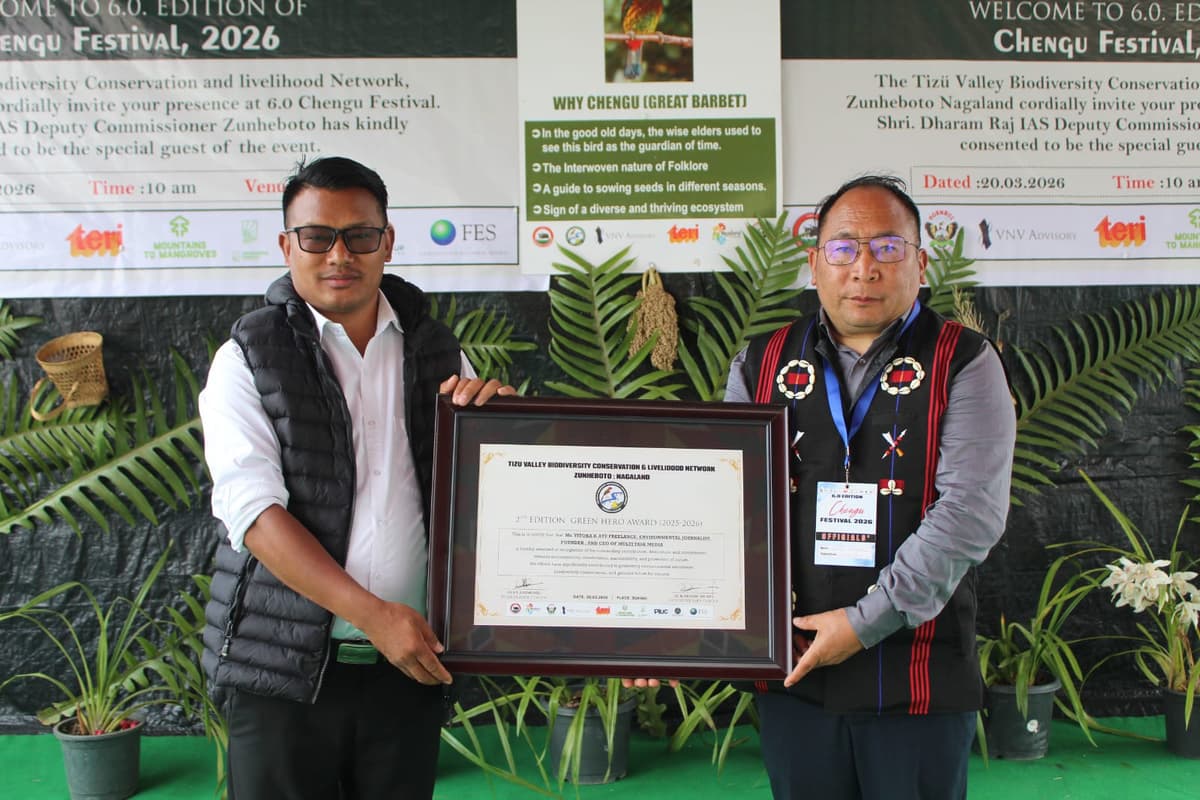
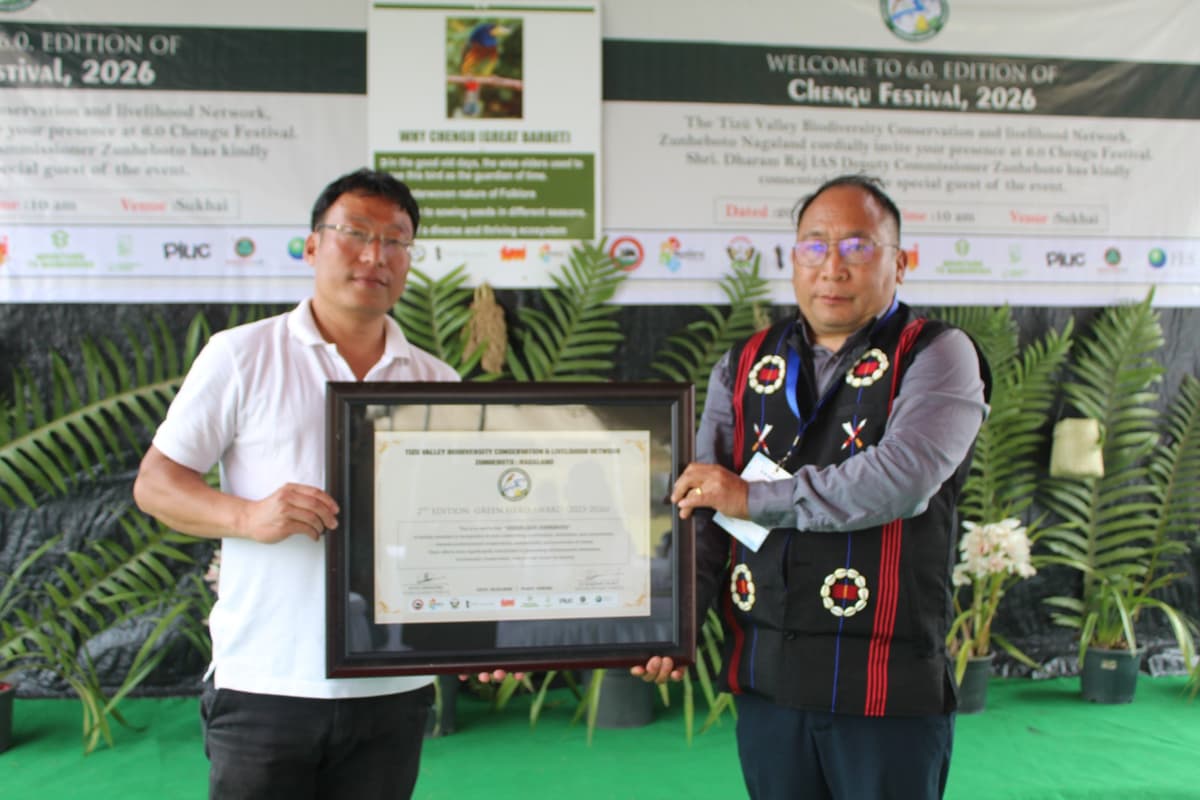
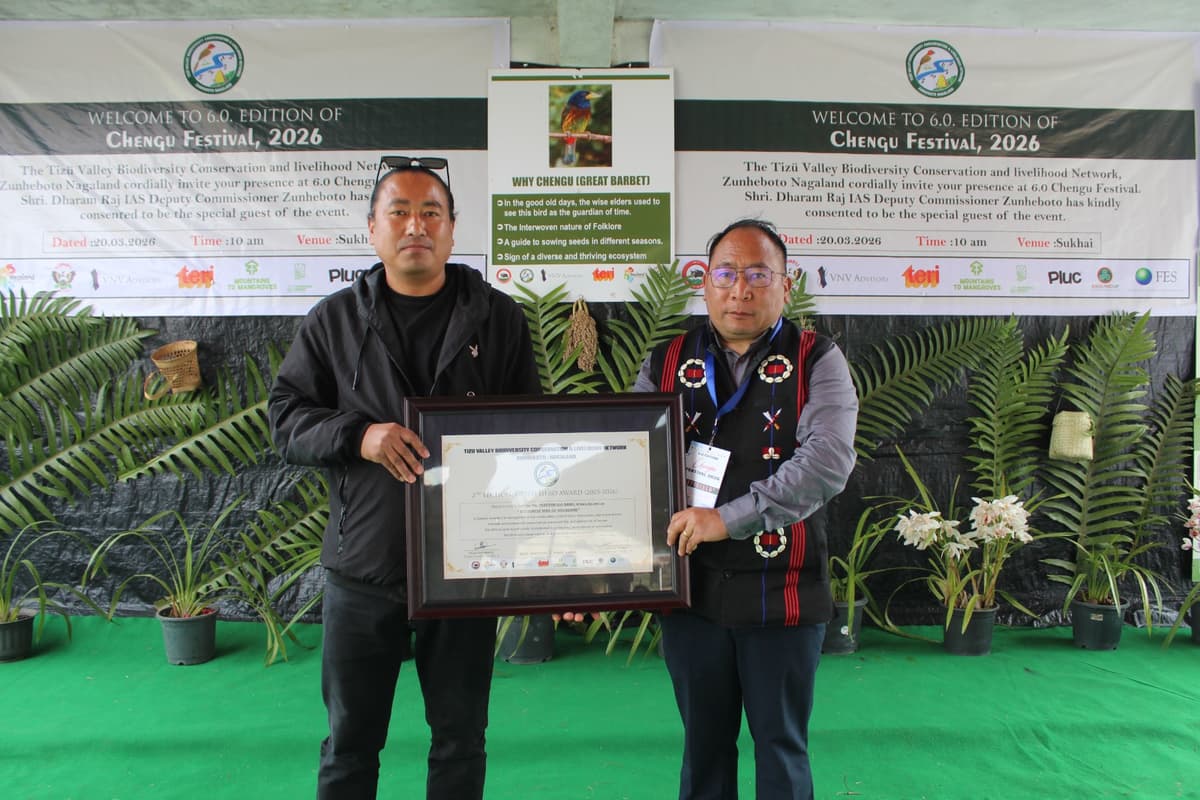
Meanwhile, the 2nd edition of the Green Hero Award (2025-2026) recognised six individuals and organisations for their dedication to environmental conservation, sustainability, and nature protection.
The awardees included Green Club Zunheboto for pioneering community-led initiatives in environmental stewardship; Tshetsholo Naro, widely known as the "Butterfly Man of Nagaland", for work in butterfly conservation and biodiversity advocacy; and Vitoka K Aye, freelance environmental journalist, founder and CEO of Multi Task Media, for amplifying environmental stories through journalism.
Also awarded were The Silver Vision for innovative projects fostering sustainable development; Ruichinilo Kemp, co-founder and CEO of Kenono Foundation, for leadership in community-based conservation efforts; and Rokongulie Meyase, Wild Left tour operator, for promoting eco-tourism and nature preservation.