


A three-day mandatory training programme for Census 2027 field trainers commenced in Kohima for four districts.
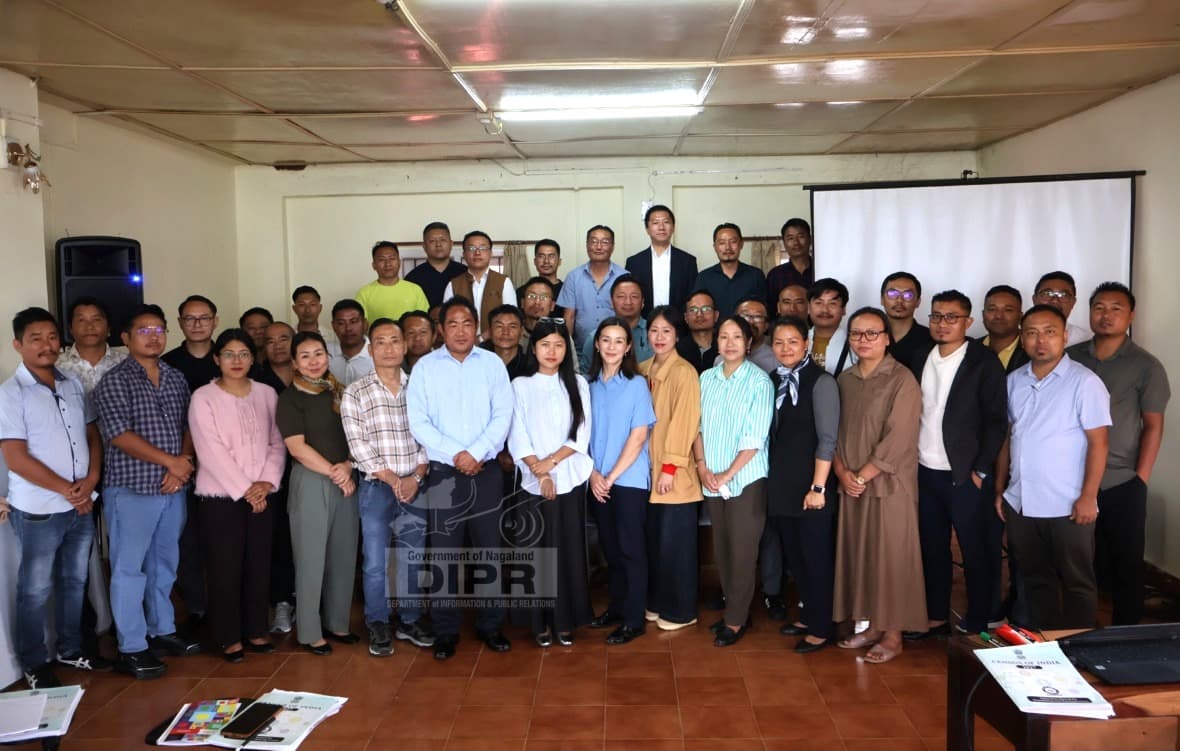
DIMAPUR — A three-day mandatory training programme for Field Trainers under the Census of India 2027 commenced at the Commissioner’s Circuit House in Kohima on Wednesday.
According to a DIPR report, the training brings together 36 participants from Kohima, Tseminyu, Wokha, and Zunheboto districts.
Addressing the inaugural programme, Sub-Divisional Officer (Civil) Sadar, Seyiekhrietuo Solo, said that the Census exercise goes beyond mere head counting and has a far-reaching impact on the developmental landscape of the state.
Referring to the 2001 and 2011 Censuses, he noted that gaps and discrepancies in data had affected developmental indicators and planning at various levels. He therefore stressed the importance of conducting the upcoming Census with accuracy and sincerity to ensure better planning and development for the coming years.
Solo said the role of field trainers is as important as any other in the Census process since they would be responsible for training enumerators and field workers. He urged the participants to make full use of the three-day training by actively engaging with the resource persons, raising queries, and participating in interactive sessions.
Also read: Nagabazar Sub-Centre upgraded health building inaugurated in Kohima
Stating that the months ahead would be crucial, he encouraged the trainees to continue exchanging ideas and supporting one another even after the training period. He expressed confidence that the participants would carry out the responsibility with dedication and later look back with pride at their contribution.
In his opening remarks, Additional District Census Officer of Kohima and Training Coordinator, Dr. Riku Khutso, informed that the programme marked the first phase of training for Field Trainers, who would subsequently train enumerators and supervisors in their respective districts. He said the Census exercise would commence in July while self-enumeration would begin prior to that.
Dr. Khutso stated that the Census would be conducted through a full-scale digital operation and acknowledged the positive response received in identifying officers for various responsibilities. He urged the participants to cooperate fully with the master trainers, pay close attention during the sessions, and return to their districts prepared to effectively train and guide field functionaries.
Speaking at the programme, Additional District Census Officer from the Directorate of Census Operations, Mhathung Kithan, thanked the district administration for hosting the first field trainers’ training. He informed that unlike previous Census exercises, the 2027 Census would involve a five-level training structure to ensure that concepts, instructions, and technical knowledge are transferred uniformly without loss of information at any stage.
Kithan described the Census as one of the world’s largest administrative exercises and said accurate data collection was critical for policy implementation, economic planning, and nation-building.
He said incorrect data could adversely affect planning and implementation, while accurate data would contribute towards achieving the vision of Viksit Bharat. He therefore urged the trainers to understand the significance of the exercise and sensitise the public on the importance of providing correct information during enumeration.
He also encouraged the participants to maintain a uniform understanding of concepts, actively clarify doubts during the sessions, and ensure consistency in data collection practices across districts.
The master trainers for the programme are Associate Professor at Kohima Science College and Master Trainer for Kohima district, Tosovil Niekha, and Temjensunep from the Directorate of Census Operations.