


Blacksmith training under PACES begins in Chetheba town, Phek district to boost skills, self-employment and rural livelihoods.
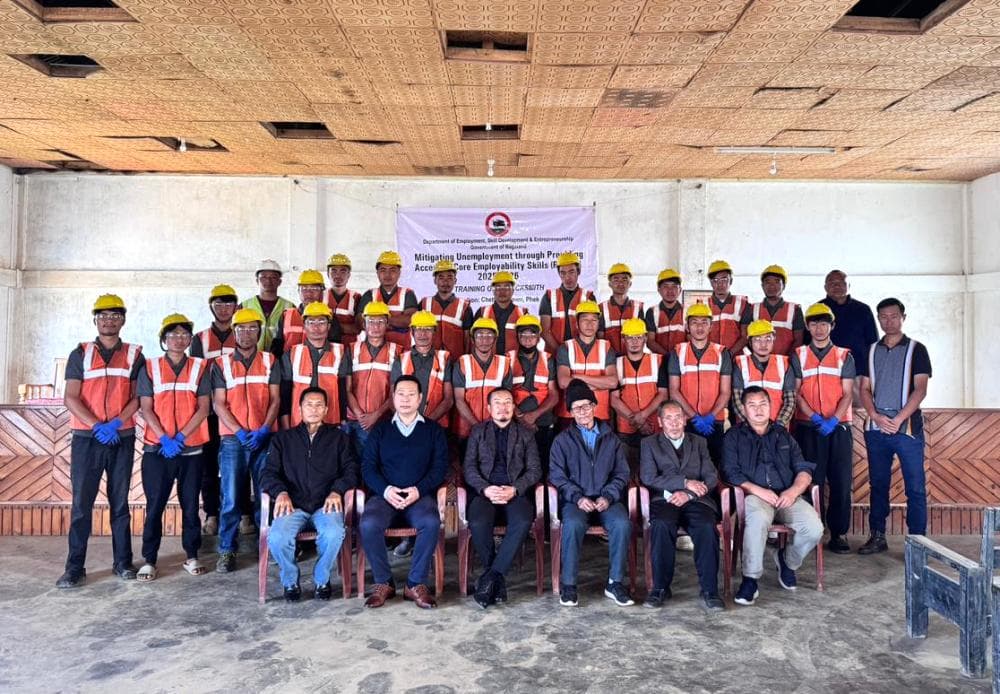
DIMAPUR — A basic blacksmith training programme under the Department of Employment, Skill Development & Entrepreneurship, commenced on Tuesday at Chetheba town in Phek district.
The training is being conducted by Zynorique Initiatives Society (ZIS) under the skill development programme titled “Providing Access to Core Employability Skills (PACES),” an update stated.
A total of 25 candidates have been selected for the programme, which will run for seven days covering 50 hours of intensive training.
Speaking at the inaugural programme, Kulo Kezo, District Employment Officer, Phek, encouraged the trainees to be present regularly, show keen interest in the training, and make the best use of the opportunity.
He noted that this was the first time such a programme had been brought to the town and urged the participants to set an example by learning a skill that could serve as a sustainable livelihood.
Kezo further emphasised the need for the trainees to become self-reliant and self-sustaining, stating that the training could help them earn their livelihood with dignity.
Also read: IGNOU Kohima holds 39th convocation
Nagaland University researchers develop hydrogel for solid-state supercapacitors
He urged them to change their mentality towards making a living, be sincere in attending classes, and work together as a team.
Head GB of Chetheba town, Motahu Rakho, in his address, acknowledged the government for bringing the training programme to the town and expressed gratitude for the initiative.
He expressed optimism that the trainees would make the most of the opportunity, acquire useful skills, and eventually give back to society.
Giving a brief overview of the programme, Tenempong Longchar, training partner from Zynorique Initiatives Society, informed that the course would consist of 50 hours of intensive training spread over seven days.
The programme aims to enhance job readiness and livelihood opportunities for rural youth and women by equipping them with practical, demand-driven skills that can lead to self-employment and sustainable income generation.
A key feature of the programme is the provision of essential toolkits to all trainees upon successful completion of the training, enabling them to immediately engage in gainful livelihood activities.
Earlier, the programme was chaired by Vekuto Kezo, while the invocation was pronounced by Vetazo Khesoh, Pastor, CRC Chetheba.