


An augmented spring shed project at Akamen in Mokokchung district was inaugurated to improve water availability for over 1,000 households in the Ungma Yimlang area through aquifer recharge and community-based monitoring.
Upgraded system to supply water to more than 1,000 households in Ungma Yimlang area
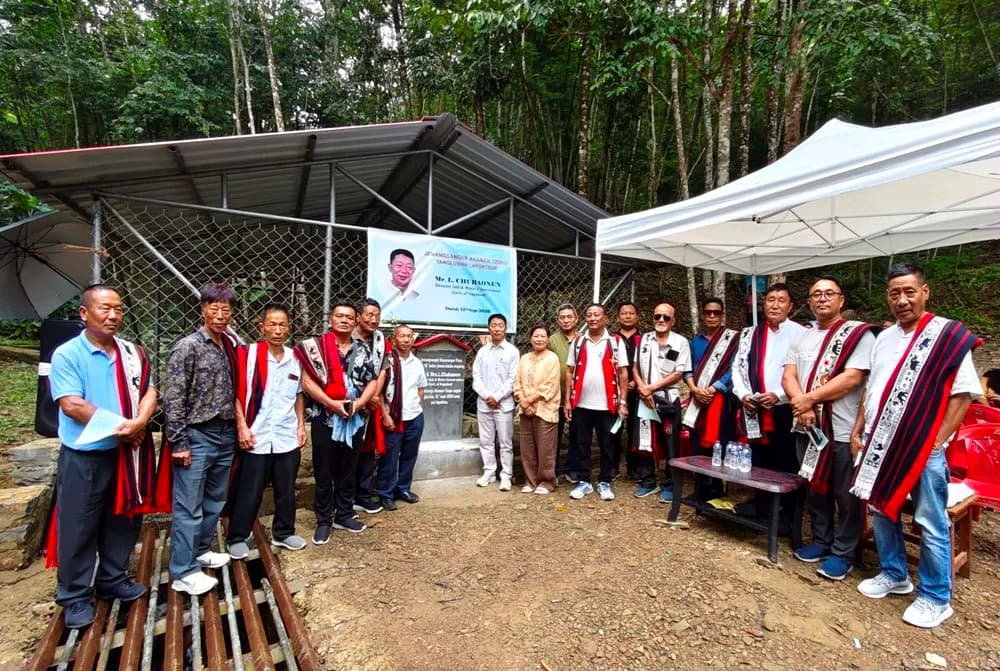
UNGMA — An augmented spring shed project, Jenangsanger Akamen Tzupo, was inaugurated by L Chubaonen, Director of Soil & Water Conservation, and dedicated by Shipongjungshi, associate pastor of Liden, at Akamen, a few kilometres from Ungma village in Mokokchung district, on September 12.
The revitalised project aims to improve long-term water availability by focusing on the entire underground aquifer catchment rather than only the spring’s discharge point.
Recharge ponds have been demarcated and constructed on hilltops and in forested areas to facilitate rainwater infiltration and replenish the spring.
Community-based monitoring of water availability is also an integral part of the initiative.
The upgraded system is expected to supply water to more than 1,000 households in the Ungma Yimlang area. The project was taken up under the initiative of the Soil & Water Conservation director.
In his address, Chubaonen recalled that Jenangsanger Akamen Tzupo was initiated in the 1960s with the modest objective of ensuring at least one bucket of water for every household during the dry season.
He said the present augmentation had significantly increased the catchment’s discharge capacity.
Also read: New logistics centre targets jobs for Naga youth
Highlighting the importance of protecting the catchment, he urged villagers to impose a complete ban on the use of chemicals in the area, warning that such substances could pollute the spring and pose long-term health risks to dependent communities.
He added that the spring serves not only the Yimlang locality but the entire Ungma community.
Chubaonen also called upon the people of Ungma to focus on two priorities: quality education and building a self-reliant community.
Describing education as the bedrock of social progress, he appealed for village educational institutions, from primary schools to higher levels, to be transformed into centres of excellence.
This, he said, would help ensure that young people do not have to leave the village for quality education, thereby reducing the drain on local resources.
Observing that competition for government jobs had become increasingly stiff, he further urged residents to equip the youth with skills and opportunities to become self-reliant individuals.
Alemtoshi Tatar spoke on behalf of the landowners. Other speakers included Imli Imsong Tatar and Kikumsangba Jamir Tatar.