


H Tovihoto Ayemi inspected drainage clearance works in Dimapur as monsoon preparedness efforts intensify.
DUCCF and others lead monsoon preparedness drive in Dimapur
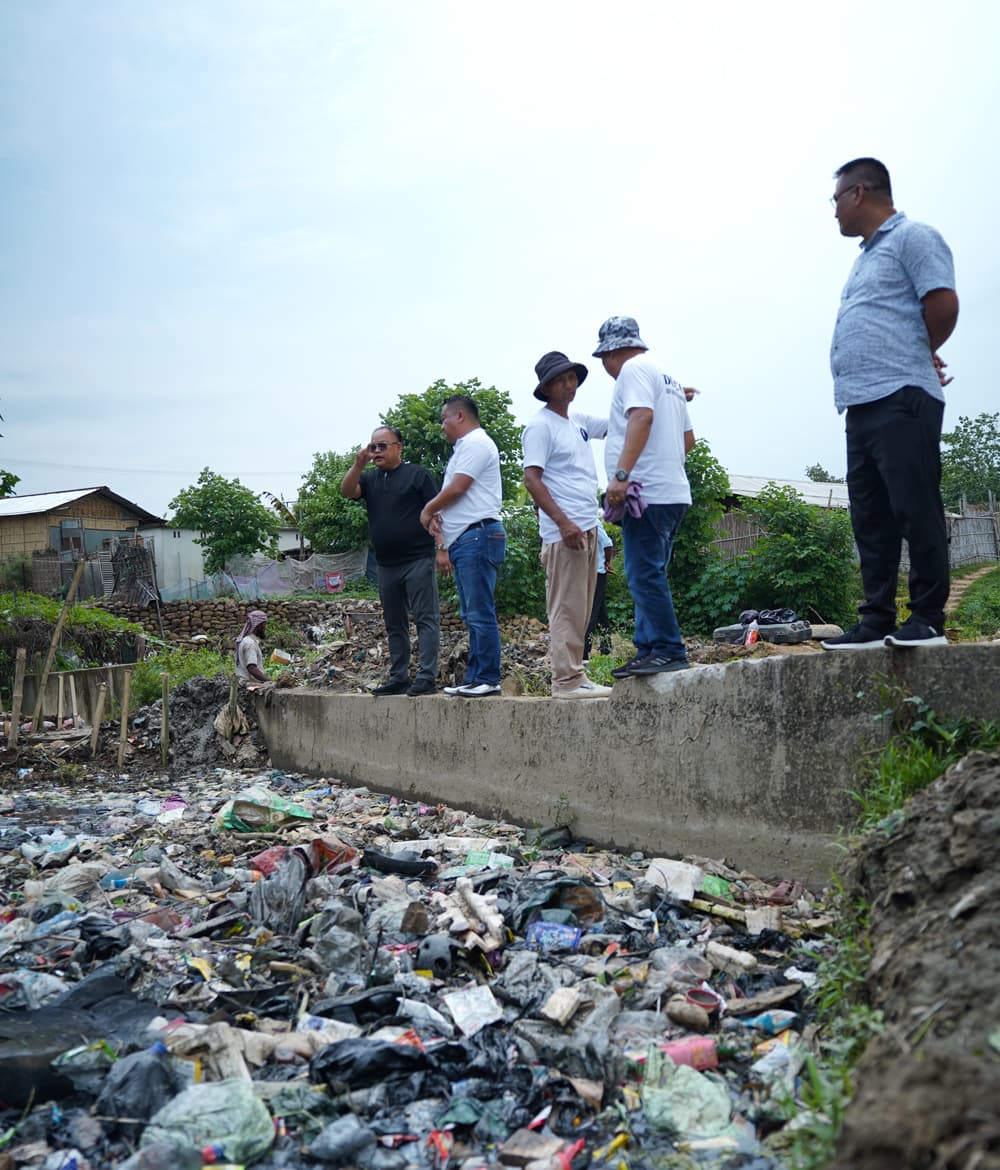
DIMAPUR — As part of the ongoing monsoon preparedness initiative in Dimapur, Advisor for Tribal Affairs and Election, H Tovihoto Ayemi on Saturday inspected drainage clearance works being carried out across various municipal areas.
The initiative is being supervised by the district administration and the District Disaster Management Authority (DDMA) Dimapur in collaboration with the Dimapur Urban Council Chairmen Federation (DUCCF), GBs Union Sadar, Naga Council Dimapur and other civil society organisations.
According to officials, six teams comprising members of DUCCF and GBs Union Sadar have been constituted to execute and monitor drainage clearance activities in 24 areas under the Dimapur municipality.
The drive, which began on May 16, will continue for another week.
Speaking to media persons during the inspection at Burma Camp, Ayemi said the state government had undertaken the initiative in view of recurring monsoon-related problems faced by Dimapur every year.
He said the chief secretary and other officials had already inspected several locations, but he wanted to personally assess the situation as earlier reports received by him were not satisfactory.
Also read: Ahead of monsoon, chief secretary reviews flood-prone areas in Dimapur
However, after visiting the sites, he expressed satisfaction with the ongoing efforts and said he was hopeful Dimapur would not witness the kind of flooding and drainage problems experienced in previous years during the monsoon season.
On the issue of finding a permanent solution, the advisor said drainage cleaning drives had been conducted regularly over the years, but the problem continued to persist.
Ayemi stressed that the Dimapur Municipal Council (DMC), DDMA and all concerned agencies must work in close coordination to address the issue effectively.
He also highlighted the importance of public participation, stating that no initiative would succeed without cooperation from residents.
He said drains were meant for water flow and not for garbage disposal, adding that indiscriminate dumping of solid waste into drains remained one of the primary causes of clogging.
He further pointed to encroachment on drainage areas as another major concern. Stating that no individual had the right to encroach upon drainage channels irrespective of influence or status, he said the law was equal for all and assured that necessary action would be taken against violators.
Ayemi added that instructions had already been issued to the district administration to identify and clear encroachments, and said he would continue to follow up with the authorities regarding the matter.
President of DUCCF and in-charge of the drainage cleaning activities, Zasivikho Zakiesato, said the organisation was currently focusing on clearing major drainage channels at six locations across the town.
He informed that a net had recently been installed in one of the drains to trap waste flowing from Medical Colony and SM Colony, which was later removed using JCB excavators.
On the issue of garbage dumping by the public, Zakiesato said civil society organisations alone could not enforce rules unless supported by official orders from the municipality. He said even after repeated appeals, many residents continued to dump waste into drains.
He urged residents across Dimapur district to refrain from throwing garbage into drainage channels, stating that such practices obstruct efforts to improve sanitation and cleanliness in the town.
Responding to queries on whether drainage and sanitation should primarily be handled by the municipal authorities, Zakiesato said the present drive was initiated under the district administration and DDMA as part of a community development effort aimed at creating public awareness.
He also said Dimapur could learn from the example of the Mokokchung Municipal Council, which had improved civic management through cooperation between authorities and community leaders.
He questioned why the municipality could not mobilise resources effectively when even DUCCF had managed to undertake small-scale activities through membership contributions and local collections despite rising costs of commodities.
Zakiesato informed that around 45 to 50 manual labourers had been deployed across six strategic locations, with supervisors and colony chairmen overseeing the work throughout the day.
He said the operation was mainly focused on clearing major outlet pipelines leading towards the Dhansiri River, Lengri River (Lengriajan) and other drainage routes passing through several colonies.
Besides manual labour, heavy machinery including JCBs, Hydras and cranes were also being used for the large-scale clearance operation.