


District Empowerment Programme transforms classrooms in Mon and Peren with STEM labs, libraries, improving engagement despite challenges in implementation
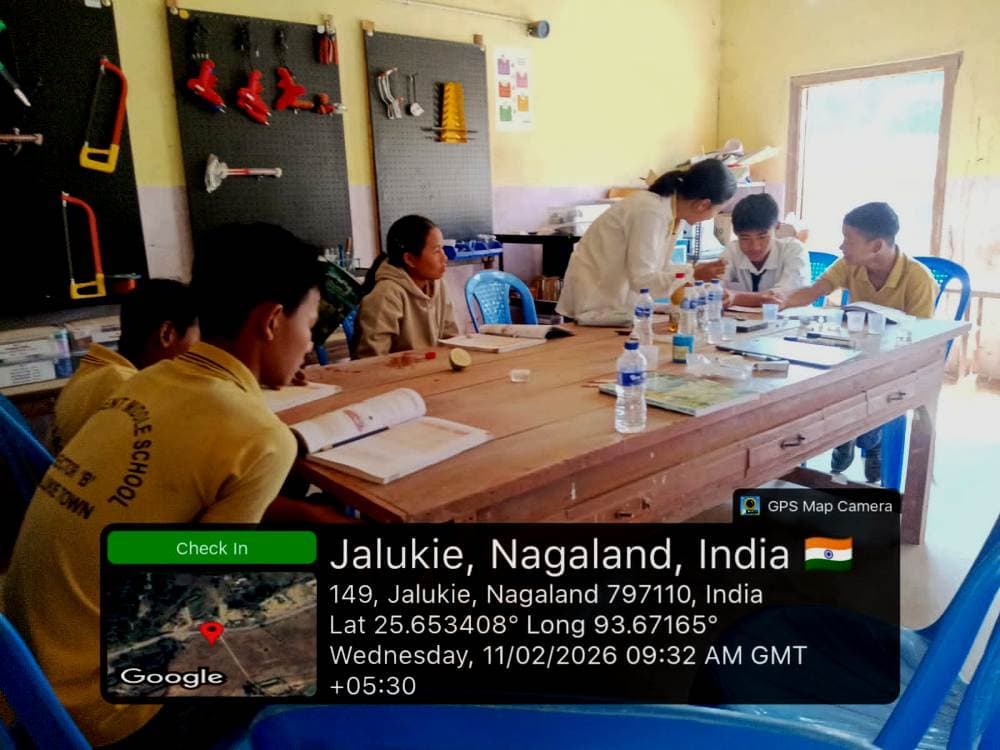
DIMAPUR — Twice a week, Nemang and Chingwang, Class 6 students at Government Middle School (GMS) Mon Town-A, visit the school library. On other days, their science lessons sometimes move to the STEM lab, where they use simple materials to understand concepts that were once explained only through textbooks.
For students in several government schools across Mon and Peren districts, such changes have become part of the classroom routine over the past two years under the District Empowerment Programme (DEP), a three-year initiative running from 2024 to 2027 in select government schools in the two districts.
The programme is being implemented through a partnership between HDFC Parivartan, ShikshaLokam and Elevate Foundation, with support from Samagra Shiksha and the Directorate of School Education, Nagaland. Its aim is to strengthen foundational learning through teacher training, reading initiatives and improvements to school infrastructure.
So far, 14 schools across Mon and Peren districts have been brought under the programme following needs assessments and site visits. These include Government Middle School Mon Town-A, Government Middle School Ngangching and Government Higher Secondary School Tizit in Mon district, and Government Middle School Sector B Jalukie, Government High School DC Colony and Government High School ‘B’ Jalukie in Peren district. Two of these schools — one in each district — have been identified as model schools.
Also read: Nagaland plans feeder-school system to boost enrolment in government schools
Under the programme, schools have received support such as libraries, STEM labs, classroom learning aids and improvements to water and sanitation facilities, with various community engagement programmes designed to involve parents and school management committees more actively in school life.
At GMS Jalukie Sector B in Peren district, Devi Maya (Class 8) and Paizele (Class 7) said they now visit the school library regularly and take part in science activities in class.
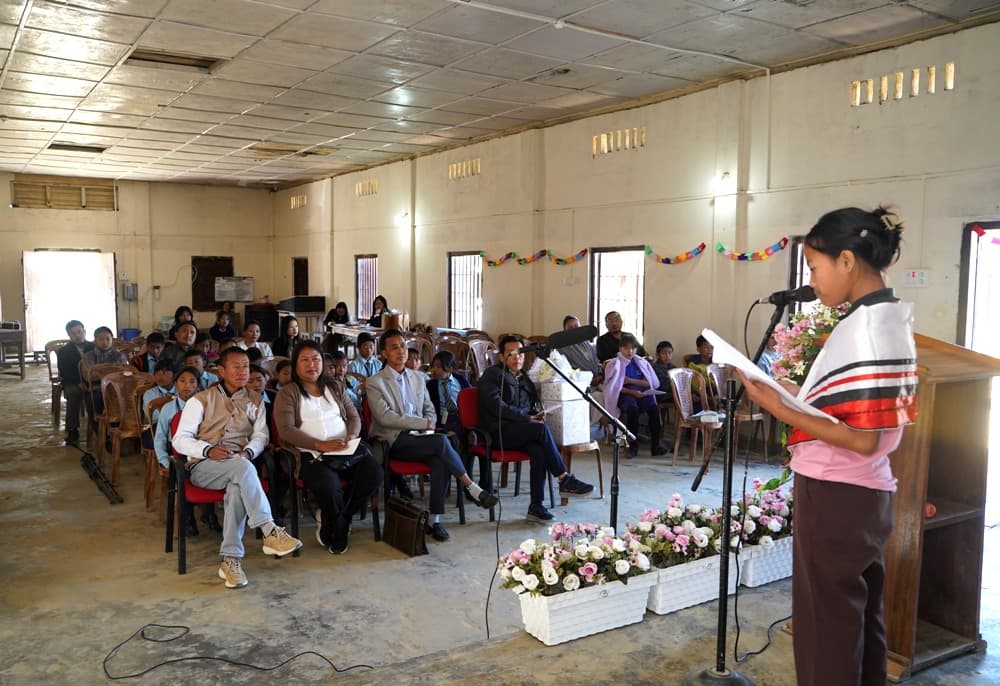
“We also have easy access to water in school washrooms as the pipelines are attached,” they said.
For Ruth Jami, a science teacher at GMS Jalukie Sector B, the availability of lab materials has made it possible to conduct lessons through experiments and demonstrations.
“Activity-based teaching-learning has improved and its frequency has increased,” she said, noting that several science chapters now require students to carry out activities to understand concepts.
But Jami said conducting such lessons regularly can be difficult in practice. With five teaching periods a day, preparing and conducting activity-based lessons take considerable time and increase teachers’ physical and mental workload, sometimes requiring them to put in extra effort or adjust their schedules to complete the activities.
Wepre Lasuh, head teacher of GMS Ngangching in Mon district, said the broader structure of schooling still poses challenges for activity-based teaching.
Read more: 117 government schools in Kohima record attendance below 80%; DEO issues show-cause notices
“Considering our current assessment pattern, which still strongly emphasises writing competencies of students, and the syllabus that requires most of their time and attention, it becomes difficult to conduct activities regularly,” Lasuh said.
Despite these constraints, TY Albert, head teacher of GMS Mon Town-A, said the establishment of the library and STEM lab has helped students improve reading and writing skills.
“In the past years we did not have facilities like STEM labs and libraries. Now students are able to access these facilities and it is helping them improve their reading and writing,” he said.
Albert also noted that in schools with large enrolment, “it is difficult to cover up all the students.”
Meanwhile, officials responsible for monitoring schools say the changes are noticeable in many classrooms.
Ranglungheing, Educational Block Resource Centre (EBRC) coordinator in Peren district, said teachers are increasingly focusing on basic reading practice and using teaching materials during lessons.
“Students are also more active and confident in class,” he said.
However, some officials also noted that the new teaching practices are not followed uniformly across all schools. Izaibamle Nchang, an EBRC coordinator in Tening block of Peren district, observed that some schools conduct such activities regularly but the level of practice varies from school to school.
M Alei, EBRC coordinator for Mon block, said reading ability among younger students has shown gradual improvement, though more work is still needed.
The improvements are usually assessed during school visits by listening to children read aloud, checking their reading levels and comparing their progress over time.
Alongside classroom interventions, several training and engagement activities have been conducted under the programme. These include leadership training for education officials on change management, teacher training on using classroom spaces as learning aids under the Building as Learning Aid (BaLA) approach, and STEM training to strengthen teachers’ ability to use newly established labs.
A key initiative under the programme has been the R.E.A.D. (Revolutionise Education And Dreams) Campaign, a three-month reading drive held from September to November 2025. Unlike the DEP interventions limited to selected schools, the campaign was implemented across schools in both Mon and Peren districts to promote a culture of reading and encourage the use of reading corners and libraries supported under Samagra Shiksha.
According to programme coordinators overseeing the programme, increasing student engagement in classrooms was one of the primary objectives when the programme began.
Before implementation, baseline information on school infrastructure, attendance patterns and teacher capacity was collected to understand gaps in learning and facilities.
Programme coordinators for both districts said the introduction of libraries and STEM labs has so far had the strongest visible impact in terms of improving student engagement and conceptual understanding.
However, they acknowledged that the direct impact on academic performance has yet to be fully measured.
Learning progress is currently monitored through classroom observations, review meetings with school leaders, and examination of student work samples produced during activities such as the programme’s reading campaign.
However, they said several factors have limited the pace and consistency of the programme’s impact. These include irregular student attendance in some areas, heavy teacher workloads, staff shortages due to rationalisation, and the challenge of maintaining new facilities such as libraries and STEM labs. They also pointed to varying levels of teacher readiness to adopt new teaching methods.
With the programme scheduled to conclude in 2027, Jami said most of the STEM lab materials will be improvised for use in learning activities.
Noting that the activities have made learning more engaging for students, Lasuh and Albert expressed hope that similar interventions will continue after the DEP concludes.
As for now, the interventions have made a difference for Nemang who maintained that, “studies are easier than last year because we can learn by doing science activities.”