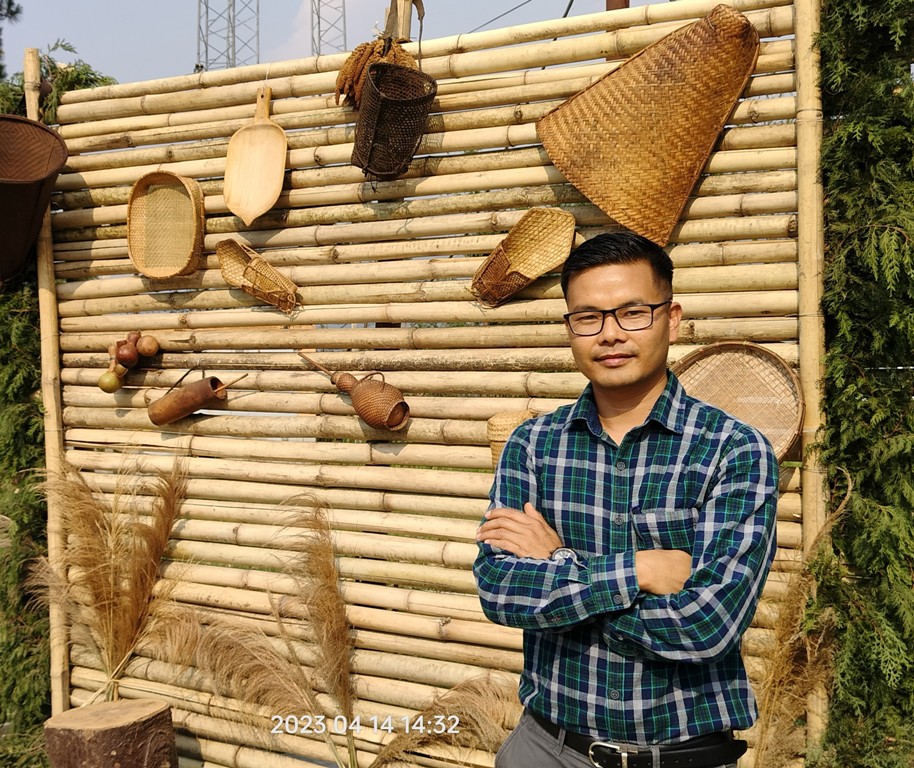
DIMAPUR — Dr. Limamanen
Phom, 39, is an assistant professor in the Department of Zoology at Sao Chang
College, Tuensang. Inspired by the marvels of biology, like the flow of blood
in the human body to the towering growth of plants, his fascination with life
sciences began at a young age. His admiration for teaching as a profession took
root during his high school years, shaping his journey into academia.
Dr. Phom
holds a Ph.D. and has dedicated his career to teaching and research with
interests in neurobiology, biochemistry, biodiversity conservation, and
socioeconomic development. He is actively engaged in various initiatives,
including livelihood and health promotion programs, forest and wildlife
conservation efforts, and community biodiversity conservation.
He was
awarded by the Indian Council of Medical Research (ICMR) New Delhi and received
the Young Scientist International Travel Grant Award (2015) to present his
research findings in Frankfurt, Germany. He is also a recipient of the ICMR
Senior Research Fellowship and participated in the Sakura Exchange Programme in
Science (2018), hosted by the Japan Science and Technology Agency at the
Biomedical Research Institute in Tsukuba Science City, Japan.
In this
interview with Eastern Mirror, Dr. Phom talks about the importance of
wildlife conservation and the role of community involvement and emphasises the
growing demand for expertise.
How
would you define Zoology for students, and which key areas should they explore
early in their studies?
Zoology as
a subject is not limited to the field studies and the collection of animal
species. It is broad and integrates fundamental knowledge of animals with
applied science, using advanced technology.
Interested
students can begin with what they have: the collection, preservation, and identification
of animal specimens using valid scientific protocols. They can also learn basic
culture techniques and microscopy, which are essential skills in specific
fields such as applied zoology.
What are
some emerging fields or specialisations within Zoology that students should
consider for future career opportunities?
Neurobiology,
biochemistry, genetics and developmental biology, wildlife conservation,
entomology, taxonomy, animal behaviour and cognition, and other related fields
in biomedical sciences.
Which
industries and organisations actively hire Zoology graduates, and what roles do
they typically offer?
The
Zoological Survey of India, research and academic institutions, and other
private sectors offer jobs such as project fellow, research scientist, faculty,
researcher, curator, surveyor, taxonomist, and other related positions.
What
practical skills or experiences can students develop during their studies to
stand out in the job market?
Practical
classes are important as they teach basic laboratory techniques, allowing
students to develop skills. With some interest, they can learn the techniques
precisely and gain confidence in using new technological applications.
Protocols may vary depending on the experiment, but the scientific concepts and
their applications remain the same.
What
career paths are available for Zoology graduates beyond academia and teaching?
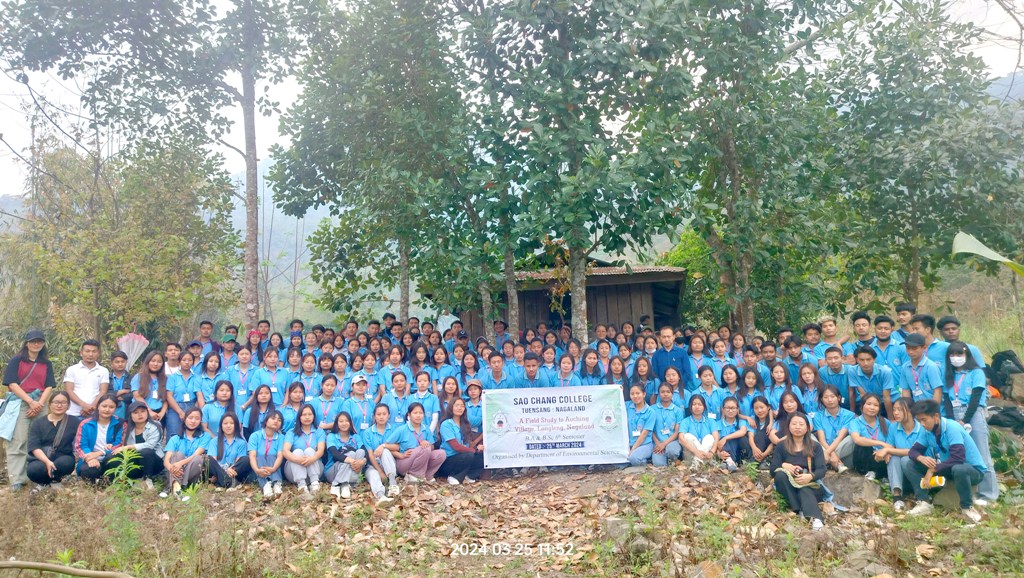
Educational
tour with students at Auching village in Longleng.
Placement
is available through competitive exams. Entrepreneurial ventures include
setting up firms related to biotechnology and biomedical sciences. Another
opportunity is to engage in nature and wildlife conservation.
What
challenges might students face when building a career in Zoology, and how can
they overcome them?
In our
context, one limitation or challenge is the lack of experts. It is important to
seek guidance from like-minded individuals for proper direction.
Are
there any additional qualifications, such as short-term courses or
certifications, that can help Zoology graduates gain an advantage?
Depending
on their interests, students can familiarise themselves with a specific field
through internships or vocational courses while pursuing a full-time graduate
degree. To study the behaviour and characteristics of an animal, one must gain
knowledge in photovideography and microscopy to visualise microscopic
structures.
An interest
in wildlife conservation will require involvement in organisations associated
with nature conservation. Companies working with gene sequencing and technology
will require exposure to sophisticated equipment and software, as well as
skills related to RNA and protein experiments.
What
trends in wildlife conservation and biodiversity research should students pay
attention to for long-term career planning?
Wildlife
conservation does not simply begin with a seminar on conservation and end with
a verbal ban on hunting.
We need to
consider the entire ecosystem interaction. There are numerous areas in which to
get involved. We cannot consume all the available birds and expect our
cultivable land to naturally fertilise and become productive in a short period.
Birds play an active role in the nitrogen cycle, an important process for soil
fertility.
Apart from
gaining knowledge and skills, engaging with grassroots-level communities is
vital to understanding the issues related to conservation, which are often tied
to their livelihoods.
How can
students use their Zoology background to contribute to environmental
policy-making or community outreach programmes?
Get
involved at the local/village level; discuss with the elders the importance
given to wildlife during the olden days. Advocate about the knowledge on the
contribution of wildlife in ecological homeostasis and environmental
sustainability.
Talk about
the scope of ecotourism and livelihood enhancement from such an initiative.
Organise programmes to commemorate special days such as World Biodiversity Day
for awareness and sensitisation.
Are
there any books, documentaries, or online resources that you recommend to help
students deepen their understanding of Zoology?
To help
students deepen their understanding of Zoology, books such as Trials of Life,
Discovering Life on Earth, and The Atlas of Living World are
recommended. Online resources like Neela Bakore tutorials and Biology lectures
also offer valuable content.
What
personal qualities or mindsets have you found most valuable in your own career
journey as a zoologist?
Interest
and more preserverance.
Looking
ahead, what are your predictions for the future landscape of careers in
Zoology?
While there
is ample scope for multidisciplinary collaboration, the demand for expertise in
particular fields will increase. Pursuing the subject at the postgraduate level
and beyond will also ensure that one is making the right career choice based on
their interests.
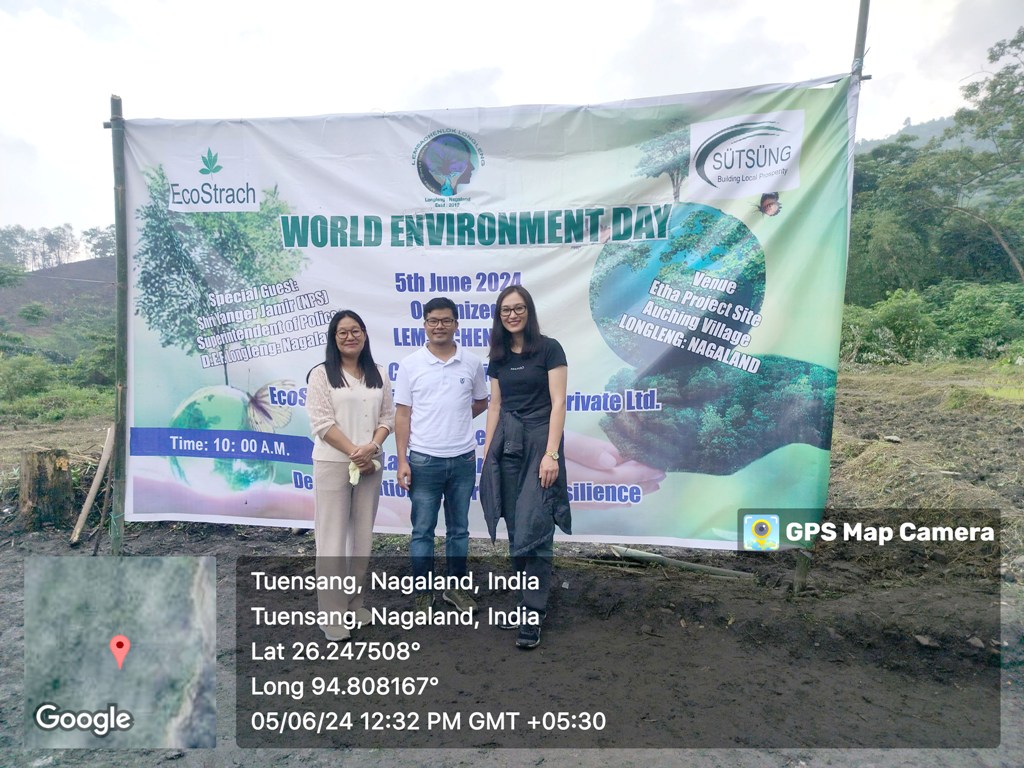
During
the observation of World Environment Day 2024.
RAPID
INSIGHTS
If you
were not in Zoology, which field would you be exploring?
Botany
If you
could specialise in a single species, which would it be and why?
Drosophila,
also commonly known as fruit fly.
My research
exposure started with the Drosophila model for human disease. It is easy to
culture and has its whole genome sequenced. About 75% of known human genes
associated with disease have functional homologs in Drosophila. Thus, it is
employed to mimic several human disorders, including neurodegeneration and
tumors. It helps researchers understand the disease's development and suggest
therapeutic interventions.
How do
you unwind after a demanding day of teaching?
Spend
quality time with family and friends. As Aristotle said, ‘Man is a social
animal’.