[caption id="attachment_167036" align="alignleft" width="300"]
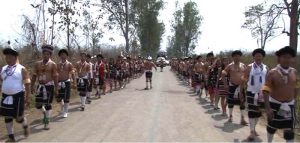 A file photograph of members of the Zeliang Naga community celebrating Mlei Ngyi festival.
[/caption]
Dimapur, March 7 (EMN): Members of the Zeliang Naga tribe in Nagaland are set to celebrate ‘Mlei Ngyi,’ a spring or sowing festival marking the beginning of new agricultural activities on March 11.
The date, custom and rites might vary from village to village but for ‘uniform celebration’ of the festival, the Nagaland government has designated aside Mar. 11 as the day to celebrate “Mlei Ngyi” by the Zeliang community.
Introduction to festivities
Hengyi-sa: The village high priest conveys good wishes to his community, proclaims the arrival of festive season, and sets the date of the festival to enable for preparation of self, food, drinks, dresses etc. Preparatory agricultural activities such as jungle clearing for current jhum and millet cultivation in fallow jhum areas are supposed to have been completed well ahead of the commencement of the event.
Kecimpu: Its is an act of self-cleansing and purification ahead of the festival and involves cleaning of clothes and belongings, seed treatment so that seeds sown after the festival are vigorous and healthy.
Mlei zautau: It involves preparation of local rice brew especially meant to be served to the traditional fire makers.
Main festivities
Day one - Mlei-teu: The event marks the commencement of Mlei-ngyi festival and is usually performed by the clan headman (kizeu-pei) of each dormitory, who will make fire by using strands of bamboo (mlei-ria) and bamboo fine fibres and keep the flame burning until culmination of the festival. During the entire festive period, the clan headman (kizeu-pei) will abstain from having any indulgence with wife and family and maintain a separate hearth.
Heteu hebak dap / Leidi: This event involves slaughter of domestic animals meant for food during festival in different dormitories. The evening also witness engaged couples being invited to their respective would-be-in-laws for dinner and blessing. Boys will be invited to would-be-wife’s home and vice versa and this dinner invitation by village folks usually continues during the entire festive period.
Day two - Rodi: At dawn, some adult male members from the two major clan viz. Heu and Hau foray into the jungle to make wooden totem (Herie) for each clan which is usually a 6 – 8 feet length wooden plank split and shared one each from a single trunk. The plank will then be brought to the village by each clan carrying their respective wooden totem and place it on a clean predestined location in front of each dormitory. All male members in traditional attires gather to yodel around the totem and proceed to the playground for traditional games and sports like Hedau (kicking the plank), Heram (high jump), Tsugi (shot put).
The sporting event culminates with a traditional yodelling (‘Nroh’) by males gathered around the arena (Hejo-pung).
Day three - Bamsak: The day is significant with families sharing Hengyi-dom (festival food package) to family members living out of the village. The evening hours are occupied with male members visiting female dormitories and calling them out by name and (having verbal) exchanging pleasantry. Interpretation of dreams follows the next day.
Day four - Tsingpo nsa: The day is marked with different clan collecting firewood and piling in their respective dormitories and the headmen serving dormitory wine to members. In the evening hours, female dormitory members usually sing soulful ballets and visits male dormitories and perform traditional Heba-lia (finger identification), Heriang teu (tug-of-war) and Tsingpo-nsa (firewood snatch).
Day five - Zausa: Merry making in respective dormitories prevails.
Day six - Gwangnim: The final day marks the clan headman (Hegwangme) douses the Mlei-mi (festival fire). Members of the female dormitories collect Kemniebi (sticky rice) from respective households and share with male dormitories as well as with female member including young girls.
Regapa: The event after the festival, male members begin agricultural practices of burning their jhum fields and in the process any wild animals and birds killed or captured are gifted to female dormitories. Female members collect meat from their homes and cook in dormitories. Left over pieces of meat and bones (Hailodum nsa) are collected by younger boys.
Gaipia mna: Boys and girls together have recreation and merry making with bride-to-be by singing soulful ballets and conundrum. The bride-to-be along with friends from her dormitory selects a married man to lead during Nta (traditional dances) and gives him mouthful of salt and wine.
Mtim: A day to solemnise traditional marriage ceremonies, akin to Christian holy marriages, involves marriage feasts for the entire villagers. This was stated in a press release issued by Irai Hingleu, chairman of the Jalukie Pumling Nko.


