[caption id="attachment_280330" align="aligncenter" width="565"]
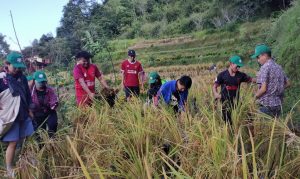 Participants of NEN farm school are seen learning the traditional farming system at Chizami village in Phek district.
[/caption]
Dimapur, Oct. 30 (EMN): The 5th edition of the North East Network (NEN), which began on October 25 concluded on October 28 at Chizami village in Phek district.
Conducted on the theme ‘Bridging the farm-to-plate-gap,’ 20 students from four institutions have participated in the four-day residential programme. The farm school aims at reconnecting youth to local food and farming systems through an experiential learning process.
An update from Wekoweu Tsuhah, state director, stated that students were exposed to topics such as ‘Understanding the natural world and food web, biodiversity, pollinators, seed systems, and soil management.’
Interactive sessions with custodian farmers and traditional knowledge holders, hands-on experience with bee-keeping, paddy harvesting, moth watching, storytelling, biodiversity walks, seed bank visit, setting vermin-compost unit etc were some of the highlights of the four-day NEN farm school.
At the valedictory programme on October 28, which also coincided with the 14th anniversary of the NEN Resource Centre, Chizami, Vekuto Vero, SDO (Civil) Chizami, exhorted the students to take back the learning with them and share the knowledge gained with as many people as possible. He remarked that an initiative like NEN farm school shows the path towards ‘self-reliance,’ which is urgently needed for a state like Nagaland that has been increasingly depending on outside states for food supplies.
Wetshete Thopi, assistant professor at the Patkai Christian College, Dimapur, also addressed the gathering of students, NEN staff, community leaders, church elders, and representatives from different departments. He reminded that indigenous peoples constitute just 5% of the world’s population but 80% of the world’s biodiversity is in their lands.
He stated that the biodiversity is at threat because of people’s greed leading to its destruction. While pointing out that modern development is not sustainable anymore, he stated that one has to acknowledge that traditional knowledge and practices hold the key to protecting the biodiversity. He urged the students to take responsibility for protecting the lands, ecosystems and environment.
A participant in the NEN farm school, Kevithozo Casavi, who is pursuing his B. Tech degree at NERIST in Arunachal Pradesh, shared his experiences. “I have acquired a different perspective on agriculture now after learning more about traditional agriculture practices and sustainability. Though we need modern technology, its usage should be limited and should not destroy our environment,” he stated.
During the valedictory programme, participants of NEN farm school also enacted a role play on the contribution of farmers to food security; curated an exhibition of posters; performed own-composed songs; recited poems and shared their experience of the farm school.
Resource persons were bee-keeper Kekhrowe Tsido from Enhulumi village; Dr. Esther T Longkumer, ACTO, Soil Science, ICAR-KVK Phek; community knowledge holders from Chizami Zulhipe Chirhah nmely Wenyilo Naro, Dikhwetsou Wezah, Kediu Mekrisuh, Keneile Thopi, Ebamhethokro, and NEN staff.


