


YARD conducted a waste awareness and segregation campaign during the 5th Edition Flower Festival at Sechü-Zubza on November 17
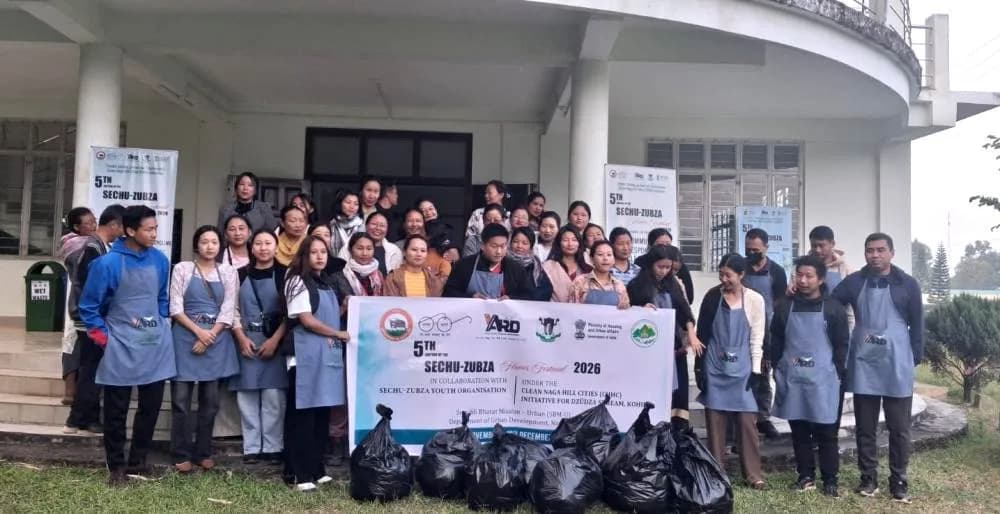
DIMAPUR — Youth Action for Rural Development (YARD), under the Clean Naga Hill Cities (CHHC) Initiative of the Swachh Bharat Mission-Urban (SBM-U), Department of Urban Development, conducted a waste awareness and segregation campaign during the 5th Flower Festival at Sechü-Zubza, Kohima, on Tuesday.
The festival was organised by the Youth Organisation, Sechü-Zubza, in collaboration with the Department of Horticulture, Kohima, according to an update.
The campaign was organised as part of YARD's ongoing efforts to promote responsible waste management practices, encourage segregation at source, and strengthen community participation in protecting the Dzüdza Stream.
The programme was attended by Kelhousenuo Nagi, President of the Sechü-Zubza Women Organisation. In her address, she highlighted Sechü-Zubza's potential as a flower-growing destination and a source of sustainable livelihood, urging sellers to maintain reasonable prices and encourage younger generations to learn these skills for future livelihood opportunities.
During the programme, Ashale Seb, Senior Waste Management Consultant, YARD, addressed the gathering on the importance of proper waste management, segregation of waste at source, and collective responsibility towards environmental protection.
She stressed that waste segregation must begin at the household level, with every individual taking responsibility for the waste they generate, in order to minimise pollution and prevent waste from entering natural water bodies.
She further highlighted the importance of protecting the Dzüdza Stream, noting that responsible waste disposal practices and community participation are essential to safeguarding the stream and its surrounding environment.
A waste audit was also conducted during the event to assess the types and quantities of waste generated. The audit recorded 60.95 kg of PET plastic bottles and 8 kg of HDPE plastics, highlighting the significant volume of plastic waste generated during the event. Other recyclable and residual materials recorded included 16.6 kg of metal cans, 2.330 kg of aluminium, 2.095 kg of glass bottles, and 11.545 kg of inert waste.