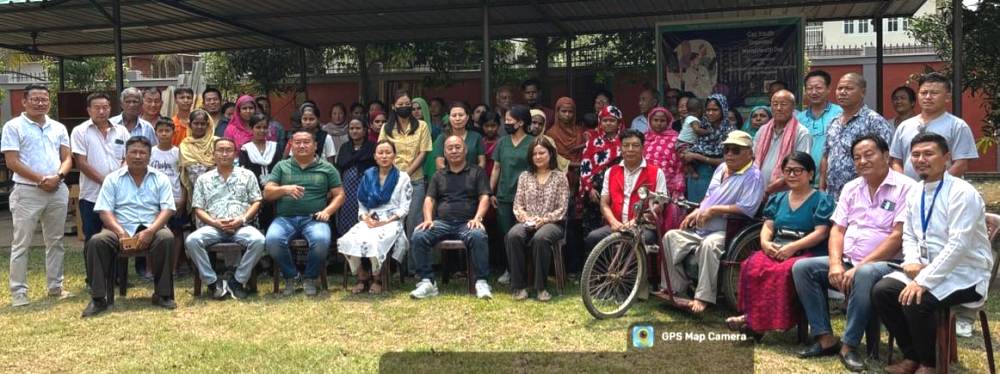
Participants, health workers, and others during World
Health Day observation at Burma Camp in Dimapur on Monday.
DIMAPUR — Along with the rest of the world,
World Health Day was observed in Nagaland on Monday, with the theme 'Healthy
Beginnings, Hopeful Futures'.
Can Youth: Can Youth, in collaboration with the Office of
the Chief Medical Officer (CMO), observed the day at Naga Colony, Burma Camp,
Dimapur.
An update stated that the event saw a significant turnout,
with a total of 166 participants, including 120 individuals attending the
non-communicable diseases (NCDs) segment and 46 attending the dental check-up
camp.
During the event, Zhove Lohe, secretary and director of Can
Youth, emphasised the growing concern of health hazards, primarily due to
high-risk lifestyles. He noted that factors such as the excessive use of
pesticides in processed foods are significant contributors to the rise of
non-communicable diseases (such as diabetes, hypertension, heart diseases,
asthma, and more).
He advocated for the adoption of healthier lifestyles
through proper nutrition and regular exercise. Additionally, he stressed the
importance of maintaining not only physical health but also cultivating a
positive attitude towards life.
The health camp was attended by four doctors from different
departments: Dr. Lishelo, District Officer of Non-Communicable Diseases; Dr.
Moa, Dental department; Dr. Chumzai Newmei, Urban PHC; and Dr. Athono Thira,
Dental department under Urban PHC, Burma Camp.
Dr. Lishelo pointed out that India is among the countries
most severely affected by NCDs, with millions of lives lost annually due to
poor eating habits, lack of physical activity, and mismanagement of chronic
conditions such as diabetes and hypertension.
He emphasised the importance of a balanced diet, regular
check-ups, and adherence to medication as crucial steps in both preventing and
managing NCDs.
He called for individuals, particularly those over the age
of 30, to prioritise their health and adopt preventive measures to reduce the
growing burden of these diseases. Dr. Lishelo also highlighted the need for
collective action at the community level to mitigate the impact of NCDs.
Immanuel College: Immanuel College, under the initiative of
the department of Education, observed World Health Day with Dr. Nepuni Athikho,
Diplomate of National Board (DNB) (Family Medicine) consultant in Palliative
Care and Geriatric Medicine, as the resource person.
According to an update, Dr. Athikho, speaking on the theme,
highlighted the four components of health: physical, mental, social, and
spiritual well-being, and encouraged the gathering to give equal importance to
all these aspects.
Stressing spiritual health, the speaker reminded everyone
how wonderfully God created man, emphasising the need to value health by
choosing a healthy lifestyle. He stated that health begins with a healthy
start, and both physical and spiritual fitness are equally crucial.
Pointing out the toll that bad habits such as alcohol
consumption, tobacco use, and smoking take on the body, he strongly urged the
students to prioritise their health by developing healthy habits. In his
concluding remarks, he urged everyone to live a full life and to complete it
well.
NEISSR: The day was also observed at NEISSR, where Fr. CP
Anto, principal of NEISSR and peace advocate, addressed a diverse gathering of
students, educators, and professionals.
In his keynote address, Fr. Anto emphasised the importance of
maintaining balanced mental health in today’s fast-paced and often overwhelming
world.
He noted that mental wellness is not merely the absence of
illness but the ability to understand, manage, and harmonise emotional and
psychological responses. He stressed that balanced mental health is essential
for living a productive, meaningful, and fulfilling life.
Fr. Anto explained the roles of two major stress
hormones—adrenaline and cortisol. While necessary for responding to threats or
challenges, prolonged exposure to these hormones due to chronic stress can lead
to burnout, anxiety, and health complications.
Adrenaline, he explained, prepares the body for action,
increasing heart rate and focus, but constant overproduction weakens immunity.
Cortisol, while essential in regulating metabolism and inflammation, can be
harmful when persistently elevated.
To promote emotional well-being, Fr. Anto spoke of the four
“happy hormones”: dopamine, serotonin, oxytocin, and endorphins. These
naturally occurring chemicals boost motivation, mood, emotional connection, and
pleasure. He encouraged the audience to engage in daily practices such as
exercise, positive social interaction, mindfulness, and gratitude to nurture
these hormones.
He concluded by highlighting that mental health is a shared
responsibility and crucial to building a hopeful future. Through collective
effort and intentional living, he affirmed, a society rooted in well-being can
be achieved.