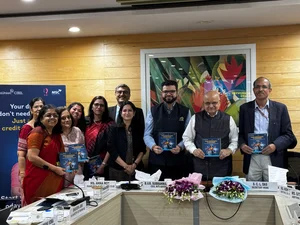
Women accessing credit to run businesses jumps 42 pc to 27 m
Women accessing credit to run businesses jumps 42 pc to 27 million: NITI Aayog
According to the report launched by NITI Aayog, as of December 2024, 27 million women were monitoring their credit, marking a 42 per cent increase from the previous year
NEW DELHI — At least 27 million women in India are seeking credit for running
business enterprises and actively monitoring their credit scores, a report
showed on Monday, which signifies a massive year-on-year surge.
As of December 2024, 27 million women were monitoring
their credit, marking a 42 per cent increase from the previous year, signalling
growing financial awareness and empowerment, according to the report launched
by NITI Aayog.
The report highlighted that women’s share of the total
self-monitoring base increased to 19.43 per cent in December 2024, from 17.89
per cent in 2023.
The number of women from non-metro regions actively
self-monitoring their credit has shot up by 48 per cent, while in the case of
metro areas, it has risen by 30 per cent.
In 2024, Maharashtra, Tamil Nadu, Karnataka, Uttar
Pradesh and Telangana accounted for 49 per cent of all self-monitoring women,
while the southern region leads with the total number going up to 10.2 million
women.
Northern and central states, including Rajasthan, Uttar
Pradesh and Madhya Pradesh, saw the highest compounded annual growth rates
(CAGR) in active women borrowers over the past five years, according to the
report.
Since 2019, women’s share in business loan origination
has increased by 14 per cent and their share in gold loans has grown by 6 per
cent, with women accounting for 35 per cent of business borrowers by December
2024.
The report has been published by TransUnion CIBIL, Women
Entrepreneurship Platform’s (WEP) of NITI Aayog and MicroSave Consulting (MSC).
During the launch, B.V.R. Subrahmanyam, CEO of NITI
Aayog, highlighted the critical role of access to finance in empowering women
entrepreneurs.
“The government recognises that access to finance is a
fundamental enabler for women’s entrepreneurship. The Women Entrepreneurship
Platform (WEP) continues to work towards building an inclusive ecosystem that
fosters financial literacy, access to credit, mentorship, and market linkages,”
Subrahmanyam added.
However, ensuring equitable financial access requires a
collective effort. The role of financial institutions in designing inclusive
products tailored to women’s needs, along with policy initiatives that address
structural barriers, will be instrumental in accelerating this momentum.
“To achieve this goal under the aegis of WEP, Financing
Women Collaborative (FWC) has been constituted. We seek more financial sector
stakeholders to join FWC and contribute to this mission,” Subrahmanyam added.
Anna Roy, Principal Economic Advisor, NITI Aayog and
Mission Director WEP, said that encouraging women entrepreneurship is one way
of ensuring employment opportunities for women entering the workforce in India.
“It also serves as a viable strategy for accelerating
equitable economic growth. Promoting women’s entrepreneurship could create
employment opportunities for 150 to 170 million people while driving greater
participation from women in the labour force,” Roy mentioned.
With rising credit awareness and improved scores,
financial institutions have the opportunity to offer gender-smart financial
products tailored to women’s unique needs, said the report.