


Inside Chümoukedima's palliative care centre, where dignity, compassion and holistic support offer hope beyond cure for terminally ill patients.
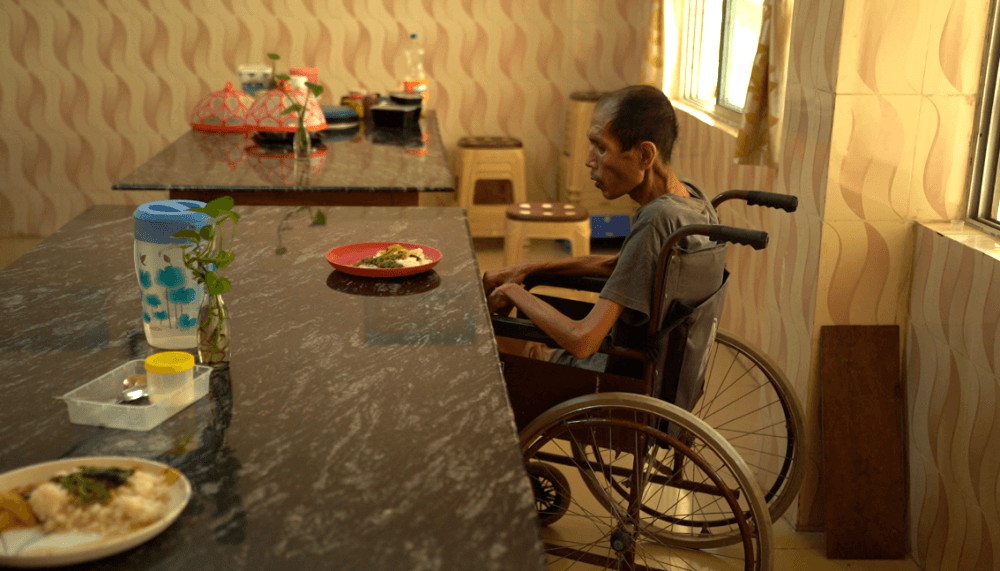
DIMAPUR — At St. Joseph's Pain and Palliative Care Centre (SJPC) in Chümoukedima, success is not measured by lives saved but by pain eased, dignity restored and the assurance that no one dies alone. Operating on a "no bill" policy where patients pay only if they can, the 20-bed hospice has quietly become a lifeline for terminally ill patients, stroke survivors, the elderly and people abandoned by circumstance across Nagaland.
-1784480383396.png&w=1200&q=75)
Established in 2022 by the Catholic Diocese of Kohima, the centre calls its mission “personalised comprehensive total care.” For those who live within its walls, however, the philosophy is much simpler: love in action.
A place where no one feels alone
For Mariamma Yoseph, the centre has been more than a place of treatment. After suffering a stroke in 2024, she spent 15 days at SJPC, where nurses and caregivers helped her recover. But her association with the centre had begun even earlier, when an insect bite developed into a severe wound requiring repeated dressing.
"The sisters would come and dress the wounds. Their love and care is wonderful," she recalled.
Following another accident earlier this year, she returned to the centre. "They have really cared for me," she said.
-1784480371691.png&w=1200&q=75)
Her experience is echoed by many others. One woman who arrived with no caregiver said the sisters had become "like a mother", while another patient with a spinal tumour said she received better care than she had at home.
"They provided everything—from meals to every other need—and my body is showing much improvement," she said.
For families too, the centre has become a source of reassurance. The daughter of an 82-year-old woman suffering from diabetes, heart disease and kidney ailments said doctors had once suggested amputating her mother's infected leg. Instead, the sisters began visiting their home, dressing the wound, offering emotional support and praying with the family.
"When I ask Sister Prina how much I should pay, she simply says, 'If you can, you give. Otherwise it's okay.'"
Today, whenever she goes to work, she leaves her mother at the centre for day care. "I don't have any worry once my mother is inside this palliative care. They take care of everything."
Filling a critical gap
According to Rev. Fr. Chacko, Director of Health Commission of the Diocese of Kohima, the centre was established to address a gap in Nagaland's healthcare system that often goes unnoticed. “Taking care of terminally ill people is an area which is not at all covered by anybody,” he told Eastern Mirror.
-1784480379969.png&w=1200&q=75)
Working closely with the Christian Institute of Health Sciences and Research (CIHSR), which has a palliative care wing, the diocese realised that many patients no longer required hospital admission but could not be adequately cared for at home.
"Palliative care is the best answer for someone who needs medical care but does not need to remain in hospital," he said.
Unlike hospitals, which focus primarily on curing illness, palliative care seeks to improve quality of life by relieving pain and addressing emotional, psychological and spiritual needs.
The centre's motto—Through the body to the soul—reflects that philosophy. "When someone is terminally ill, the person begins to feel life has no meaning and that they have become a burden. We should be able to be with this person physically, emotionally and spiritually."
WATCH MORE:
Fr. Chacko believes preserving dignity is as important as treating disease. "A hospital is meant for illness. Palliative care is about dignity," he said.
He recalled patients who had arrived on stretchers but later returned to college, resumed work and rebuilt their lives. One former drug user, abandoned on the roadside, spent six months at the centre before recovering, marrying and eventually finding employment in Bengaluru.
Sustained by compassion
SJPC survives largely through faith and community support. Around half of its operating expenses are met through church support and regular donors, while the remainder comes through contributions from well-wishers—sometimes in cash, but often in the form of rice, medicines or medical equipment.
Those who can afford treatment are encouraged to contribute; those who cannot receive the same care without charge. The centre also works with CIHSR and the North Eastern Social Research Centre (NEST), while colleges such as Mount Mary and Patkai Christian College regularly send interns.
Those who can afford treatment are encouraged to contribute; those who cannot receive the same care without charge. The centre also works with CIHSR and the North Eastern Social Research Centre (NEST), while colleges such as Mount Mary and Patkai Christian College regularly send interns.
Fr. Chacko believes the need for palliative care will continue to grow as Nagaland sees more cancer patients, stroke survivors and people living with paralysis following road accidents.
He also called for dedicated government support, suggesting that Nagaland could adopt community-based models similar to Kerala by training Village Development Boards, churches and civil society organisations to provide basic home-based palliative care.
The long-term vision, he said, is to expand SJPC into a dedicated palliative hospital while strengthening partnerships with healthcare institutions and community organisations.
Asked what the public could do beyond making donations, Fr. Chacko's answer was simple. "Come and visit this place," he said. "Someone who is terminally ill is always looking at the ceiling. When you come and ask, 'How are you?', that gives greater satisfaction and consolation."
His words perhaps best capture the spirit of the centre. "There is limit to cure," he said, "but there is no limit to care."