


Nagaland University research shows how Mikania micrantha can be used to develop cancer-fighting nanoparticles with antibacterial and drug synthesis potential.
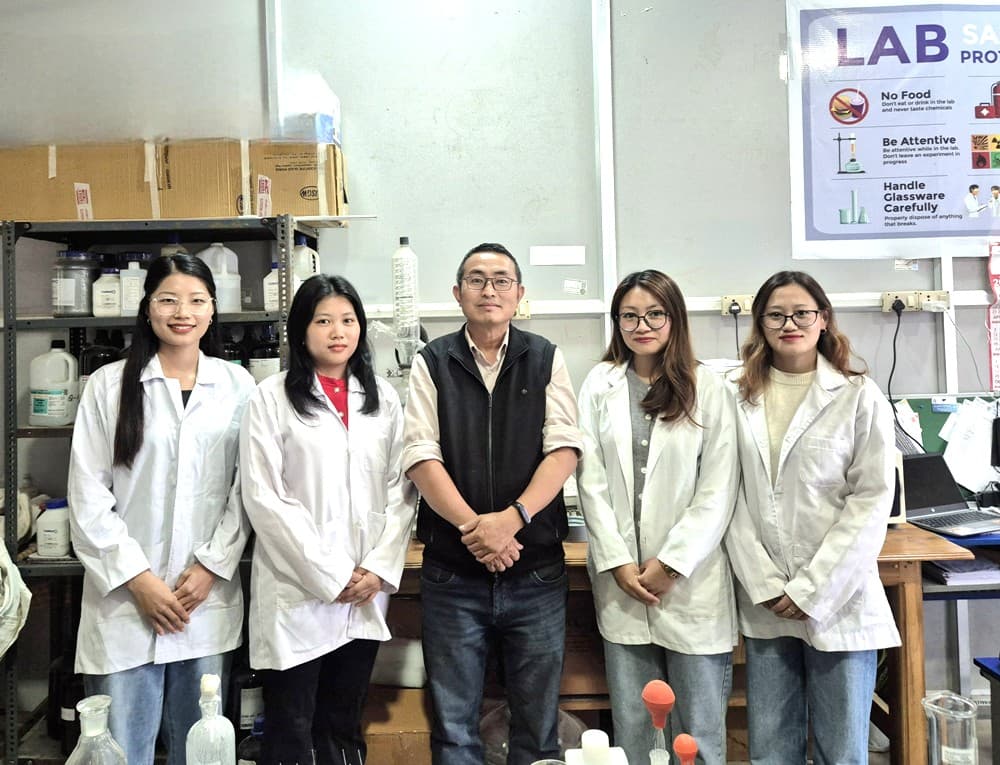
DIMAPUR — A research team led by Nagaland University has claimed to have transformed the invasive weed Mikania micrantha into a powerful tool for next-generation drug development, antibacterial applications and cancer research.
The study, carried out in collaboration with Fazl Ali College, Mokokchung, demonstrates how the fast-spreading plant—long considered a threat to local ecosystems—can be harnessed for high-value scientific use through an eco-friendly “green chemistry” approach, stated a press release issued by the university on Monday.
By using leaf extracts of the plant, the researchers successfully synthesised highly stable silver nanoparticles without relying on toxic chemicals typically used in conventional nanomaterial production.
These nanoparticles act as ultra-fast catalysts, enabling the production of key pharmaceutical compounds known as imidazoles in just 30 to 180 seconds.
Imidazoles form the backbone of a wide range of medicines across multiple therapeutic areas, and the new method offers a faster, cleaner and more cost-effective alternative to traditional drug synthesis processes.
Also read: Nagaland University researchers identify anti-cancer potential of Konyak herbal medicine
Beyond pharmaceutical manufacturing, the research also highlights significant biomedical potential. Laboratory tests revealed that the nanoparticles exhibit strong antibacterial activity against harmful pathogens, including Staphylococcus aureus, a major cause of hospital-acquired infections, and Yersinia pestis.
In parallel, tests conducted on human colon cancer cells showed that the nanoparticles significantly reduce cancer cell viability, demonstrating nearly twice the effectiveness of the plant extract alone.
This finding positions the study as a promising step toward the development of plant-based nanomaterials for future cancer therapies, the university stated.
Importantly, the nanoparticles are reusable and retain efficiency for at least six cycles, reducing both production costs and chemical waste.
They also exhibit remarkable stability at temperatures as high as 165°C, making them suitable for demanding industrial environments.
Supported by national research funding agencies and published in a peer-reviewed international journal, the study underscores the untapped potential of Nagaland’s biodiversity.
Scientists involved in the project suggested that many locally available plants may hold similar promise, opening avenues for further research and innovation.
Apart from its scientific significance, the development also offers an innovative solution to managing Mikania micrantha, which has long posed ecological challenges across the state.