


Day 3 of Hornbill Festival 2025 at Kisama featured diverse cultural performances hosted by Deputy Chief Minister Yanthungo Patton.
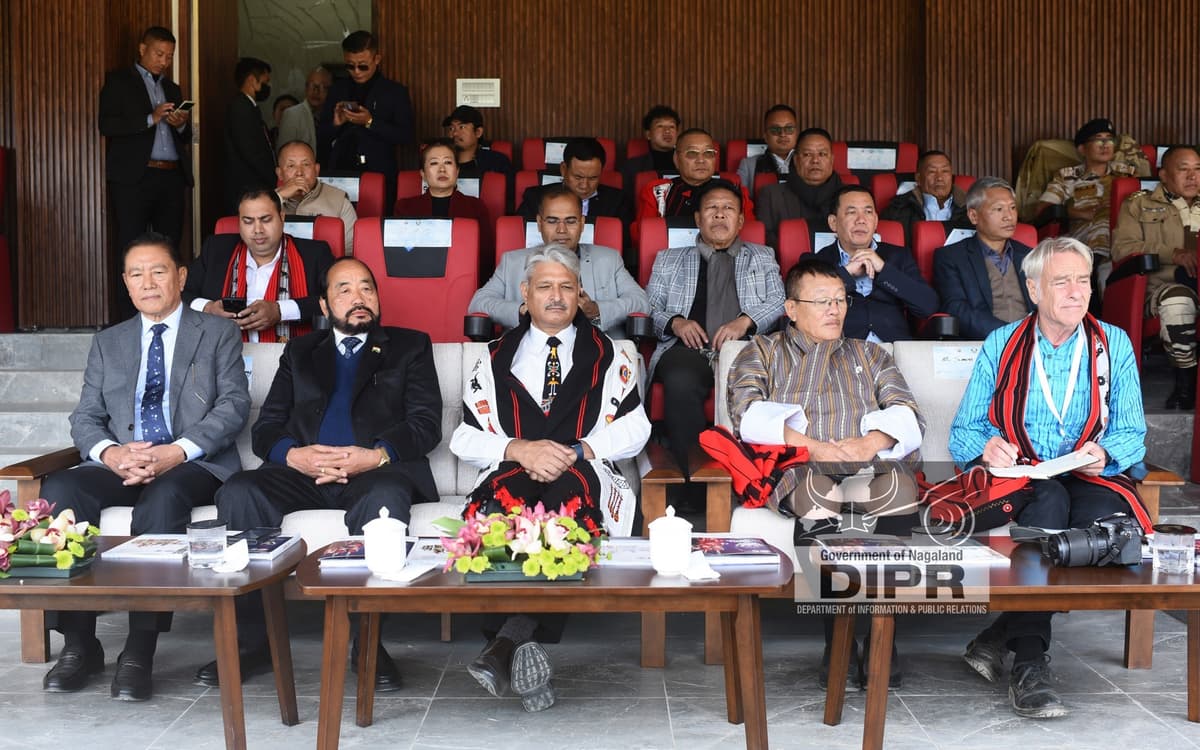
DIMAPUR — The third day of the 26th Hornbill Festival witnessed a vibrant array of cultural presentations at the Naga Heritage Village, Kisama.
The cultural show was hosted by Yanthungo Patton, deputy chief minister and minister-in-charge of Home and Border Affairs, and co-hosted by K Tokugha Sukhalu, advisor for Food and Civil Supplies and Legal Metrology.
Guests included Jigme Thinlye Namgyal, ambassador of Bhutan and consul general; Air Marshal Surat Singh, SM, commanding-in-chief, Eastern Air Command, Indian Air Force; Lt. Gen. Mohit Wadhwa, GOC 101 Area; and Simon Lee Broughton, founding editor of Songlines, according to a DIPR report.
Also read: Hornbill Festival 2025 turns service hub with Aadhaar, legal aid and creative exhibits
The day featured a showcase of Naga cultural dances and folk traditions.
The Zeliang troupe performed Akoina Lin, a folk dance presented during large gatherings, symbolising merrymaking and comparing the dancers to falcons and butterflies. The Yimkhiung Cultural Troupe presented Kha Kiaklak Rhimo, followed by the Tikhar troupe with Tainang Jong Paihi Ai, a women’s folk dance performed during major festivals, celebrating praise, hospitality, and the sharing of premium wine.
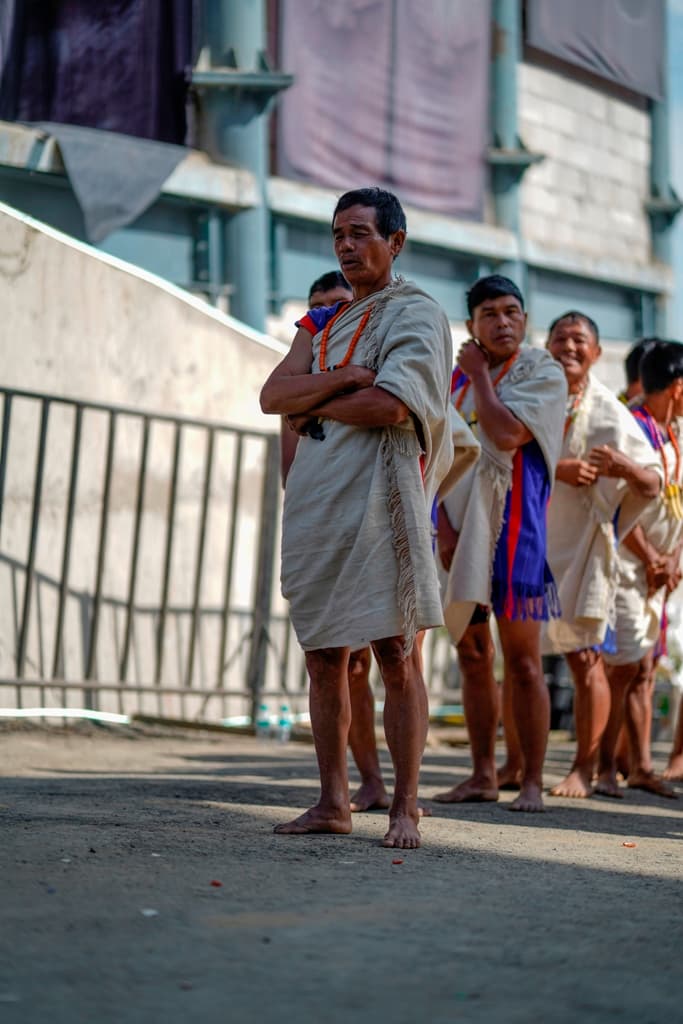
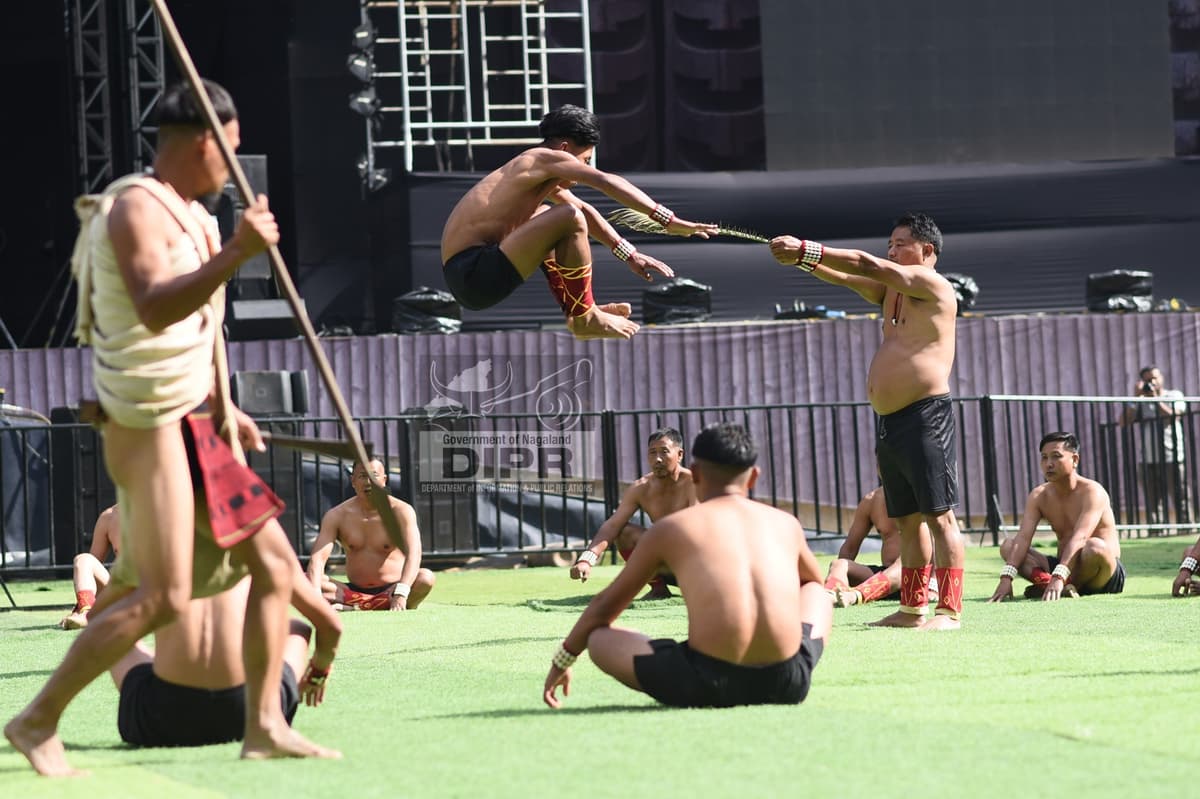
The Sumi troupe showcased Akikiti, a traditional kick-fighting sport performed within a circular ring. Practised by young boys in the morung, it emphasised skill, fitness, and self-defence and was traditionally showcased during festivals like Tuluni, Ahuna, and Tixini.
The Sangtam troupe performed Shangrü Thsaba Khi, a friendship folk song celebrating inter-tribal unity, mutual respect, and lasting companionship. The Rengma troupe presented Künyeün, a war dance of the Igada Festival, marking the selection of new warriors and traditionally performed by the Tseminyu troupe.
The Pochury troupe performed Küzhegwi, a ritual chant by elders reminding villagers to strictly adhere to customs to prevent natural calamities. This ritual is observed in late January before the commencement of other festivals.
The Phom troupe showcased Ho Ho Shou, the song of origin and migration, recounting the ancestral journey from “Entolok” to “Laimeisham” and paying tribute to the tribe’s resilience.
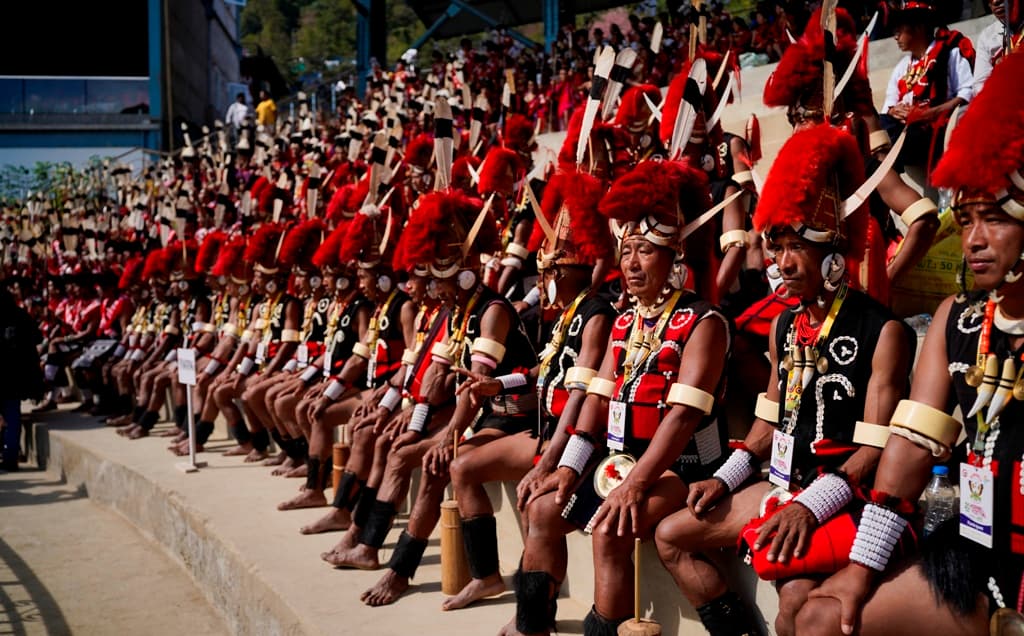
The Lotha troupe performed Myingthung Sharü, a dance of praise traditionally presented to welcome a new village chief. Performed by warriors and youth, the dance affirms loyalty, courage, and the readiness to defend the village under the new leadership.
The Kuki troupe performed Lenchonghoi La, a folklore recounting the tragic abduction of Lenchonghoi by Khalvompu. The story highlights the sorrow of her seven brothers, unable to rescue her due to natural barriers, and the place later known as Lenchonghoi Lei.
The Konyak troupe presented Gan-rin Boa, a war-footing song performed before battle, involving rituals, dance and oath-taking, symbolising unity, bravery and readiness for combat.
The Kachari troupe showcased Bagurumba, the butterfly dance performed by Mech Kachari women. Celebrated for its grace and beauty, the dance promotes virtue, character and harmony with nature.
The Khiamniungan troupe performed Beoyam Kinya, a harvest demonstration reflecting the joy, relief and communal unity during harvest season. The chant traditionally helped ease fatigue among villagers returning from the fields.
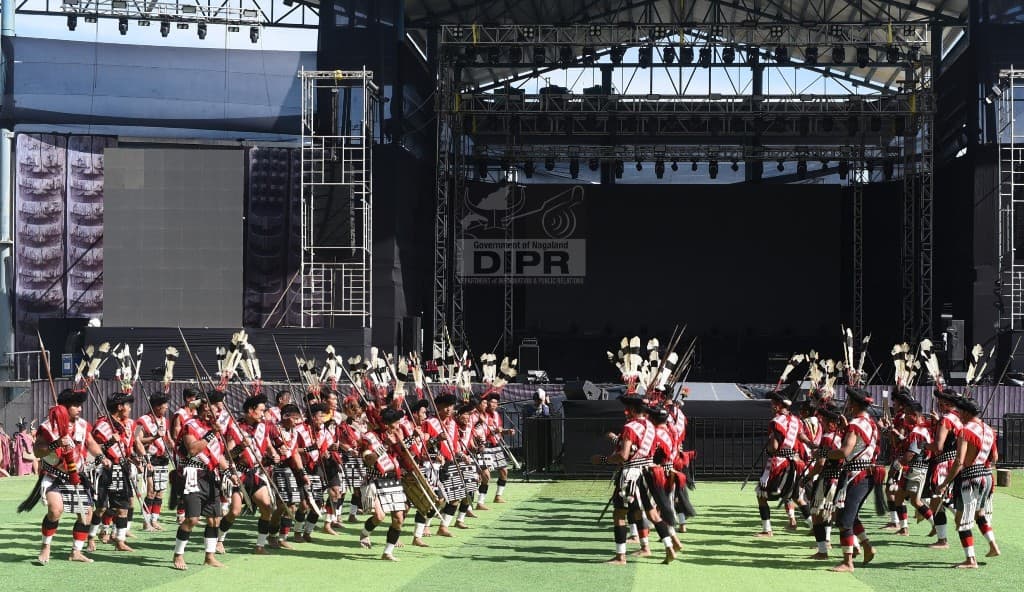
The Garo troupe presented the Quarrel Dance, depicting a symbolic conflict between the Sangma (intelligence) and Marak (power) clans. Rituals with sword and shield precede the performance, followed by a celebratory dance symbolising restored peace.
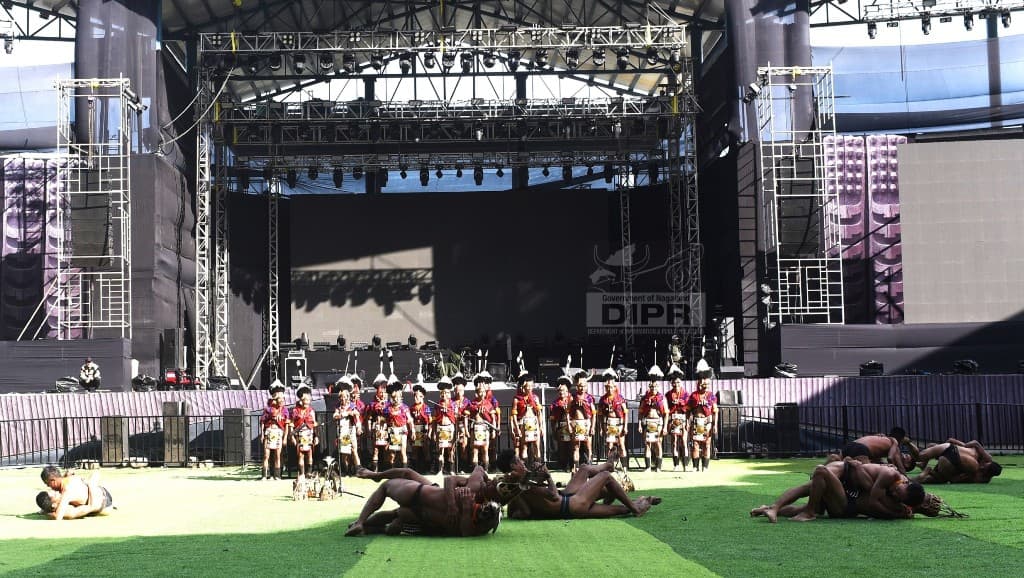
The Chang troupe performed Khuyubü, a traditional wrestling sport historically held during festivals, where champions were honoured with a traditional hat known as Helikhun. The Chakhesang troupe showcased Süte Li, a millet cultivation song sung during fieldwork, as millet serves as an essential early-season crop.
The Ao troupe presented Keyi Asahba Yimya (The Tiger’s Hunt), highlighting the historical necessity of tiger hunting to protect livestock and communities and its transformation into folklore and dance.
The Angami troupe concluded the cultural sequence with Lübo–Tati, featuring the traditional single-stringed musical instrument, Tati, known for its deep resonant sound, traditionally played during social visits and gatherings.