


Vishü Rita Krocha's seventh book, 'A bowl of Khaudzü', focusing on traditional Naga food and heritage, is released in Kohima.
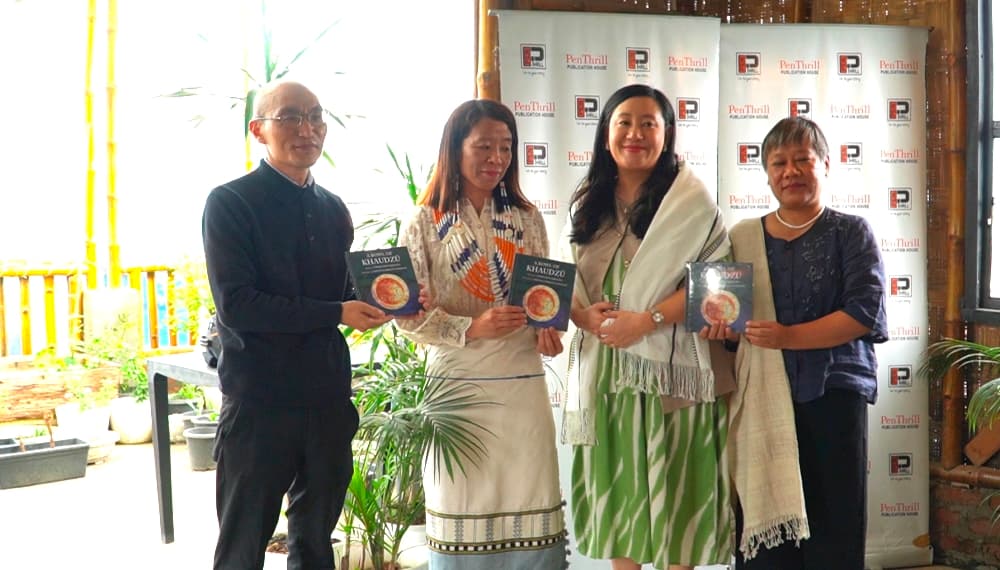
KOHIMA — "A Bowl of Khaudzü", a book on a native dish written by Vishü Rita Krocha and illustrated by Adenuo Shirat Luikham, was launched by Asalie Lese, Deputy Secretary to the Government of Nagaland, on Saturday at The Local Harvest in Kohima.
This is the seventh book authored and released by Krocha and also marks PenThrill’s 120th publication.
The author recalled that khaudzü is a dish she grew up loving, and in recent years, she developed an even greater love for it, not only because of its local taste and flavour but also due to a deeper realisation that traditional foods are comforting and have stories behind them.
She stated that one of the primary reasons she wrote the book is because she observed that many traditional foods are vanishing from tables and memories.
"Many children today, even from my own community, would not have tasted khaudzü or recognised many of our traditional foods that carry with them stories of the past and contain rich cultural values," she said.
She said that she believes the connection people have with their food shapes their lives, and ancestral foods are also part of their heritage that needs to be promoted and preserved.
Also read: Author Sahin highlights personal struggles behind her book
“This book, however small in size and content, is a labour of love. It involved endless hours in the kitchen over the past many years, just experimenting, cooking and sharing khaudzü with people I love, including families, grandparents, mothers, siblings, cousins, and friends, and also realising that the food we have on our tables is a result of the hard labour of farmers who toil in the fields to make the wonderful ingredients available for our consumption," she expressed.
In writing this book, she did not just want to share the recipe of a much-loved native dish but also preserve the memory of a childhood that is still alive and could perhaps inspire the younger generation to go back to their roots.
Vizovono Elizabeth, an independent editor and researcher, shared her thoughts on the book, stating that it is presented in just 19 pages but filled with beautiful words and stunning images, where the narrator recollects her memories of spending the summer in the village with her grandmother.
She described the style of writing as very interesting, structured like poetry in small stanzas of three lines but reading like prose. Each stanza of three lines is accompanied by a visual image, and the narrative style has the quality of oral narration, she said.
She also pointed out that the book is a blend of oral storytelling presented in a visually appealing written format. She added that the collaboration with the illustrations in the book created a more resplendent and enriching experience, making the reading more vibrant and colourful, allowing readers to relive past memories through stories.
Asalie Lese shared how the book talks about a particular food item but is not an end in itself. He recalled how the book contains descriptions of the social and economic activities of a particular community. He said that the book is able to capture various aspects, citing that culture and traditions are not limited to certain practices but go beyond that aspect.
Angel Raikhan spoke about what khaudzü tastes like, and Rokonuo Merko performed a special song titled 'A nei kekrei jü'. Adenuo Shirat Luikham also shared her journey of bringing the book to life through her illustrations.