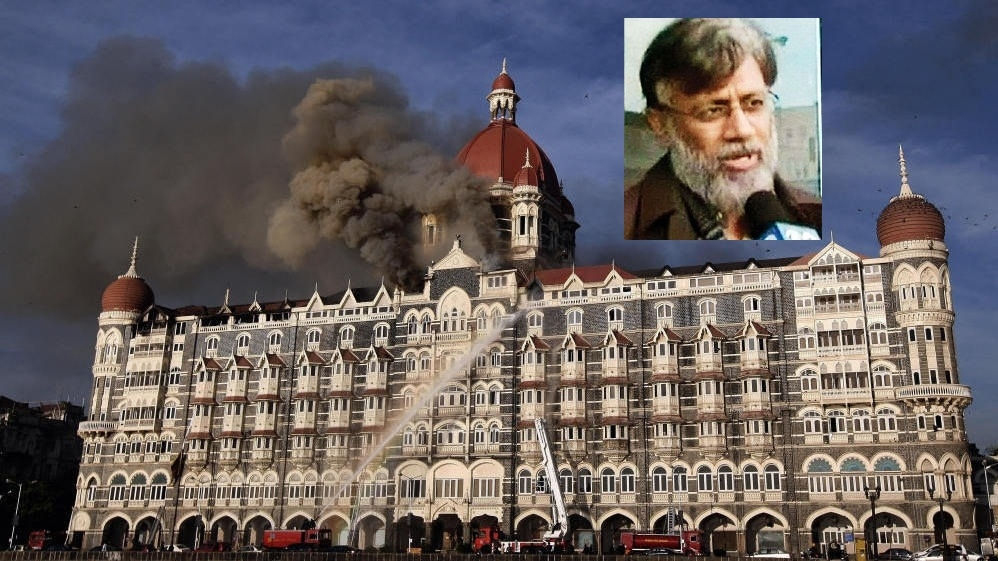
WASHINGTON — In a major development, the US Supreme Court on Saturday approved
the extradition of Tahawwur Rana, a key accused in the 2008 Mumbai terrorist attacks,
to India.
Rana, a Canadian national of Pakistani origin, has been
declared a fugitive by India and faces multiple criminal charges related to the
attacks that left 166 people dead, including six US citizens.
The US Supreme Court dismissed Rana's review petition
against his extradition. He had filed a "petition for a writ of
certiorari" in November last year, which was rejected on January 21.
This decision came a day after Donald Trump was sworn in as
the 47th US President.
"Petition denied," the court stated.
Rana's plea followed a series of failed legal battles in
lower and federal courts, including the US Court of Appeals for the North
Circuit in San Francisco.
US Solicitor General Elizabeth B. Prelogar had urged the
Supreme Court to reject Rana's petition, a recommendation challenged
unsuccessfully by Rana's counsel, Joshua L. Dratel.
Rana, currently detained at the Metropolitan Detention
Center in Los Angeles, is also a close associate of David Coleman Headley, the
Pakistani-American Lashkar-e-Taiba terrorist who played a key role in planning
the Mumbai terror attacks.
Headley, who turned approver in the case, is serving a
35-year prison sentence in the US for his involvement in the brutal terror
attacks on Indian soil.
India has been pursuing Rana's extradition to hold him
accountable for his alleged role in facilitating the deadly attacks, which
targeted iconic locations in Mumbai over four days in November 2008.
The attacks, orchestrated by the Pakistan-based
Lashkar-e-Taiba, are among the worst terror incidents in India's history.
With the Supreme Court's decision, Rana has exhausted all
legal options to avoid extradition, paving the way for India to bring him to
trial.
This marks a significant step in the long-standing quest for
justice for the victims of the 26/11 attacks.