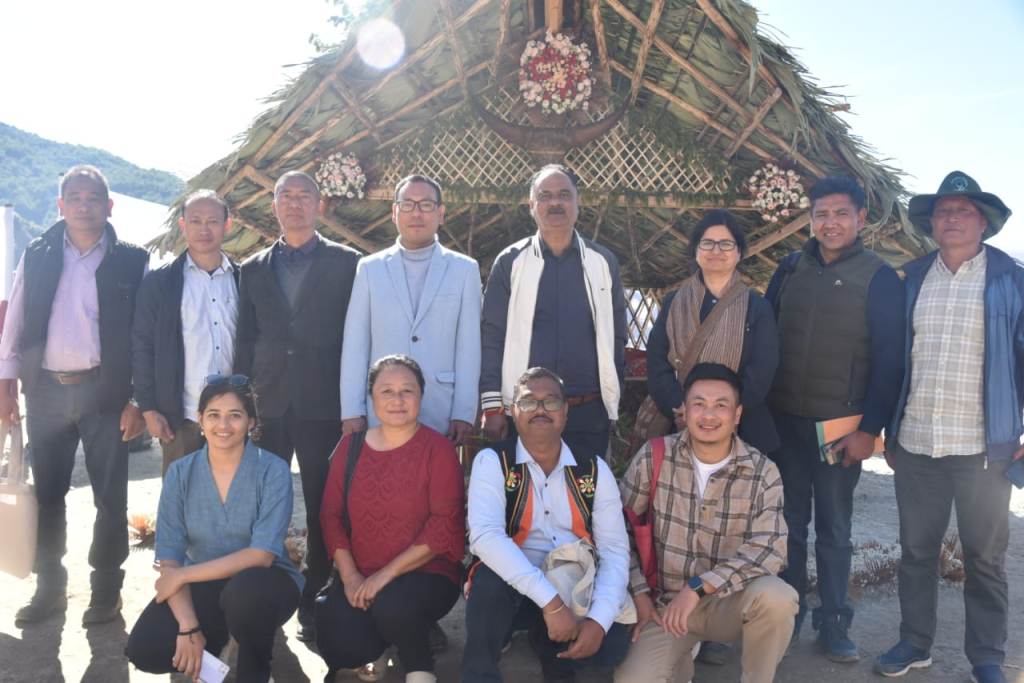
MOKOKCHUNG — A
three-day workshop for eastern Nagaland conserved areas was held from November
27 to November 29 at Choklangan village, Noklak.
The event was organised by Lemsachenlok in collaboration
with the Department of Environment, Forest and Climate Change; the Foundation
for Ecological Security; Kalpavriksh; and the ICCA Consortium South Asia.
The workshop aimed to connect Eastern communities in
creating biodiversity peace corridors, according to an update.
The event's objectives centred on understanding
community-conserved areas (CCAs) in the eastern part of Nagaland, which
represent critical landscapes where local communities play an active role in
biodiversity conservation.
The workshop included sessions on developing a framework and
policy guidelines for CCAs, preparing management plans and People’s
Biodiversity Registers, and exploring resources for conservation-related
activities to support sustainable livelihoods.
Additional sessions focused on progressive leadership, the
roles of women, youth, and children in biodiversity conservation and community
development, and fostering collaboration to strengthen collective efforts for
Eastern and trans-border biodiversity peace corridors.
The event also featured the launch of AlijoCademia, a
traditional holistic learning centre, in four villages, along with cultural
presentations.
On the second day, Neema Pathak Broome, secretary of
Kalpavriksh and coordinator of the ICCA Consortium, South Asia, discussed the
importance of United Nations Sustainable Development Goals (SDGs) and the vital
role of Indigenous communities in achieving them, despite being financially
neglected and under-recognised. Neema also inaugurated a community fishery pond
at Choklangan, aimed at providing an economic resource for the local community.
Dr. Tsewang Namgail, director of Snow Leopard Conservancy
India Trust, highlighted the environmental costs of rapid development and urged
a more responsible and thoughtful approach to progress.
T Imlitoshi Walling, retired principal of People’s College
Mokokchung, highlighted the importance of family as the foundation of all human
activities, including economy, society, religion, and conservation. He
emphasised the need for rural communities to enhance their quality of life by
identifying and utilising their untapped talents and skills to benefit society
and contribute to state and national progress.
Dr. Temjensangla Pongener, associate professor at Fazl Ali
College, Mokokchung, addressed female participants, focusing on women’s vital
roles in community development and their contributions to social, economic, and
environmental progress.
Mongngoi Phom, associate pastor of Longleng Town Baptist
Church, emphasised the church’s role in sustainable development, citing
scriptures that call for humanity's responsibility towards the Earth.
Dr. Y. Nuklu Phom, Chairman and Team Leader of Lemsachenlok,
outlined a vision for expanding CCAs beyond local boundaries to connect larger
landscape corridors.
Samom Khelen Singh, DFO Tuensang and special guest, launched
the AlijoCademia Centre online, benefiting four villages—Aniangan, Langnok,
Kingjong, and Wui. This initiative by Lemsachenlok aims to provide educational
opportunities and resources to remote communities.