

Speakers at the Dimapur rally urged Naga political groups to overcome internal divisions, while seeking transparency in negotiations and an honourable settlement.
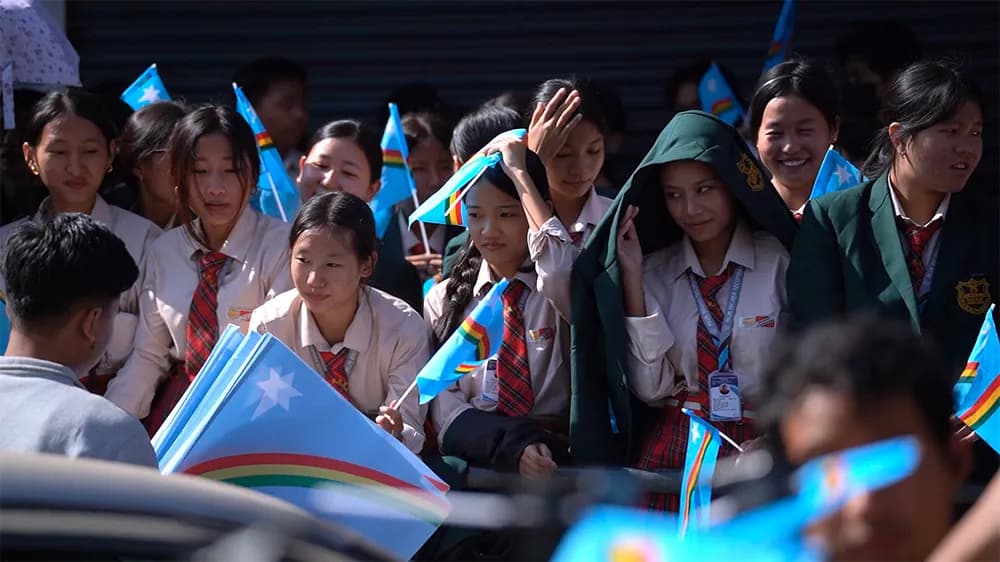
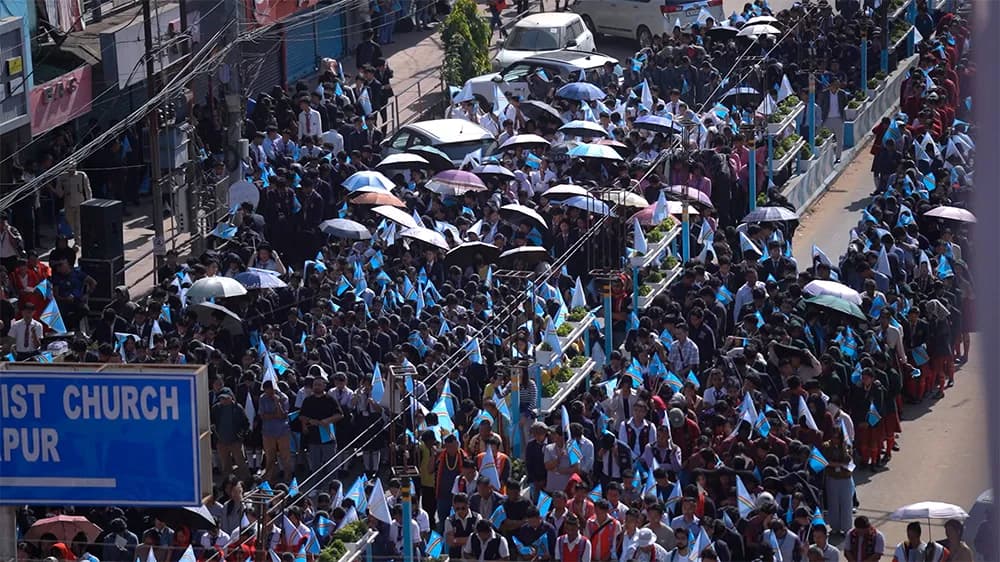
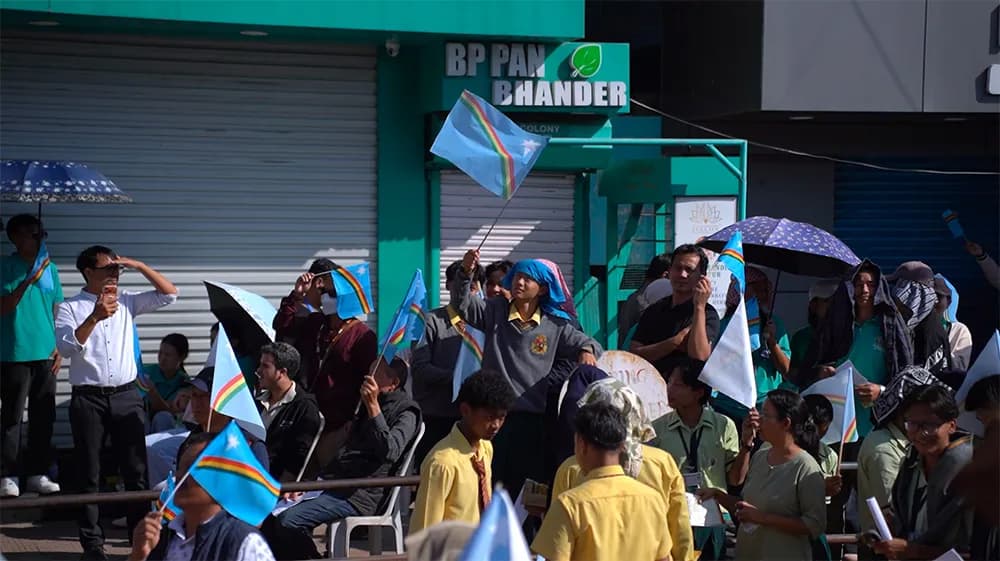
DIMAPUR — Thousands of people gathered at Clock Tower, Dimapur, on Friday for a Naga rally organised by the Naga Students’ Federation (NSF), calling for unity among Naga political groups and an early, inclusive and honourable settlement of the Naga political issue.
Held on the theme “One People, One Nation, One Destiny”, the rally brought together students, youth, elderly citizens and representatives of Naga organisations, with speakers urging the people to rise above tribal and organisational differences and renew their commitment to the collective Naga political aspiration.
Three public resolutions read out by former NSF president Kegwayhun Tep asserted that the Naga political movement belonged to the Naga people and that its assertion, position, leadership and manifestation must rest with them. The resolutions called on all Naga political groups to uphold this principle and stand together against divisive forces.
They also urged the Nagas to rise above tribal differences and administrative divisions, safeguard their identity and historical narratives, and resist attempts to distort or undermine Naga history, identity and political rights. The resolutions further called on the government of India and Naga political groups to work towards an inclusive and honourable settlement.
Addressing the gathering, secretary general of Naga People's Movement for Human Rights (NPMHR), Dr. Neingulo Krome, recalled the painful history of Naga political struggle, describing it as one written in blood and tears. He alleged that more than 300,000 Nagas had lost their lives during decades of conflict before the ceasefire, while many others endured torture, displacement and starvation.
Referring to the 1964 ceasefire, Krome said several rounds of talks with the government of India had failed to produce a settlement, with the Naga delegation remaining firm on its demand for sovereignty.
He said internal divisions, greed and corruption had weakened the collective Naga aspiration, criticising some leaders and national workers for prioritising the retention of power over a lasting political solution. The younger generation, he said, was bearing the consequences of the failures of earlier generations.
Krome appreciated the Working Committee of Naga National Political Groups (WC-NNPG) for declaring that its negotiations with the Centre had concluded, but expressed concern over the prolonged talks between the NSCN (IM) and the government of India, which began in 1997.
Tracing the history of successive interlocutors, including Swaraj Kaushal, K Padmanabhaiah, RS Pandey, RN Ravi and AK Mishra, he questioned the Centre's commitment to the negotiation process. He said the Framework Agreement signed in 2015 had raised hopes among the Naga people, but its implementation remained unresolved and contested.
Krome also questioned the need for the recently appointed interlocutor, Ajit Lal, to study the Framework Agreement and its competencies, given the long history of negotiations and the records available.
He lamented that prolonged political uncertainty had fuelled mistrust and divisions among Naga groups, and apologised to the younger generation for the political uncertainty inherited from the past eight decades. He urged the people to reject greed and corruption and uphold honesty, truth and unity.
Reading out a message from Nagaland Tribal Hoho Coordination Committee (NTHCC), Naga Women Hoho Dimapur president Imlinungla said the prolonged delay in resolving the political issue had caused considerable uncertainty, particularly among the younger generation.
The NTHCC called for an early political settlement, urging the Centre and all stakeholders to demonstrate genuine political will and bring the negotiations to a logical conclusion. It also sought transparency on the charter of demands forming the basis of the negotiations, saying the Naga people had a right to understand the issues under discussion and the possible implications of any settlement.
The committee further called on all Naga political groups to rise above their differences and come together on a common platform to pursue a lasting settlement.
A representative of United Naga Council said the rally sent a message to the government of India and the international community that the Naga spirit and struggle for self-determination remained alive.
Citing the 1929 memorandum to the Simon Commission, the 1951 Naga plebiscite, the 2011 Amsterdam Communiqué and the August 3, 2015 Framework Agreement, he said the Naga political aspiration was rooted in the decisions and sacrifices of earlier generations. Welcoming the recent visit of interlocutor Ajit Lal and the Union ministry team, he urged the Centre to respect the unique history and political rights of the Nagas and bring the prolonged issue to an honourable conclusion.
A representative of Tirap Changlang and Longding People's Forum (TCLPF) reaffirmed the Naga identity shared by people across administrative boundaries, saying they remained united by their common history, aspirations and collective dream. The forum, he said, supported an early and inclusive solution.
A representative of Naga Students' Organisation of the Naga Self-Administered Zone, Myanmar, said the Nagas needed to prepare themselves for a political settlement by addressing internal divisions. Political maturity, mutual respect, responsible leadership and social discipline were essential to building a peaceful and prosperous future, he said, adding that the future of the Naga people could not rest solely in the hands of a few leaders or organisations.
Delivering the presidential address, NSF president Mteisuding called for renewed unity, saying the future of the Naga people must take precedence over individual, tribal and organisational interests.
He urged the government of India to demonstrate political will and bring the decades-long negotiations to a meaningful conclusion. He also called on Naga leaders, tribal institutions, civil society organisations and elders to translate their calls for unity into action, warning that continued divisions could undermine the collective future.
On the role of non-Nagas in the political movement, he said the NSF welcomed genuine friendship and solidarity from other communities, but maintained that the Naga political issue and the authority to determine its future must remain with the Nagas.
He stressed that the issue was historical and political in nature and could not be treated as an ordinary administrative matter or addressed through arrangements that disregarded the aspirations of the people.