


Monalisa Changkija’s latest collection of verse, This Silence is an ode to life lived in its fullness, and here is review of the book.
Share


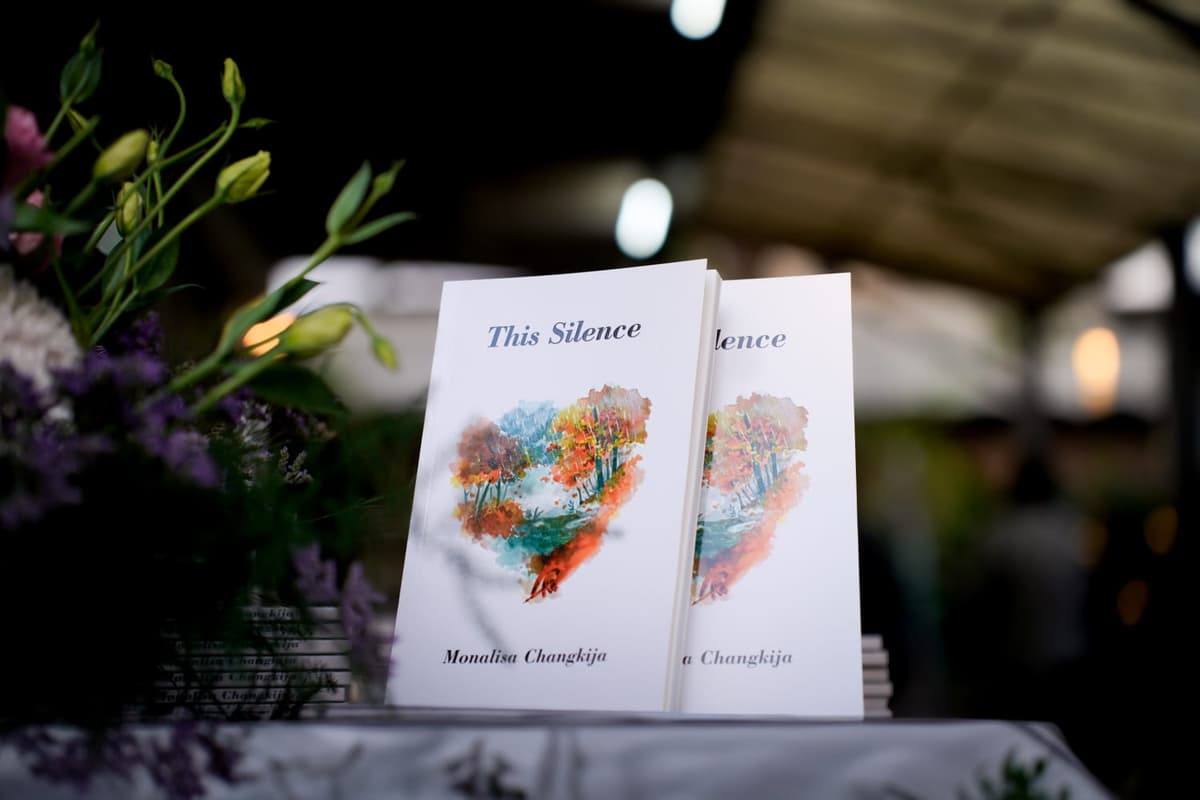
Monalisa Changkija’s latest collection of verse, This Silence is an ode to life lived in its fullness. In many ways, the poems in this collection bear witness to the author’s life as a fearless journalist speaking unapologetically during a time when male-dominated and male-centric norms and patriarchal structures shaped Naga society. It is this characteristic vein of her personality that finds expression in her poems which weave together themes of love, aging, death, identity, passage of time, memory and solitude - culminating in a resonant and emotionally charged offering to the reader.
As someone who turns to poetry for solace, I found some of Changkija’s poems to have a profound and lingering impact - particularly those such as Shrouds of Silence, Unfinished
Business, By Mistake, Tell Me Lies, and Vernal Showers which lay bare the tumult and vulnerability of love that casts shadows on the inner self, exposing emotions charged with grief, longing and unspoken desires. In Tell Me Lies, Changkija writes - “Oh yes, tell me
more lies/ they keep me wary/ of the duplicity of the human heart/ in the chicanery of the
world”. Similarly, in Unfinished Business, she ruminates, “And I wish you goodnight too..
Hoping you will understand/ and concede someday/ why you and I will be upset with each other” capturing the ache of unresolved emotions that often place undue strain on human relationships.
On the other hand, poems such as Age-Related & Age-Defying, Is It Time Already? and At
My Age reflect the poet’s ongoing preoccupation with aging. This thematic concern can be traced back to her writings from the late 1990s, a period when she was likely navigating the realities of middle age. Her poem Sunset is indicative of this where she writes, “My inspiration level is not what it used to be/ .. I forgive and endeavour to forget/ the years that rolled by/ trying to be a woman of substance”. Perhaps this is the way Changkija allows her emotions to effervesce – by quietly reckoning with time, memory and the burdens of becoming. While the temper of these poems constitutes the majority of her verse in this new collection, lines from and evoke and confront the socio-political realities of Nagaland. During her 2024 speech at the A Kevichusa Citizenship Award Ceremony, Changkija paid homage through her verse wherein she awakens through poetry – a remembrance of Chalie Kevichusa, mirroring the sentiment in her poem as, “People die, you know”, you said/ “Yes, I know, but only if we forget they lived”/ I replied”. Here, we see how the poet demonstrates her ability to move seamlessly between the personal and the political, using poetry as a way to honour memory, resist erasure, reclaim the narrative and bear witness.
Changkija’s verse offers as much food for thought as her Editorials, Post-Eds, Op-eds and Anchors. It is both provocative and insightful for the reader of today, inviting deep reflection on so many issues permeating both the social and individual fabric of our society. Yet it may be what resides between the lines of these poems that stay with the reader long after the poems have been savoured: a woman giving voice to her emotions as she moves through the rhythms of her daily life, choosing poetry as her language of reckoning and reflection. In as much as there is stillness and silence, there is also the sound and the fury.
Beni Sumer Yanthan
(The writer is Assistant Professor of English at the Centre for Naga Tribal Language Studies,
Nagaland University)