


Administrative Training Institute Nagaland and Baptist College partner for a village attachment survey assessing developmental needs in three districts
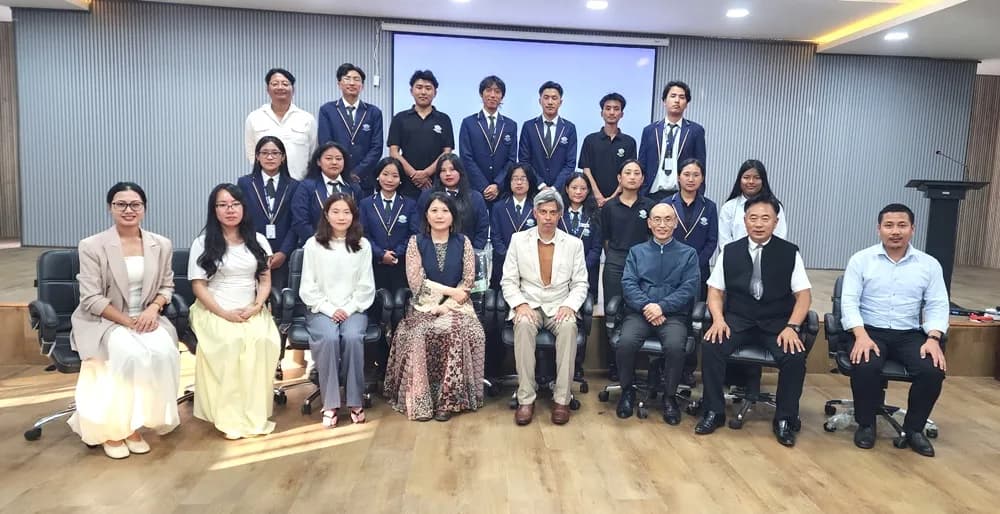
DIMAPUR — The Administrative Training Institute (ATI), Nagaland, in collaboration with Baptist College, Kohima, conducted a field-based initiative titled “Voice from the Village: A Community Grievance, Possible Solutions and Needs Assessment Survey” across three villages under the Village Level Functionaries Training Programme.
The survey was carried out in H Hotovi in Niuland district, Thekrejuma in Kohima district, and Holongba in Tuensang district during a student village attachment conducted from October 17 to the 20th, according to an update.
The initiative was designed to identify community grievances, assess developmental needs, and explore possible solutions. The study covered key areas, including road connectivity, healthcare, education, water supply, electricity, employment opportunities, access to government schemes, and the preservation of traditional and cultural heritage.
A total of 18 students accompanied by three faculty members participated in the programme, staying in the villages for three days and two nights. Dr. Sentinaro, Coordinator of the Internal Quality Assurance Cell at Baptist College, coordinated the overall execution.
Read more local news: Nagaland gets first dedicated children’s hospital in Dimapur
North East Christian University holds diplomatic debate simulation on UN Day
The findings were presented to the Director General of ATI in Kohima on October 26, with the objective of bringing grassroots concerns to the attention of the state government to assist future development planning.
The programme was attended by Joint Director Kaholi Sema, Deputy Secretary Asale Lese, Deputy Director Imlibenla Jamir, Dr. Alem W Longchar, and Dr. Hovithal.
The Director General of ATI commended Baptist College, the faculty, and the participating students for their efforts and the presentations submitted. He stressed the need to assess whether government schemes and development projects are effectively reaching intended beneficiaries, expressing hope for further collaborations to strengthen community participation and improve public service delivery.
He noted that the immersion provided students with firsthand experience of grassroots realities, enabling them to share knowledge and propose solutions to village challenges.
Participating students and faculty presented their findings regarding the status of education, healthcare, and physical infrastructure, including roads and water supply.
The students shared that they gained valuable insights from the attachment, and they also highlighted traditional community strengths, such as indigenous water conservation techniques and environmental preservation methods.
ATI plans to expand the initiative to include more students in future attachment programmes.