Union Minister highlights
Northeast's transformation and role in combating climate change
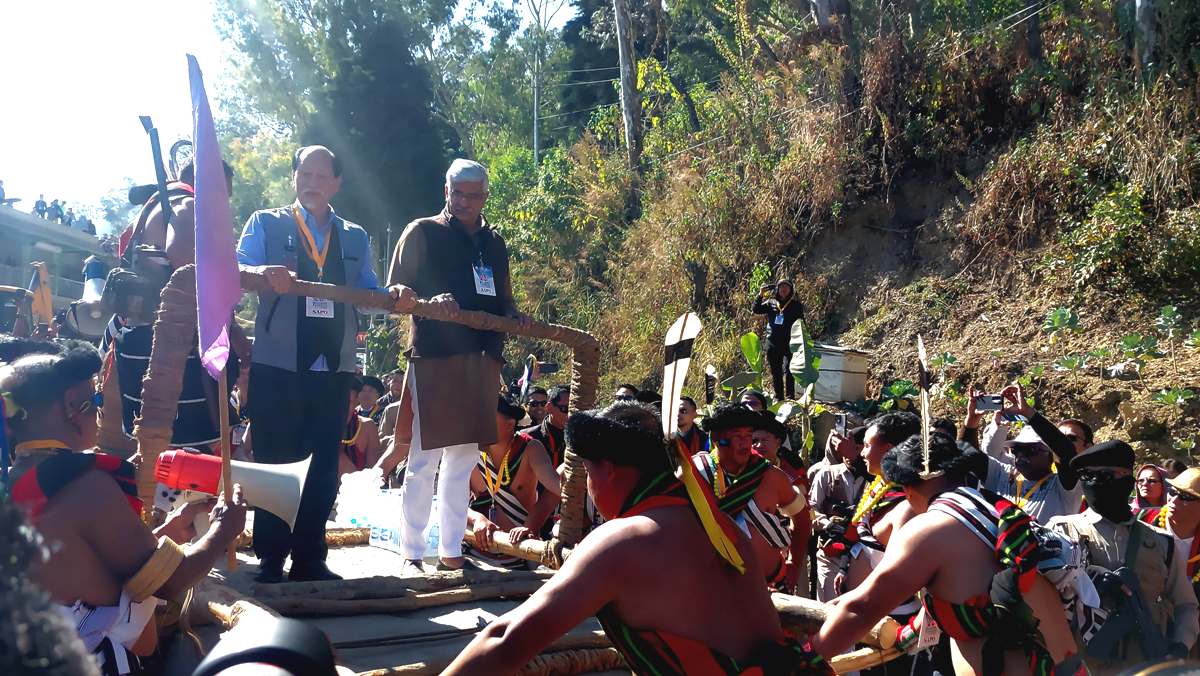
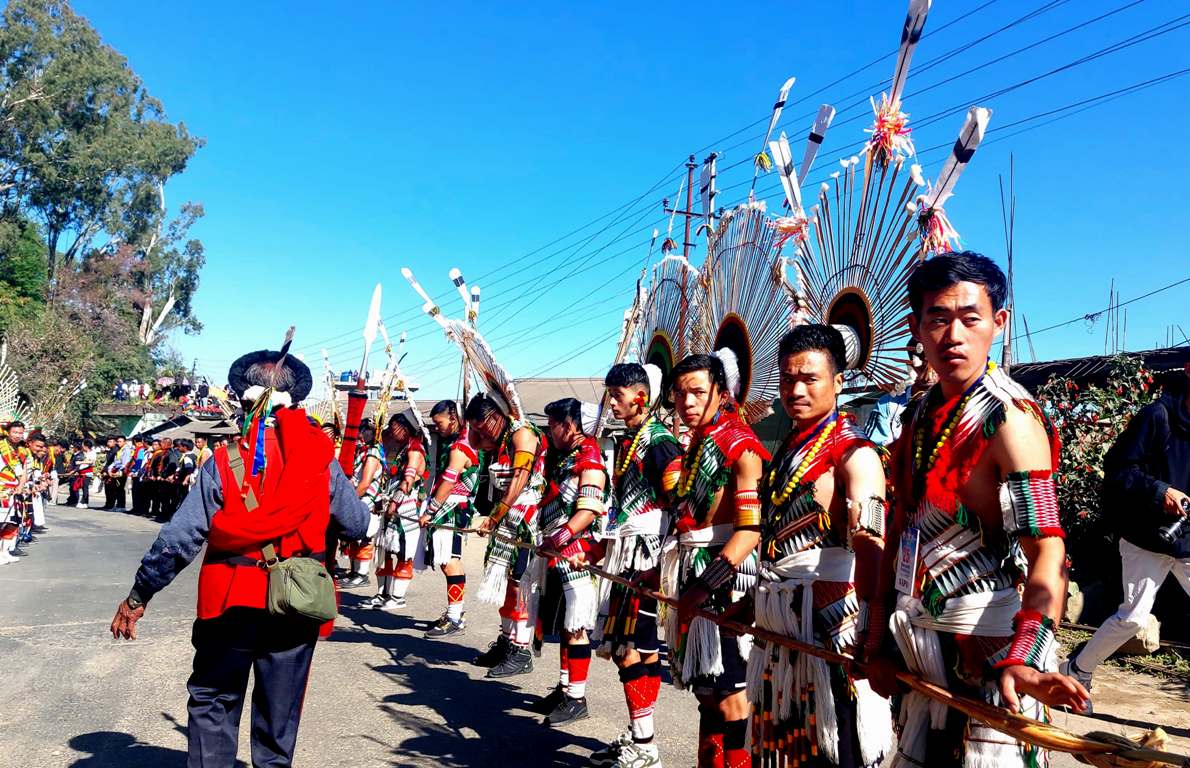
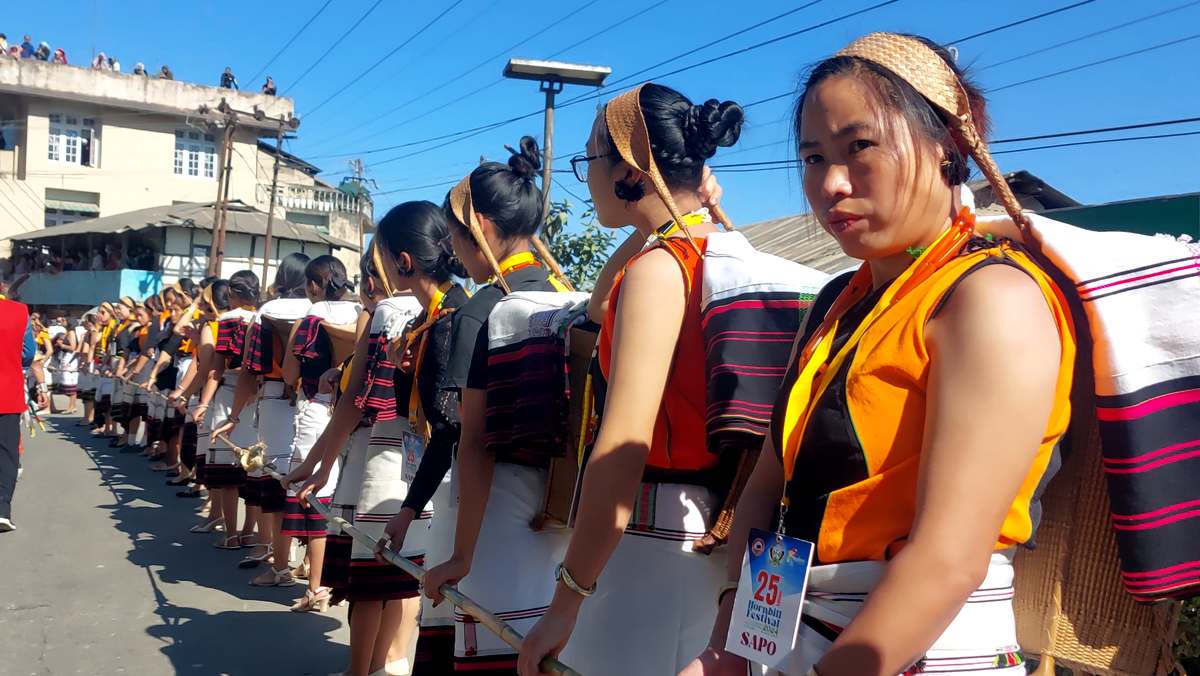
KISAMA — Commemorating the 25th edition of the Hornbill Festival, the Southern Angami
Public Organisation (SAPO) organised a stone-pulling ceremony from Napfülezha
Kigwema TCP Gate to the Naga Heritage Village in Kisama.
The stone weighed 15 tonnes and
was 24 ft long, 6 ft wide, and 1.8 ft thick. Thousands of people from 13
villages under SAPO pulled the stone for more than 4.5 km. Twenty-five gunshots
were also fired.
Union Minister for Culture and
Tourism Gajendra Singh Shekhawat graced the occasion as chief guest. “In 25
years, this Hornbill Festival has become a truly international festival where
people from across the world come together to see, witness, and experience the
beautiful hills and valleys of Nagaland,” he said during the flag-off event.
He observed that the festival,
with the support of the Ministry of Tourism and Culture, can become a globally
known festival.
Also, Shekhawat said that in the
last 10 years under Prime Minister Narendra Modi, the Northeast region has
witnessed unprecedented transformation. He added that the NE states, especially
Nagaland, have all the potential to become a driver of this transformation.
“The diversity of culture and the
richness that these states carry have all the potential to be the growth engine
of our country,” he said.
The union minister further talked
about climate change, pointing out that its impacts are visible everywhere
today. “This is the time when the people go back to their roots, back to the
tribal people, and learn for themselves how they can live with nature, how they
can co-exist with nature,” he said.
According to him, the Hornbill
Festival is an opportunity for the world to come, witness, and connect with
their roots.
Additionally, he said that the
pulling of stone portrays a united strength—“that united we are strong, and our
united ancestors could pull this heavy stone or wood and log drums to their
villages from the forest.”
Shekhawat said that in the same
spirit of unity, people can pull the country towards the expectations of the
future generation.
Chief Minister Neiphiu Rio, who
was the chief host of the ceremony, said that the event was in memory of the
blessing the state has received during the past 25 years of celebrating its
rich culture and tradition.
Rio stated that when the Nagas
were living a wild, isolated, and savage life, the British people came to the
Naga Hills and took it over eventually after bloody battles. However, realising
the uniqueness of the Nagas, their rich culture and traditions, they passed a
bill in 1873 known as the Bengal Eastern Frontier Revolution Act (BEFRA) that
had protected (and continues to protect) the Nagas from the outside world—those
who enter without permission.
This protection is now being
given under constitutional provision by the government of India.
"With the British protecting
us (in the past), the government of India’s Constitution protecting us now,
people recognise us. But if we don't recognise ourselves, who’s to be blamed?”
he posed.
Further, the chief minister
stated that the Hornbill Festival has been billed as the 'festival of
festivals' because even as every Naga tribe has a festival, the Hornbill
Festival represents the coming together of all these festivals.
During the culmination programme,
Minister for Tourism and Higher Education Temjen Imna Along delivered a short
speech and pointed out how the stone-pulling represented unity in strength in
respect of the people of Nagaland.
He stated that the stone-pulling
ceremony epitomises the visions and goals of the people of Nagaland, “which
shows the resilience and perseverance to live in prosperity despite the huge
size of the stone that was pulled.”