


With 30,000 graduates unemployed, Aying’s pani puri cart in Dimapur highlights youth entrepreneurship in Nagaland.
Yapangnaro Jamir
DIMAPUR — With nearly 30,000 graduates unemployed in Nagaland, educated youths face a stark reality as their skills and creativity remain untapped while valuable years pass by.
However, change does not always require massive initiatives; it can begin with small but effective steps. A viable path forward lies in starting small and replicating proven successes. Dimapur offers one such example in Aying’s story.
From Mon to a cart in Dimapur
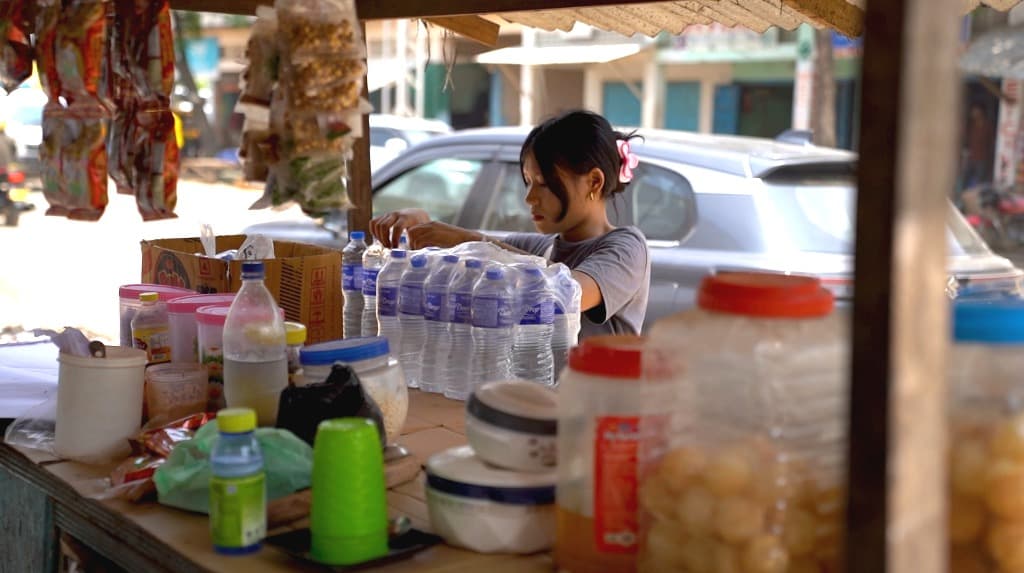
At 22, Aying had earlier never imagined herself behind a vending cart at Circuit House colony in Dimapur, serving pani puri and chana.
Raised in Mon district, she had expected a different path. She aspired to pursue higher studies, but lacked sponsors or the income to pay her fees. Faced with this challenge, she chose to create a way out.
During her childhood, she often visited Dimapur and realised it was the commercial hub of Nagaland, while business opportunities were limited in Mon.
Also read: NSDMA to conduct NEPEx, Night Guard on April 29-30
While planning to start a small business, she contacted her aunt in Dimapur, who supported her and helped her settle there.
First came the thrift store, which failed miserably. The clothes sat unsold, the rent due, and she found herself in that quiet space between effort and outcome where many people choose to give up.
Then her aunt suggested a pani puri and chana stall at Naga Shopping Arcade (Supermarket), to which Aying agreed.
Now she sets up the same cart every day. She soaks the chana overnight and wakes early each morning to prepare the necessary items.
She then carries the heavy load to the cart parked just outside a bar, where a line soon forms. Students, shopkeepers and office staff return for the taste and consistency.
Her struggle is real. She endures sleepless nights because of the heavy workload and worries constantly about paying rent.
Aying gets little time to rest or enjoy herself, balancing household chores with preparations for the cart.
She expressed gratitude to the bar owners opposite her workplace who rented the cart to her free of cost, else it would have cost her another INR 2,000 to 3,000, while a new cart costs INR 20,000 to 30,000.
Being a woman, she said she cannot remain out for long and so had to return home by 6 pm to 6.30 pm.
Despite earning only around INR 1,000 profit during Wednesday bazaars and INR 600-700 on other days, she continues her work with determination, encouraged by words of support from Naga customers.
She also hopes to expand her reach by creating an Instagram account to showcase her products.
However, her old phone has made that difficult, and she plans to buy a new one in December during Christmas.
She also dreams of opening a bigger store.
When unemployed youth ask if it’s embarrassing to run a stall with a degree, she tells them what she learned.
“There is dignity in small beginnings. Dreams do not always arrive as we imagine. Sometimes they come as salt, tamarind, and the decision to keep going.”
With government jobs limited, for Aying small startups are a way forward to build resilience, keep money circulating locally, and restore self-reliance.
“One cart will not employ 30,000 people. But 30,000 small decisions can. A tea stall, a repair kiosk, a home bakery, a delivery run, a vegetable cart sourcing from local farms — these are not small dreams.
They are the base of an economy we own,” she said. (The writer is currently an intern at Eastern Mirror)