


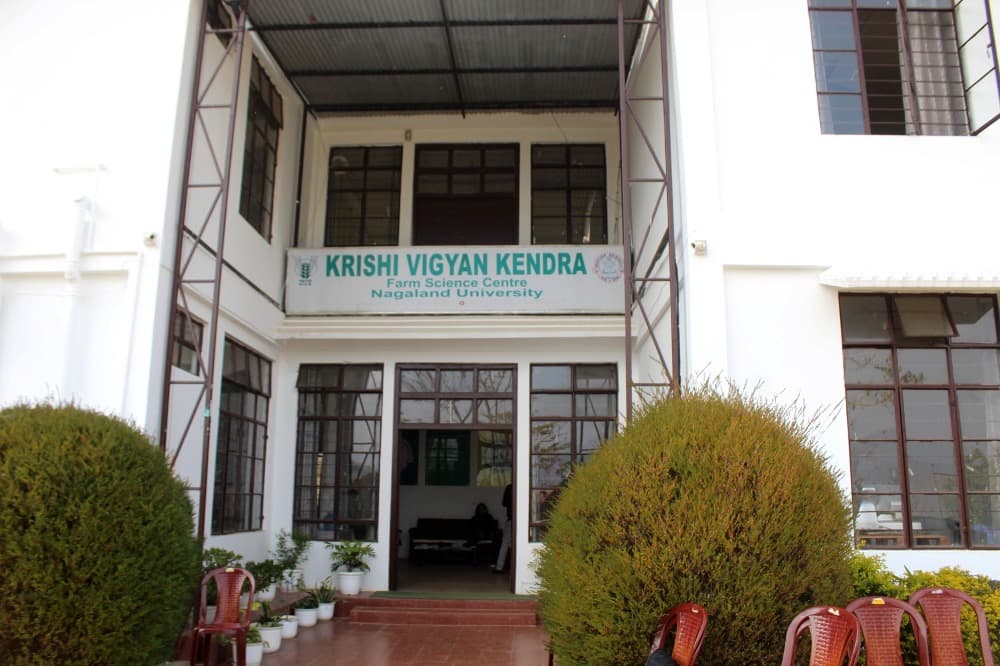
Krishi Vigyan Kendras are agricultural extension centres established by the Indian Council of Agricultural Research to bridge the gap between agricultural research and the farming community
Share


Introduction
India is predominantly an agrarian economy, where 58 per cent of the population and approximately 70 per cent of the rural households depend on agriculture for livelihood. Traditional farming practices coexist with modern and technology-driven agriculture. It plays an important role in the process of socio-economic development. The agriculture sector accounts for around 20.19 per cent (DAC&FW Annual Report, 2020-21) of Gross Domestic Product (GDP) in the Indian economy and around 62 per cent of Indian population rely on it for survival.
The Indian agriculture system is under stress due to population growth and climate change. There is a need to increase world food production by 60 percent to meet the global food in 2050 but the number of farmers is decreasing day by day amid increase in migration of people from rural to urban areas. There is diversion of agricultural land and water resources for non-agricultural purposes, which is putting a lot of pressure on natural resources. In spite of the tremendous progress the country has made in agriculture sector over the years, the productivity continues to be very low as compared to other countries.
The idea of establishing Farm Science Centre or Krishi Vigyan Kendra (KVK) emerged after it was recommended by the Education Commission (1964-66) and the same was debated by the Planning Commission and Inter-Ministerial Committee, before the Indian Council of Agricultural Research (ICAR) formed a committee led by Dr. Mohan Singh Mehta in 1973 to devise a detailed plan for implementing the KVK scheme. Consequently, the first KVK was established on a pilot basis in 1974 at Pondicherry, under the administrative control of Tamil Nadu Agricultural University, Coimbatore.
About Krishi Vigyan Kendra
At presently, there are 731 KVKs across the country under 11 Agricultural Technology Application Research Institute (ATARI) sanctioned to Agricultural universities (central and state), ICAR institutes, related government departments and NGOs (non-governmental organizations) working in agriculture, to ensure that the technology developed at lab is being taken to farmer’s field for diffusion to increase the efficiency of farming, leading to higher yields and profits. It is an important part of the National Agricultural Research System (NARS) and acts as knowledge and resource centre of Agricultural Technology. It is the only institution at district level in India for technological support to agriculture and allied activities and acts as a two-way link between farmers and researchers, and helps in the refinement of technologies in a location specific condition. The main mandate of the KVKs is the application of technology/products through assessment, refinement and demonstration. In 1984, after a performance evaluation of the KVKs, ICAR strongly recommended the creation of more KVKS throughout the country.The number of KVK is increasing day by day from one in IV plan to 731 centresin XII plan. In order to make KVK more effective and relevant under changing scenarios, various committees have been formed to review the progress and suggest much-needed improvements for their functioning. Based on their suggestions and keeping in view the emerging challenges before Indian agriculture, like slow productivity growth rate, diminishing returns, degradation of natural resources, climate change, competitive trade regimes, changingconsumer demands, etc., it has become important to further strengthen the KVK system (Report of the High PowerCommittee management of KVK, 2014).
The present mandate of KVK is “Technology Assessment and Demonstration” for its “Application” and “Capacity Development” (TADA-CD) (ICAR 2021).In order to implement the mandate effectively, the KVKs are expected to perform the following activities:
1. On-farm testing: Assess the location specificity of agricultural technologies under various farming systems.
2. Frontline demonstration: Establish production potential of technologies on the farmers’ fields.
3. Capacity building: Farmers and extension personnel are trained to update their knowledge and skills on modern agricultural technologies.
4. Knowledge and resource centre: Hub for agricultural technologies for supporting public, private and voluntary sector initiatives in improving the agricultural economy of the district.
5.Quality Seed production and sapling production:KVKs are producing location-specific quality seeds and saplings.
5. Extension services: Farm advisories using ICT and other media means on varied subjects of interest to farmers.
Objectives of KVK
1. To demonstrate the newly improved technology to the farmers as well as to the extension agency directly in the fields with their active participation.
2. To identify the area-specific problems of the farmers and prioritise the identified problems as per their importance.
3. To collect feedback from farmers and extension agencies and provide linkages with scientists for modification or refinement of technology.
4. To impart training to the practicing farmers, rural youth and extension functionaries for capacity building.
5. To provide new and important information on agriculture and allied sectors to the extension agencies or NGOs for wider circulation to improve their economic condition.
6. To prepare different extension models and verify these models in the farmers' field with their participation to create confidence among them.
Role of KVK for Rural Communities
KVKs play a crucial role in the development of rural communities, particularly in the agricultural sector. KVKs are agricultural extension centres established by the Indian Council of Agricultural Research (ICAR) to bridge the gap between agricultural research and the farming community.
The key roles of KVKs for rural communities are as follows:
A.Transfer of Technology
KVKs act as a conduit for transferring agricultural technologies from research institutions to farmers. Location-specific research findings and innovations are chosen and disseminated to farmers at the grassroots level so that it has an impact. Transfer of technologies is done through demonstrations and field visits with a goal to empower the farmer with the required knowledge and skills to improve productivity.
Various technology transfer is being promoted by KVK:
1. High-Yielding Varieties (HYV): HYV of crops that are suited to local agro-climatic conditions is introduced.
2.Integrated Pest Management (IPM): Use of Biological control, cultural practices and pesticides in a judicious manner to manage pests and diseases.
3.Crop management practices: Use of a proper package of practices for the crop.
4.Livestock management: It includes adopting better animal husbandry practices, breed improvement, nutrition, housing and disease management
5.Soil health management: Soil testing, soil management, fertilizer use and methods of organic amendments.
6.Water Saving Technologies: Drip irrigation, sprinkler system and methods to increase water efficiency.
7.Aquaculture: Fish farming, pond management, fry/fingerling production.
8.Farm mechanisation: Introduction of farm machinery based on local needs to improve efficiency and reduce labourcosts
9.Organic /Natural Farming: Vermi-composting and use of a cow-based farming system
10.Sericulture/ Apiculture:Rearing of muga /eri silkworm / honeybees for honey for additional income.
11. Climate-smart agriculture: Use of climate-resilient technologies.
B. Training and Capacity Building
Training and capacity building are integral components aimed at enhancing the knowledge and skills of farmers, farmwomen, rural youth, and other stakeholders in the agriculture sector.
1.Training for farmers, youth and women empowerment: KVKs organise various training programmes for farmers, youth and women empowerment to enhance their knowledge and skills in modern agricultural practices for generating income.Training and capacity development programmes cover crop cultivation, animal husbandry, horticulture, agro-processing, organic farming, and the use of modern agricultural technologies
2.Vocational training programmes: Vocational training programme helps in upgrading the required skills for entrepreneurship development.
3.Technology Awareness Workshops: Organisedto create awareness about new and advanced agricultural technologies among farmers like ICT, precision farming and sustainable farming.
4. Collaboration with different stakeholders and capacity building of extension workers.
C. Demonstrations
KVKs conduct on-farm demonstrations to showcase new and improved agricultural practices, technologies, crop varieties, different breeds of livestock, aquaculture, apiculture, mushroom production, post- harvest management of crops and processing of various fruits and vegetables etc. Demonstrations make it easier for the farmers to adopt the technology at their households/farms.
For a successful demonstration, the following methodology is involved:
1. Technology selection as per the needs of the local agro-climatic conditions.
2. Identification of a suitable site along with the farmers.
3. Preparation of demonstration plots, sowing and monitoring.
4. Observation by technical staff and farmers and finding the solution if any problem arises.
5. Data collection and feedback.
6. Scaling up for the spread of the technologies to be adopted by a large number of farmers.
D.Seed Production and Distribution
KVKs having facilities for seed production contribute to the production and distribution of quality seeds which help farmers access better seeds, leading to improved crop productivity. KVKs that have land provide a training programme on quality seed production, which includes:
1.Selection of the right crop/varieties.
2. How to grow crops for seed production.
3. Seed harvesting, processing and grading.
4.Moreover, in the absence of the seed production facilities, farmers are provided with quality seeds purchased from reputed seed companies. The seeds so distributed are monitored for their yield performances and the feedback obtained is studied for further research and innovation. In case of natural calamities, KVK provides some amount of seeds to the farmers as contingency measures.
E.Soil Health Management/ Natural farming
KVKs offer guidance on soil health management practices, including soil testing, nutrient management, and the use of organic and green manures. This helps farmers maintain soil fertility and optimise crop yields.
1. Soil Testing Services: KVKs provide soil testing advice services to farmers, enabling them to understand the nutrient status, pH levels, and other important characteristics of their soils and inform them regarding nutrient management and fertilizer application doses.
2. Nutrient Management: KVKs give the farmers recommendations regarding balanced nutrient management to meet the demand of the plants /crops without causing imbalances.
3. Natural farming: Relevantly a new introduction and mainly cow-based where beejamrit (treatment of seeds using cow dung,urine and lime-based formulation, arich source of Nitrogen, Phosphorus, Potassium--NPK),whapsa or whapasa (process which involves activation of earthworms in the soil to create water vapour creation), mulching (use of bio-mass to conserve moisture) and plant protection (spraying of biological concoctions which preventweeds, pests and diseasestoprotect the plants and improve soil fertility) are used.
F. Livestock production and management
Livestock is an important component for rural farmers as it supports them in improving the socio-economic conditions by selling their livestock and provides nutritional benefits through the consumption of meat, milk, and eggs. Some important activities under livestock include:
1.Breed Improvement/ introduction: KVKs advise farmers on selecting and breeding high-yielding and disease-resistant livestock breeds
2.Nutrition Management: Educates the farmers on balanced nutrition for livestock.
3.Feed Management: Farmers are encouraged to include location-specific crops / locally available crops in the animal feed to reduce the cost of feeds.
4.Healthcare Practices: KVKs promote good healthcare practices for livestock, which include vaccination, deworming, and disease management. Information on reproductive health management, including estrus synchronisation, artificial insemination, and breeding techniques to enhance livestock productivity is disseminated.
5.Housing and Shelter: Information on proper housing is crucial for providing comfort, protection from adverse weather conditions, and minimising stress on animals.
6.Disease Control: KVK provides information on various quarantine procedures, proper sanitation, and hygiene practices in livestock management. This is done to ensure that the farmers and consumers get quality meat.
7.Management of Livestock Wastes: KVK provides information on the use of manure for organic farming / natural farming and biogas production. Proper waste management is required for environmental sustainability.
8.Value Addition and Dairy Processing: KVKs promote value addition in the dairy sector by providing training on dairy processing techniques. This includes activities such as milk processing, cheese making, and other value-added products.
9.Demonstration Farms: KVKs have animal demonstration farms where farmers are made to visit to adopt best practices in livestock management. These farms serve as learning centers for hands-on training and practical demonstrations.
10.Livestock Insurance: KVKs help by providing information on livestock insurance schemes to help farmers mitigate financial risks associated with livestock farming, which includes coverage for diseases, accidents, and other unforeseen events.
G. Fisheries Management
KVK provides the required training and demonstration along with a package of practices for fish farming so that farmers can harvest more benefits from a small area.
1.Training and Capacity Building:KVKs provide training on pond preparation, stocking, feeding, water quality management, disease control and other aspects of fish production to educate farmers, aquaculturists, and fishermen about modern and sustainable fish farming practices.
2.Demonstrations and On-Farm Trials:Farmers are provided with hands-on experience and practical knowledge by observing best practices in pond management, fish stocking, and harvesting through demonstrations and OFT.
3.Fish Seed Distribution:KVKs facilitate in the distribution of quality fish seeds to farmers so that they have access to good-quality fingerlings.
4.Disease Management:Guidance on disease prevention and control measures in fish farming is provided.
5.Water Quality Management:Advice on maintaining proper water quality in fish ponds, including parameters like dissolved oxygen, pH, and nutrient levels are provided to ensure a healthy pond environment.
6.Market Linkages:KVKs help fish farmers in identifying markets and providing information on the market rate for their produce.
7.Research and Development:KVKs collaborate with different research institutions to adopt and disseminate new technologies, breeding methods and sustainable practices so that the latest information is passed to the fish farmers.
8.Integrated Farming System: Promotes integrated farming systems which incorporate fish farming with other agricultural activities, such as poultry or horticulture, for enhanced overall farm productivity and increasing income from a small area.
H.Mushroom production and Management
1. Demonstrations and On-Farm Trials:KVKs conduct on-farm trials and demonstrations to showcase successful mushroom cultivation practices where farmers have an opportunity to witness the entire cultivation process, from substrate preparation to harvesting, in their own farm.
2. Seed and Spawn Distribution:KVKs facilitate the distribution of quality mushroom seeds and spawns to farmers from a reputed source.
3. Problem Solving and Advisory Services:KVKs provide advisory services to farmers, addressing their queries and concerns related to mushroom cultivation.
4. Market Linkages:KVKs assist farmers in identifying potential markets for their mushroom produce i.e., market trends, pricing of mushroom.
5. Research and Development:KVKs contribute in adoption of new research and development activities related to mushroom cultivation which will benefit the farming communities.
6. Awareness Programmes:KVKs organise awareness programmes to promote nutritional benefits of mushroom consumption and the economic potential.
I. Honey bee and management
1. Training and Capacity Building: KVKs organise training programmes to educate beekeepers and farmers about modern and sustainable beekeeping practices, along with hands-on training on hive management, beekeeping equipment, honey extraction, and pest and disease control in apiaries.
2. Demonstrations and On-Farm Trials: On-farm demonstrations and trials are conducted to showcase successful beekeeping techniques.
3. Technology Dissemination: KVK help beekeepers to adopt improved hive designs, bee breeds and management practices for better honey production.
4. Bee Breed and Queen Distribution: Distribution of quality bee breeds and queen bees are done so that quality honey can be produced.
5. Disease and Pest Management: Information on the prevention and control of diseases and pests affecting honeybees is provided.
6. Honey Quality Assurance: KVKs assist in maintaining and improving the quality of honey produced so that it fetches a premium price in the market.
7. Market Linkages: Linkages are identified by KVK and facilitates by improving connections with buyers and retailers.
8. Integration with Crop and Horticulture Systems: Bees help to enhance overall farm productivity through pollination services and through demonstrations and trainings. KVKs promote the integration of apiculture with crop and horticulture systems.
9. Awareness Programmes: KVKs organise awareness programmes to educate farmers and the community about the benefits of beekeeping, both in terms of honey production and pollination services for agriculture.
J.Entrepreneurship Development
Entrepreneurship development is an important aspect for the development of progressive farmers, and KVK plays an important role in this process.
1. Training Programmes on entrepreneurship development: These programmes cover various aspects of agribusiness, including business planning, financial management, marketing, and value addition for Rural Youths, SHGs and other interested groups.
2. Identification of Opportunities: Since KVK works at a grassroots level, it helps in identifying potential entrepreneurs and entrepreneurial opportunities in agriculture and allied sectors such as organic farming, agro-processing, floriculture, poultry farming, dairy etc.
3. Creating Market Linkages: KVKs facilitate market linkages by connecting entrepreneurs with potential buyers, retailers, and markets. This ensures that the entrepreneurs have access to a market for their products and helps in creating sustainable business models.
4. Incubation Centres: Some KVKs establish incubation centres to nurture and support budding entrepreneurs. These centers provide infrastructure, training, and mentorship to individuals or groups interested in starting their own agribusiness ventures.
5. Financial Assistance: Information about various government schemes and financial assistance programmes available for entrepreneurs in the agricultural sector which includes details about subsidies, grants and loans that can help initiate and sustain agribusiness ventures are provided. Ex. RKVY programme (Agriculture Accelerator Fund) supports agritech startups with grant-in-aid up to INR 5 lakh at idea/pre-seed stage and INR 25 lakhs at the seed stage.
6. Networking Opportunities: KVKs help to create platforms for entrepreneurs to develop network with each other, industry experts and potential collaborators. Networking helps in knowledge exchange, partnerships and business growth.
K.Advisory Services
KVKs serve as advisory centres, offering farmers timely information and advice on crop planning, weather forecasts, market trends, and other relevant issues which help farmers to make better decisions for their agricultural practices. For instance, Kisan Mobile Advisory Services (KMAS) and Common Service Centres (CSCs) provide SMS and internet-based alerts, warnings and other information to farmers; and Gramin Mausam Seva (GKMS) provides agro-meteorological advisory services, including weather forecasting.
L.Extension activities
Field Day, Technology Week, Krishi Mela, Kisan Mela, scientists' visit to farmers' field, farmers-scientist interaction, CFLDS, etc.
M. Convergence programmes
KVK works in close association with all Agri and allied departments of the district, ATMA, NABARD, Agricultural Universities and research institutes, integrating science, fishery, DRDC, marketing.
In summary, Krishi Vigyan Kendras play a pivotal role in transforming and uplifting rural communities by providing them with the necessary knowledge, skills, resources and other facilities to enhance agricultural productivity and improve livelihoods.
Compiled by:
Dr. Rakesh Kumar Chaurasia,
Principal Scientist and Head,
KVK, Zunheboto,Nagaland University.