


Our Reporter
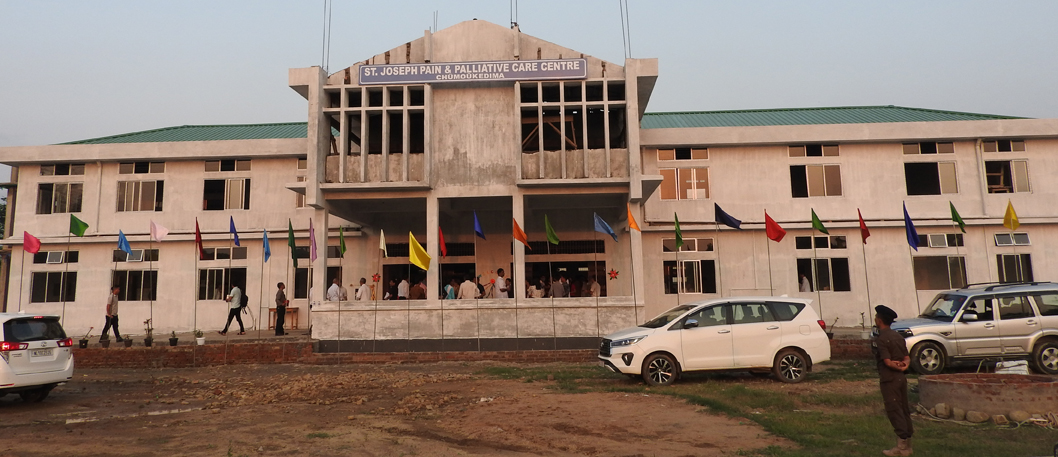
Dimapur, April 24 (EMN): Nagaland Chief Minister Neiphiu Rio on Sunday inaugurated the St. Joseph Pain and Palliative Care Centre in Chümoukedima, the state's first full-fledged palliative care centre.
Speaking at the inauguration programme, Rio said that the Catholic Church in Nagaland has been at the forefront in imparting quality education and health care at an affordable cost for people even in the most interior places of the state, and the humanitarian services carried out should be highly appreciated by one and all.
‘Palliative care resonates with the teachings of Jesus Christ on compassion and love. Its primary objective is to impose quality life by taking care of the physical, psychological, spiritual and emotional needs,’ Rio said.
He added that palliative care is not only to relieve the suffering of the patients but also to comfort and support the families through difficult times and encourage everyone to come forward and partake in this charitable cause.
Rio informed that at present, Nagaland has three palliative care units, which are functioning partially, at Christian Institute of Health Sciences and Research (CIHSR), Dr. Imkongliba Memorial District Hospital, Mokokchung and Naga Hospital Authority, Kohima (NHAK) while another was recently opened at Eden Medical Center, Dimapur for cancer patients.
The St. Joseph Pain and Palliative Care Centre has about 20 bedridden and abandoned patients and is also providing home-based palliative care as part of community palliative care programmes.
St. Joseph Pain and Palliative Care Centre, Chümoukedima, an initiative of the Catholic Church in Nagaland and managed by the congregation of Medical Sisters of St. Joseph, Nirmala province, Ernakulam, Kerala, is now ready to serve the people of Nagaland and intends to provide palliative service free of cost.
Also speaking during the occasion, Bishop of Kohima, Rev. Dr. James Thoppil said that the Catholic Church in Nagaland (diocese of Kohima) has been acknowledged and appreciated for imparting quality education at the least cost for the people at their door steps, even at the most interior places in Nagaland.
‘However in the field of health care, the Catholic Church could not build a big hospital with modern facilities, except in building moderately good health centres in Chümoukedima due to lack of funds and specialised medical personnel.
‘And today they chose ‘Mercy Sunday’ to venture into a new field in healthcare, an exclusive and full-fledged palliative care centre with the vision of compassionate and quality care, healing and wholeness for people with terminal illness and to enable people to experience comfort and total care’, he said.
Thoppil informed that the services they intend to render were palliative care, pain management, physiotherapy, nursing and end-of-life care and also planned to carry out these services through seven significant initiatives, namely an out-patient clinic, about 20 in-patient admissions, giving home-based care and day care support, training and equipping people to render palliative care at home, medical camps and conducting training and animation programmes.
Thoppil added that they intend to provide this service free of cost with generous donations from people and associations, and therefore to achieve its sustainability and free service, the centre need to liaison with the government and its various departments, voluntary organisations and people of good will so that it could render all possible assistance to carry out its service to people who need it most.
At the event short speeches were delivered by Director, Health and Family Welfare, Dr. Neikhielie Khimiao, Director of CIHSR, Dr. Sedevi Angami, Deputy Commissioner, Chümoukedima , Abhinav Shivam, and Joint CEO Nagaland State Disaster Management Authority (NSDMA), Johnny Raungmei.