[caption id="attachment_214339" align="alignright" width="320"]
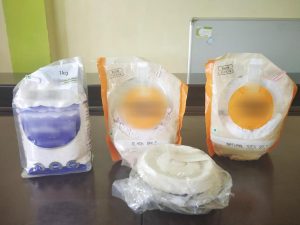 For illustrative purpose only: Some of the natural salt products including indigenously processed salt found in the market in Nagaland.
[/caption]
Our Correspondent
Kohima, Oct. 24 (EMN): Nagas have traditionally favoured locally made salt that are widely available in the market. The indigenously created salt is used for its appeal that it has ‘distinct taste’ and ‘flavour.’ However, a medical practitioner has cautioned against using the ‘local’ condiment daily.
The reason: ‘Local’ salt doesn’t have iodine—one of the most important trace minerals the body needs for tissue repair, regulate metabolism and promote proper growth and development, among other health benefits. Iodine deficiency is understood to be a major problem around the world. Women who are pregnant or breastfeeding, and those on a vegan or vegetarian diet, and those who live in certain areas of the world are reportedly at a greater risk of deficiency.
Some people in Nagaland, especially those in the rural areas, use ‘local’ salt when preparing meat or even cooking porridge for infants, and for the aged and the sick.
A state programme officer of the National Iodine Deficiency Disorders Control Programme (NIDDCP) of the government, Dr. Akuo Sorhie, told
Eastern Mirror that the ‘local’ salt may be used for other purposes but shouldn’t be used as regular salt. Using local salt will lead to iodine deficiency in a person, he said, during the sidelines of a Global Iodine Deficiency Disorder Prevention Day programme in Kohima.
The medical official explained the adverse effects of using non-iodised salt, especially for pregnant women who need more iodine. Sorhie said that iodine deficiency in pregnant women can stunt growth and development, particularly of the brain and central nervous system, of the baby.
Local beliefs of ancestors and parents favoured the use of local salt, believing that ‘sickness doesn’t occur’ if the indigenous salt is consumed daily. Traditions had even extensively encouraged pregnant women and children, Sorhie said. But after a series of tests and analysis of locally made salt, there is absolutely no presence of iodine in it, it was informed.
Although the locally made salts ‘may have good minerals’ the body may need, Sorhie pointed out to the essential element of iodine required by the human body especially for growth and development of the brain, among other health benefits.
Besides the serious consequences on health, the sale of non-iodised salt for human consumption is punishable under the Prevention of Food Adulteration (PFA) Act of 1954 and rules 1955 and passed by the state government on June 25 1984.
The director of Health & Family Welfare, Dr. N Bendangyanger Jamir, who is also the additional food and safety commissioner, cautioned that any individual or businesses that are found selling non-iodised salt for human consumption would be liable for prosecution and shall be penalised under section-58 of the Food Safety and Standard Act.
The officer informed that the designated officer/Food Safety officer of districts, are directed to carry out inspections and to test salt at entry points in their jurisdiction before the product is allowed into the state. They are then required to submit a report to the directorate for further action.


