


CNFN urges Governor to implement Naga accords, warns prolonged talks fueling lawlessness, extortion, and public frustration across Nagaland
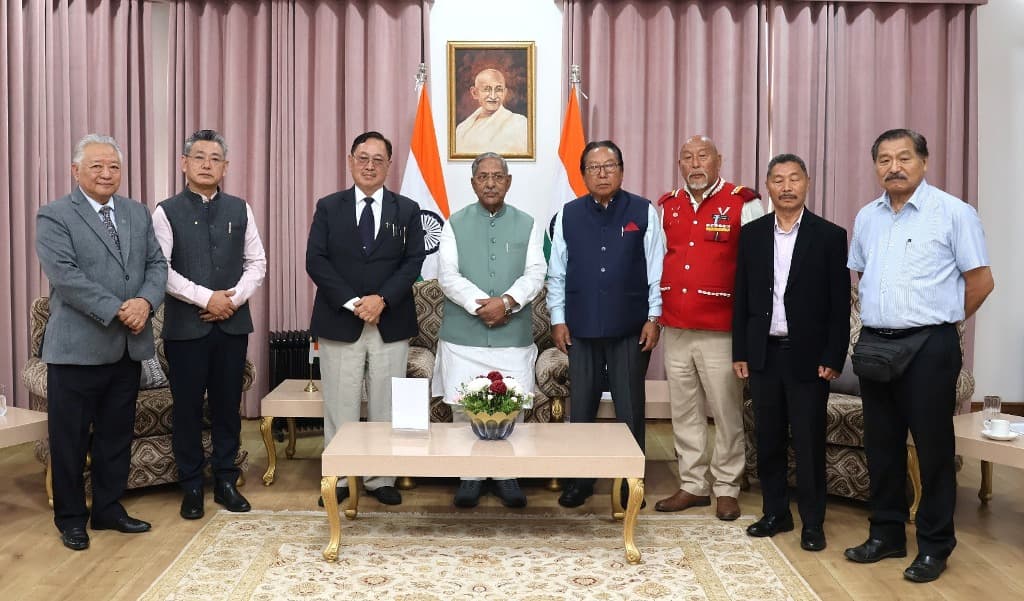
DIMAPUR — Amid growing frustration over delays in the Indo-Naga peace talks, the Concerned Naga Forum of Nagaland (CNFN) has urged Governor Nand Kishore Yadav to push for immediate implementation of the already signed agreements, warning that prolonged inaction has deepened “lawlessness” and public despair in the state.
In a memorandum submitted to the governor, the forum stated that the Naga political issue—spanning nearly a century (since submitting a representation to the Simon Commission in 1929—has reached a critical juncture, and further delay in implementing the Framework Agreement (2015) and Agreed Position (2017) is “no longer acceptable.”
The CNFN stressed that negotiations between the Centre and Naga groups had effectively concluded in October 2019, as stated earlier by then Governor and interlocutor RN Ravi, yet the lack of progress since then reflects an “inordinate delay” that has eroded public confidence.
While acknowledging the historical roots of the Naga issue—from the 1929 representation to the Simon Commission to the 16-Point Agreement that led to statehood—the forum maintained that the current phase must focus on execution rather than reopening negotiations.
Also read: Manipur: 2 killed in Ukhrul firing a day after CM’s peace visit
It also questioned recent calls by the state’s Political Affairs Committee and Chief Minister Neiphiu Rio to “upgrade” the talks to a political level, terming the move “unconstitutional” and contrary to the Nagaland Legislative Assembly’s earlier unanimous endorsement of the concluded negotiations.
“Continuing to seek fresh talks appears to be a tactic to prolong the process rather than resolve it,” the memorandum stated, alleging that political indecision has stalled implementation despite years of dialogue.
Raising concerns over ground realities, the CNFN pointed to the proliferation of over 30 armed factions in the state, many operating under ceasefire arrangements. It alleged that these groups have formed parallel systems, engaging in extortion, illegal taxation and organised syndicates that burden the public and disrupt economic activity.
“The common people are groaning under institutionalised extortion and a strangulated economy,” it stated, warning that the situation amounts to a breakdown of law and order and constitutional machinery in the state.
The forum further claimed that the prolonged “pseudo peace” has enabled corruption and intimidation, with businesses and individuals facing threats, extortion demands and, in some cases, violence.
Citing inputs from interactions between state leaders and the Centre, the CNFN suggested that there is growing impatience at the national level over the lack of progress, and questioned the state government’s role in facilitating an early solution.
In its appeal, the forum urged the governor to direct the state government to uphold its constitutional responsibility by restoring law and order and curbing the rise of armed factions.
It also called on the state to stop advocating fresh negotiations and instead work with the Centre to review the outcomes of the already concluded talks and ensure their implementation.
Stressing that the people have endured nearly three decades of negotiations and uncertainty, the CNFN stated that an early and practical solution is essential to restore stability, confidence and development in Nagaland.
“The people cannot be left to exist in confusion and misery any longer,” the memorandum stated, urging decisive intervention to bring closure to the long-pending issue.