[caption id="attachment_146747" align="alignnone" width="550"]
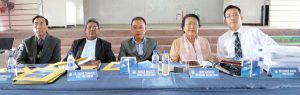 Officials of ANPSA seen during the annual meeting at Baptist High, Kohima on Oct. 24.
[/caption]
Dimapur, Oct. 27 (EMN): General Secretary All Nagaland Private Schools Association (ANPSA), Central, Nini Sekhose said private schools were the backbone of the state and employment generators which is second only to the government.
She also said private schools are employing more than 30,000 teaching and non teaching staff in the state.
Sekhose lamented that though 75% of the student population is in private schools, private schools have no say in the formulation of education policies.
“The government is the regulator, financier and provider of education all rolled into one. Such a system does not bode well both for private as well as govt. schools. It is important that a neutral body exists for formulating education policies,” Sekhose added.
Stating that at present the State Level Education Committee is the highest education policy making body of the state which formulates education policies for schools under school education and NBSE, however, Sekhose said the body is populated by government officials without any representation from private schools. She added that it is very important that private schools be represented in the body. “The ANPSA has already written to the Govt. to include the president of ANPSA Central in the SLEC. Response from the Govt. is awaited,” she informed.Presenting her annual report at the annual general body meeting of ANPSA on Oct. 24 at Baptist High, Kohima, Sekhose highlighted the achievements of ANPSA during the year.
She mentioned that one of the important changes taking place in ANPSA is the feeling of fraternity that is arising among the schools. “Schools now come together to collaborate rather than to compete, problems are shared and solutions arrived at corporately” Sekhose said.
The general secretary also said ANPSA meetings are now more a gathering of family members rather than a meeting ground for a group of professionals. The mood in the association is ‘what can I contribute to my association’ rather than ‘what can my association do for me, she added.
The president ANPSA Bithungo Kikon in his welcome address remarked that private schools were facing extraordinary times; however, he said “when the going gets tough, the tough get going.”
“Teachers are happy when the nation progresses. We are the only group of people that experience genuine joy in the success of other people’s children. An organisation cannot succeed unless it is very clear about its goals. Our goal is our children. Their welfare being is our goal and road map,” Kikon said.
“Today private schools are being punished for performing well in their duties. Attempt to curtail the autonomy of private schools is being felt.” However, he commented that they will continue to do well no matter what.
President of Private Schools’ Association, Mon Daniel Konyak spoke on the challenges faced by private schools in interior districts. He shared about communication problems and how it took a school about five days to commute from Mon to Kohima for routine works. He requested the board to consider having a branch attached to the SDEO office Mon from where routine works could be accomplished.
Fr. Felix Montero spoke on the pros and cons of introducing board exams in Classes 4 and 8.
The meeting attended by 101 delegates from private schools all over the state, concluded with discussions and brain storming on various matters.


