[caption id="attachment_219660" align="aligncenter" width="565"]
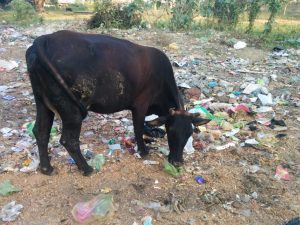
A cow grazes next to a pile of plastic wastes at Sematilla colony in Dimapur on November 23. (EM Images)[/caption]
Eastern Mirror Desk
Dimapur, Nov. 23: Even as the world is trying to curb single-use plastic items considering the overwhelming damage it can have on the environment and living beings, 6 kg of plastic was found in the stomach of a dead sperm whale that was washed ashore in Wakatobi National Park, Indonesia earlier this week, shocking the environmentalists. However, Nagaland is not free from this man-made menace with plastic items like bags, cups and bottles being strewn in open areas, inviting stray animals that look out for food.
Nagaland Chief Minister Neiphiu Rio has announced that single-use plastic items would be banned in the state by December but it is to be seen how the people of the state will respond to this noble cause.
Dr S.S. Hanah, scientist at National Research Centre on Mithun in Medziphema, Nagaland, told
Eastern Mirror that plastic wastes are threat to the lives of animals, be it marine, domestic or those in the wild.
“Many a time, hungry animals, both those in the sea and on land mistake polythene bags for food and consume it. Once ingested, plastic remain in the stomach of the animal for life as it can’t be digested, and this creates digestive problem. Such animals finally die,” said Hanah.
The scientist said that people use plastic bags for wrapping food items but animals have a very strong sense of smell. So, animals mistakenly eat plastic which is life-threatening.
“Besides consuming, some animals stuck its heads inside plastic containers thrown in the jungle or city garbage while trying to lick the leftover food and die of suffocation,” he added.
The carcass of 9.5m (31 feet) whale that was washed ashore in Wakatobi National Park on Monday exposed the stark reality of danger plastic waste could have on animals. According to World Wildlife Fund in Indonesia, a total of 6 kg of plastic, consisting of 115 plastic cups, four bottles, 25 bags and two flip-flops were found inside the stomach of the dead whale.
Considering a gross increase of plastic waste around the world, the United Nations chose the slogan “Beat Plastic Pollution” for this year’s World Environment Day, observed in June. The Nagaland government too declared during the occasion that the state would be made plastic waste-free.
Chief Minister Neiphiu Rio said at the recently concluded Tokhu Emong festival said that single-use plastic items like bags, bottles, paper cups and plates would be banned in the state by December, and that INR 10 lakh each had already been allotted to the districts from the CM’s corpus fund to promote bamboo products like bags, baskets and containers as an alternative to plastic products.
Responding to the government’s noble mission to make Nagaland a plastic waste-free state, many organisations and communities, including Kohima Municipal Council (KMC), Kuda B Khel in Dimapur, Sishunu village under Tseminyu sub-division, and Yachem village in Phom district have declared its areas as plastic waste-free.
Commissioner-secretary to chief minister Abhishek Singh had earlier told this newspaper that all the municipal bodies and town councils have been asked to ensure that single-use plastic is banned in their respective jurisdiction. He added the programme is in the “process of implementation” and that the Urban Development and Municipals Affairs department will be responsible for it besides participation from the public.


