


Academics and researchers discuss the relevance of indigenous knowledge at Pfutsero Government College's national seminar.
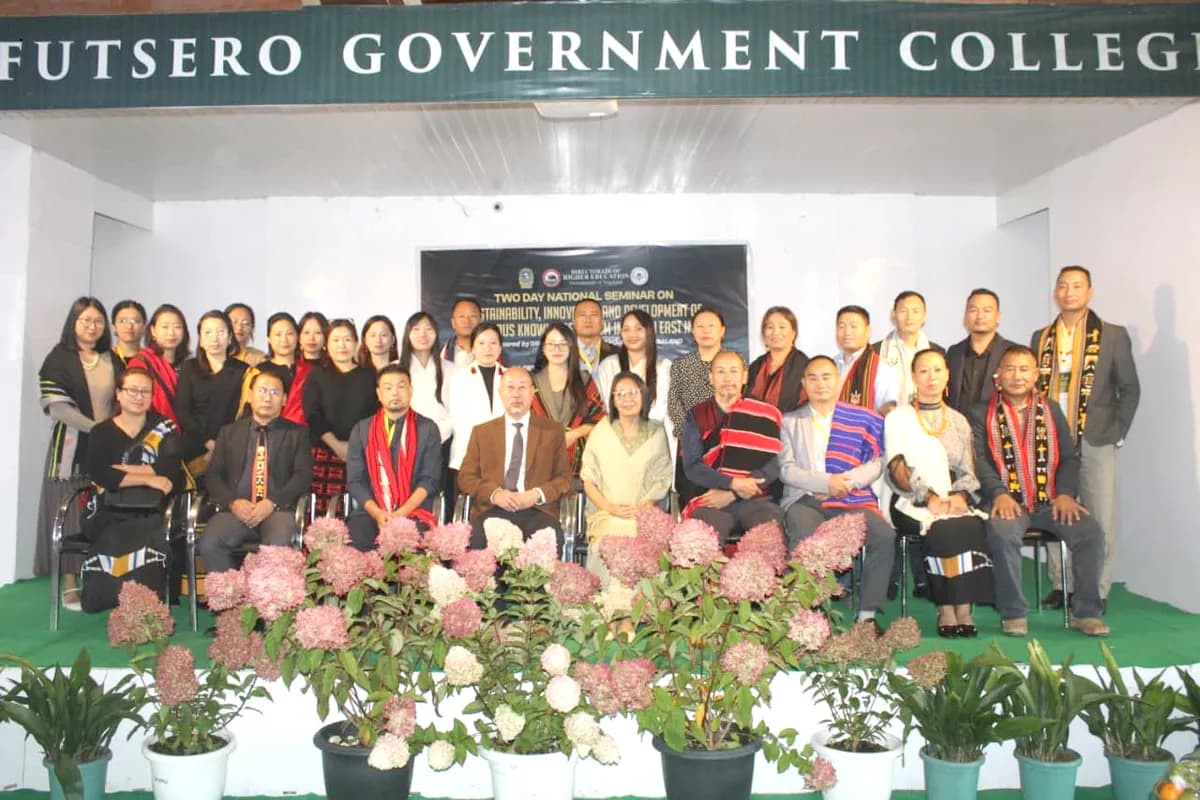
DIMAPUR — A two-day national seminar on “Sustainability, innovation and development of indigenous knowledge systems in Northeast India” concluded at Pfutsero Government College on August 6, bringing together academicians, researchers, and scholars to deliberate on the relevance of indigenous knowledge in contemporary society.
The seminar was sponsored by the Directorate of Higher Education, Nagaland, and organised by the Internal Quality Assurance Cell (IQAC) and the Department of History, Pfutsero Government College, on August 5 and 6, according to a press release.
A total of 21 papers were presented during the seminar, including 14 by faculty members and seven by research scholars. Of the papers presented, 14 were single-author papers, while seven were jointly authored. Eighteen presentations were conducted offline and three online.
The papers were presented under nine sub-themes: Indigenous Ethnic Food; Decolonising Indigenous Knowledge; Deconstructing Indigenous Historiography; Oral Narratives; Ethnomedical Practices; Performative Practices; Marriage Systems; Traditional Art, Architecture, Hunting and Fishing; and Agricultural Systems and Natural Resource Management.
Also Read: Training on Niramaya Health Insurance Scheme held in Kohima
In his keynote address during the inaugural session, IQAC Chairperson and Chairman of the Organising Committee Dr. Thungdemo N Yanthan stated that indigenous knowledge is not merely a legacy of the past but a living resource for sustainable and inclusive development.
Highlighting Nagaland as an example of enduring indigenous wisdom, he noted that indigenous knowledge has received recognition in both national and global policy frameworks, including the National Education Policy (NEP) 2020. He stressed the need to bridge modern science and traditional knowledge through innovation and highlighted the role of educational institutions in this endeavour.
Pro-Vice Chancellor of Nagaland University, N Venuh, described the seminar as a timely initiative for understanding indigenous knowledge and its contemporary relevance. He noted that NEP 2020 has accorded significant importance to indigenous knowledge by integrating it into the curriculum. According to him, indigenous knowledge provides communities with identity, values, and a sense of belonging.
Venuh cited the growing global preference for organic food as evidence of increasing appreciation for traditional knowledge systems. He urged scholars and researchers to intensify efforts to document, preserve, and promote indigenous knowledge for future generations. Referring to a local cucumber variety known for its distinctive taste and flavour, he observed that such indigenous varieties are gradually being replaced by laboratory-produced alternatives, highlighting the need to preserve local biodiversity and traditional knowledge.
The valedictory session was addressed by Director of International University, Zavise Rume. In his address, he stressed that understanding indigenous knowledge requires an understanding of the historical and cultural roots of the people from whom it emerges. He spoke on the migration history of the Nagas and highlighted cultural affinities shared with communities across Southeast Asia, including Indonesia, Malaysia, and Myanmar.
Rume noted that geography and topography serve as the foundations of indigenous knowledge, as communities creatively utilise locally available resources to meet their needs. He encouraged participants to explore and learn from other indigenous knowledge systems while remaining rooted in their own traditions. Calling for continued dialogue and engagement with nature, he stated that such efforts are essential for preserving and enriching indigenous knowledge and ways of life.