


The Peace Centre launched the “Peaceful India, Hopeful Youth” campaign in Dimapur on January 25, marking the 20th year of the Peace Channel mission.
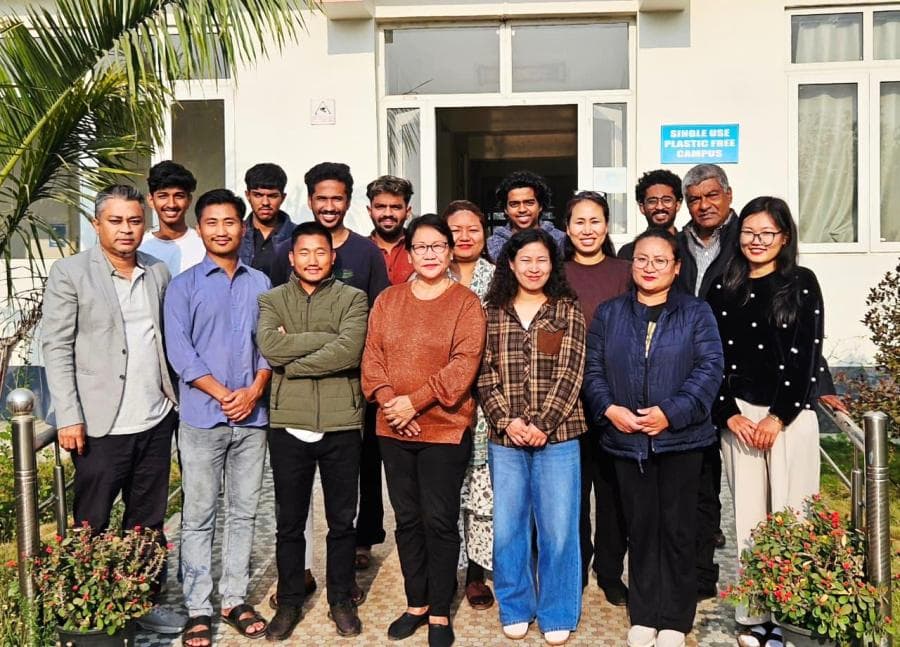
DIMAPUR — The Peace Centre (Peace Channel and North East Institute Of Social Sciences and Research) in Chümoukedima, an initiative of the Diocese of Kohima, launched a national peace campaign titled “Peaceful India, Hopeful Youth: Celebrating Diversity” on Sunday.
According to an update, the event coincided with the successful completion of the 20th year of the Peace Channel mission and the 30th Training of Trainers (ToT) on Peer Mediation and Peacebuilding at the Peace Centre, Dimapur.
Peace Channel is a youth peace movement committed to promoting interfaith harmony and social cohesion.
The campaign was launched alongside a five-day ToT programme. During the event, Fr. CP Anto highlighted the critical importance of peer mediation in higher education institutions.
He noted that many challenges faced by students—such as identity-related conflicts, relationship issues, peer pressure, discrimination, stress, and misinformation—are best understood and effectively addressed by youth themselves when they are properly trained and empowered.
Fr. CP Anto also mentioned the possibility of introducing peer mediation during the Xavier Board Executive Board Meeting of Catholic colleges and universities across India, held at Christ University, Bengaluru.
Also read: Nagaland marks National Voters’ Day with call to strengthen democracy
He noted that India’s youth remain a powerful source of hope for celebrating diversity and pluralism, especially at a time when polarising forces attempt to divide society. He underlined the social mission of higher education institutions in forming responsible citizens committed to peace, dialogue, and inclusion.
The release stated that India’s pluralistic and diverse identity is one of its greatest strengths. However, rising polarisation, intolerance, misinformation, and violent conflicts increasingly threaten social harmony. In response, the campaign places youth at the centre of peacebuilding, promoting pluralism as a lived value rooted in dignity, mutual respect, and shared responsibility.
The campaign includes a two-day intensive training programme on Peer Mediation and Peacebuilding. This enables colleges and universities to establish Peace Channel Chapters or institutional Peace Centres under their own name.
These centres will serve as hubs for peer mediation, peace clubs, interfaith dialogue, community outreach, and youth leadership development.
Through participation in this national campaign, institutions foster a peace-orientated and inclusive campus culture, enable early conflict prevention and resolution, and promote student leadership and essential life skills aligned with the National Education Policy (NEP) 2020.
The initiative also strengthens the National Assessment and Accreditation Council (NAAC) criteria related to institutional values, best practices, student support, and community engagement, while advancing the United Nations Sustainable Development Goals (SDGs).
By 2030, the campaign envisions establishing 1,500 Peer Mediation Forums, 1,500 Peace Clubs, and 1,000 Interfaith People’s Forums for Peace (PFP) across India.