


NSF-led rally in Kohima opposes Vande Mataram directive, submits memorandum to president citing religious freedom and conscience concerns.
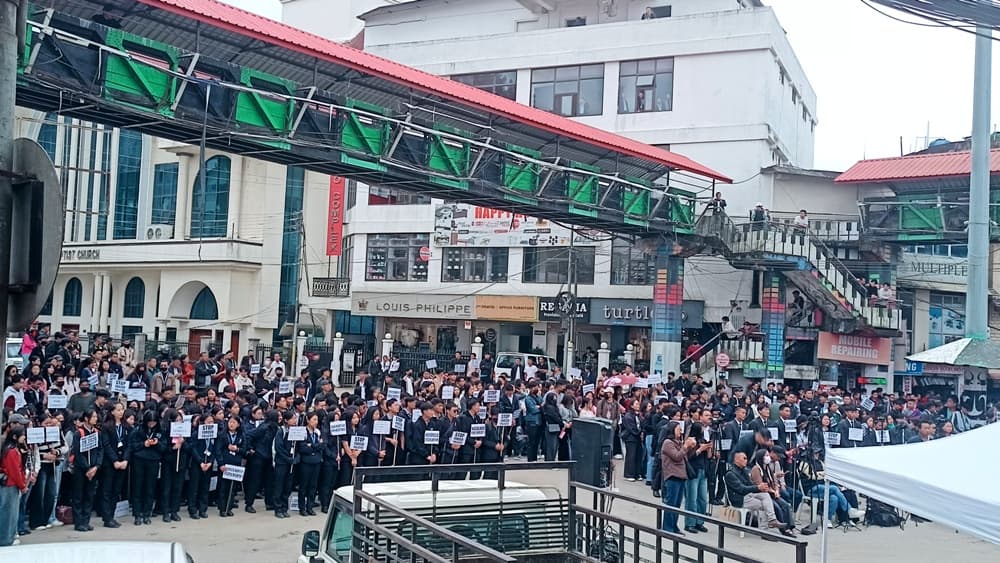
KOHIMA — A mass rally organised by the Naga Students’ Federation (NSF) in Kohima on Monday opposed the directive mandating the playing or singing of Vande Mataram during official functions and in educational institutions, with participants later submitting a representation to the President of India seeking withdrawal of the order.
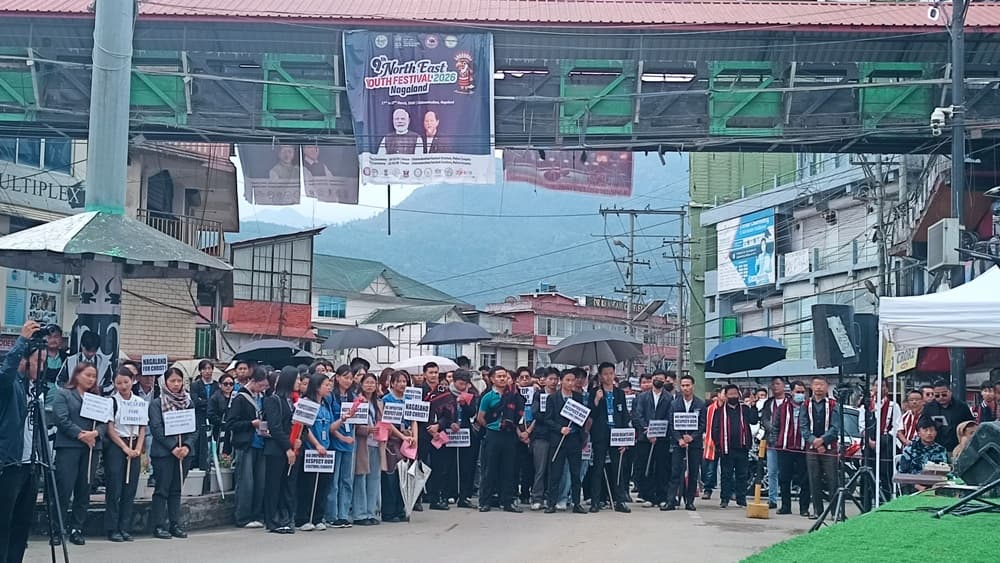
The rally was held at Old MLA Hostel junction, where student bodies, church organisations and civil society representatives gathered to express resentment over the notification issued by the Ministry of Home Affairs on January 28, 2026.
Following the rally, the NSF along with participants marched to Lok Bhavan and submitted a memorandum addressed to President Droupadi Murmu through the Governor of Nagaland opposing the directive.
In the representation, the federation stated that while the Naga people hold no hostility toward national symbols or patriotic expressions, the compulsory observance of the national song raises concerns relating to freedom of conscience and religious sensitivities. It urged the government of India to nullify or withdraw the directive mandating the singing or playing of Vande Mataram during official functions and in educational institutions in the Naga homeland.
Also read: Nagaland Congress criticises Imna Along over Vande Mataram remarks
Ao Students’ Conference directs schools to stop Vande Mataram
Addressing the gathering earlier, NSF president Mteisuding said the issue raised a “fundamental matter of conscience” for the Naga people and maintained that the identity and beliefs of the Naga people cannot be dictated by administrative directives or imposed symbols.
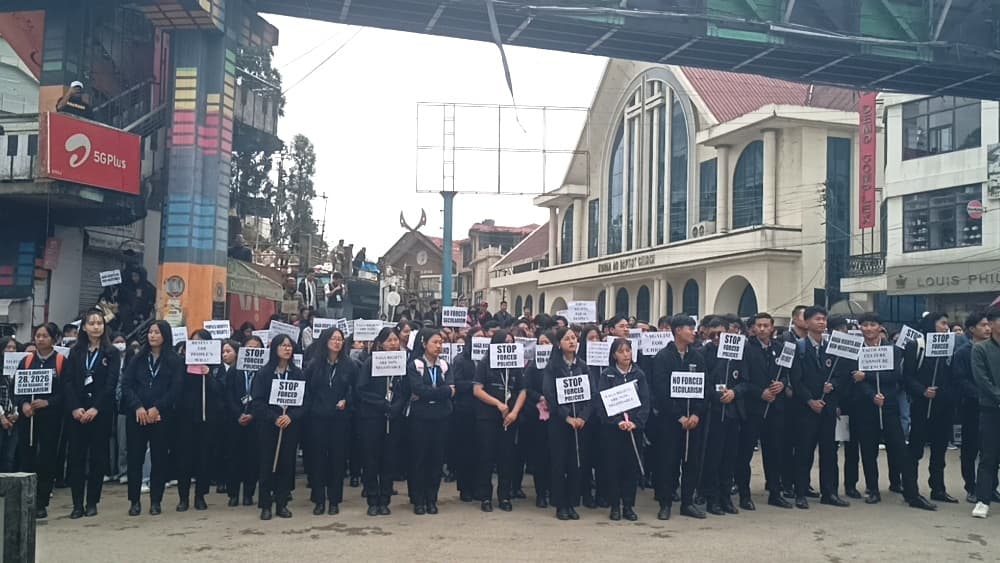
He said the compulsory observance of the national song could conflict with the religious beliefs of communities in the Naga homeland, noting that the song contains devotional imagery associated with the worship of a particular deity.
Mteisuding said the rally was not directed against any community or faith but was intended to protect secularism and freedom of conscience. Citing international human rights instruments such as the Universal Declaration of Human Rights and the International Covenant on Civil and Political Rights, he said individuals and communities have the right to practise their beliefs without coercion.
WATCH MORE:
He also said the rally in Kohima was being echoed by similar demonstrations across educational institutions and federating units of the NSF throughout the Naga homeland, calling for respect for the beliefs, identity and dignity of the Naga people.
Nagaland Joint Christian Forum vice-president Rev. Dr. Vevo Phesao reiterated the forum’s opposition to the directive, saying certain elements in the national song are contrary to Christian faith and principles. While acknowledging the patriotic spirit of the song, he said the principle of secularism enshrined in the Constitution must be upheld in letter and spirit.
Phesao said Nagaland, being a Christian-majority state, cannot compromise its religious beliefs by adhering to the directive and urged the government of India to respect the rights and sentiments of religious minorities. He added that the forum is not opposed to patriotic songs but maintained that the national anthem Jana Gana Mana is sufficient to unite the country.
While acknowledging legislators who had spoken in defence of Christian faith in the Nagaland Legislative Assembly, he appealed to them to uphold “one faith, one baptism, one church, and one people under God,” and expressed hope that the memorandum submitted to the President of India would receive a positive response.
He also expressed concern over the denial of visas and safe passage to church leaders and friends from abroad wishing to visit Nagaland and appealed to the government of India to uphold the spirit of democracy and secularism.
He also expressed concern over the denial of visas and safe passage to church leaders and friends from abroad wishing to visit Nagaland and appealed to the government of India to uphold the spirit of democracy and secularism.
Advisor to the Nagaland Christian Revival Church Rev. Vangpong Phom said the Nagas were facing what he described as “spiritual warfare” and alleged that various schemes and pressures were being used to threaten their identity and existence.
Phom said the culture, history and practices of the Naga people are distinct and have traditionally been passed down through oral traditions, particularly through the morung, where elders would teach younger generations about community values and history. Referring to the directive, he claimed that the song contains elements praising Hindu deities which conflict with Christian beliefs and called on the Naga people to stand united to safeguard their rights and faith.
Catholic Association Nagaland president Jonas Yanthan also expressed concern over the notification, saying it raises serious questions relating to religious freedom and secular values. While stating that the Church has no objection to the national anthem Jana Gana Mana, he said Vande Mataram carries religious connotations related to the worship of Hindu goddesses which many Christian communities in the state find difficult to accept.
Yanthan said Nagaland, created under special constitutional provisions, guarantees freedom to practise religious beliefs and social customs, and cautioned that policies perceived as imposing religious practices could undermine India’s democratic and secular framework.
Naga Peoples Movement for Human Rights secretary general Neingulo Krome criticised the directive as an intrusion into the conscience and identity of the Naga people. He said India has projected itself as one of the world’s largest democracies and a signatory to several international human rights conventions emphasising respect for religious freedom and the right to life.
Krome argued that imposing practices perceived to conflict with people’s beliefs undermines the principles of secularism and human rights and called on the Naga people to remain conscious of their identity and history while defending their rights and dignity.